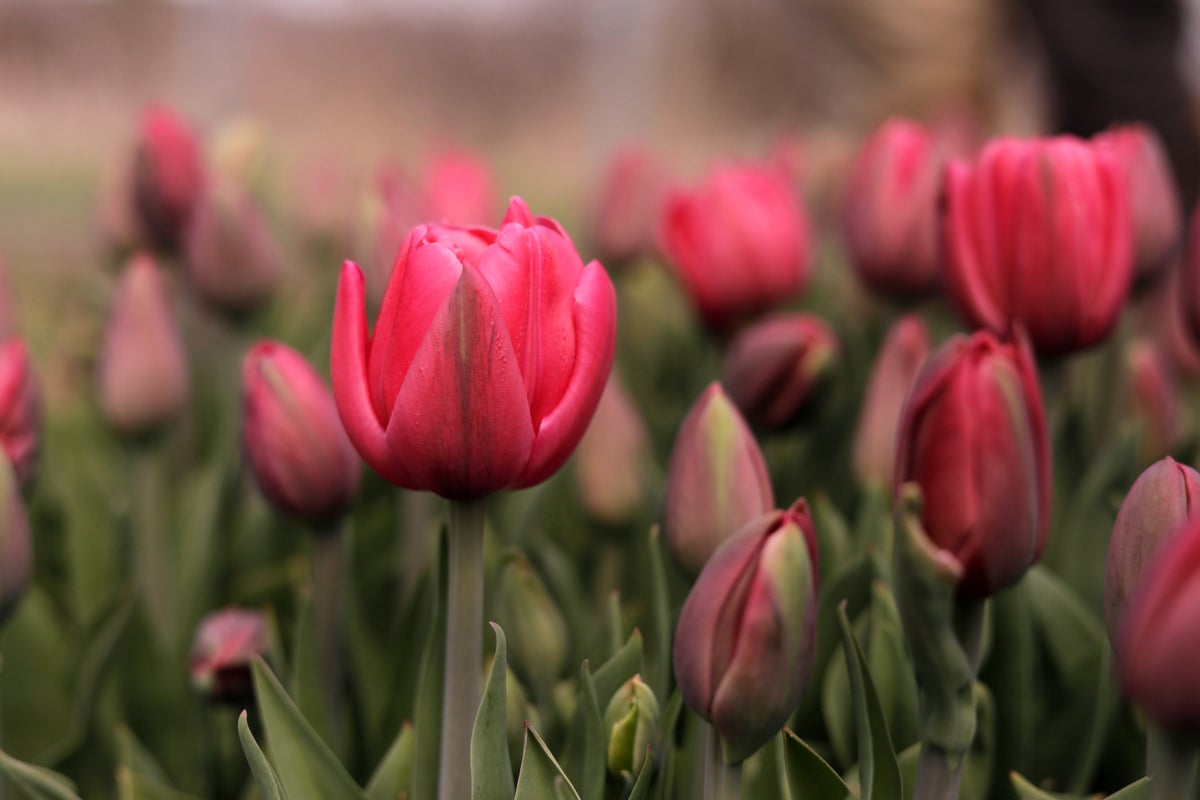
A sudden and violent shift in spring weather patterns is currently strangling the floral industry’s most critical production window. For flower farms, Mother’s Day isn’t just another holiday; it represents up to 30 percent of annual revenue squeezed into a single week of sales. When an unseasonable cold snap or erratic precipitation hits during the final weeks of April, it doesn't just delay growth—it creates a permanent supply vacuum that drives retail prices to record highs and leaves florists with empty coolers.
This isn’t merely a story about a few frost-nipped petals. It is a lesson in the fragility of high-stakes agricultural logistics.
The Mathematical Certainty of a Supply Shock
To understand the current crisis, you have to look at the biology of a rose or a tulip through the lens of a balance sheet. Commercial flower farming operates on a rigid calendar known as "forcing." Growers calculate the exact number of days required for a bulb or cutting to reach peak bloom based on consistent light and temperature.
When a heatwave is followed by a sharp freeze, the plant’s internal clock breaks.
If the temperature drops below a certain threshold for even four hours, the metabolic process slows down so significantly that the bloom will miss the shipping window for the holiday. In the floral world, a flower that arrives on the Tuesday after Mother’s Day has a value of zero. It is a perishable commodity with an expiration date that is non-negotiable.
This year, the swings have been particularly malicious. We are seeing swings of 40 degrees within a 24-hour period in key growing regions. This forces growers to make a devastating choice: spend a fortune on supplemental heating—burning through their profit margins—or risk losing the entire crop to the cold.
Why Greenhouses Are Not a Fail Safe
There is a common misconception that indoor growing protects the industry from the whims of the sky. This is a half-truth that ignores the reality of energy costs and infrastructure limits.
Most of the flowers sold in the United States during May are imported from Colombia and Ecuador, but a significant portion of high-end specialty blooms—peonies, snapdragons, and ranunculus—comes from domestic farms in California, Oregon, and the Pacific Northwest. These domestic growers often use "hoop houses" or unheated high tunnels. These structures protect against wind and light rain, but they are useless against a sustained freeze.
Even for those with fully climate-controlled glass houses, the cost of electricity and natural gas has spiked. When the outside temperature drops unexpectedly, the HVAC systems work overtime.
- Heating oil costs can eat 15% of a farm's seasonal profit in a single week.
- Humidity spikes caused by rapid temperature changes lead to Botrytis (gray mold), which can rot a shipment from the inside out while it is in transit.
- Labor shortages exacerbate the issue, as farms need more hands to move plants or apply protective covers on short notice.
The Invisible Squeeze on the Local Florist
While the farms are battling the elements, the local flower shop is the one that ultimately takes the heat from the consumer. Most florists book their Mother’s Day orders months in advance. They promise specific varieties and colors based on historical availability.
When a "weather event" occurs, the wholesalers begin a process of "allocation." This is a polite industry term for rationing.
If a farm was supposed to ship 10,000 stems of White O'Hara roses but only 4,000 survived the frost, the wholesaler will prioritize the massive national supermarkets and tech-driven delivery platforms over the small, independent boutique. The small business owner is then forced to go to the open market, where prices for a single stem can double or triple overnight.
The Price Tag of Volatility
Consider the typical cost structure of a Mother's Day bouquet. Under normal conditions, a dozen roses might wholesale for $1.50 per stem. During a weather-induced shortage, that price can jump to $4.00. By the time the florist adds labor, ribbon, a vase, and delivery, the $75 arrangement now needs to cost $130 just to keep the lights on.
Consumers often view this as price gouging. In reality, it is a desperate attempt at survival by an industry that operates on razor-thin margins.
The Myth of the Global Backup
For years, the industry relied on the "Global South" to act as a buffer. If the US had a bad spring, we would simply import more from the equatorial regions. However, the climate patterns affecting North America are part of a broader atmospheric instability that is hitting South American growers just as hard.
Colombia has dealt with excessive rainfall that has delayed harvests and increased the prevalence of fungal diseases. Meanwhile, transport logistics remain clogged. The air freight capacity required to move millions of stems from Bogota to Miami is fixed. You cannot simply "order more planes" when a crop finally decides to bloom all at once after a delay.
This creates a "flush." A flush is when the weather warms up too quickly after a cold snap, and every flower on the farm opens at the same time. The market is suddenly flooded with product, but because the logistics chain is built for a steady flow, thousands of stems sit on the tarmac and rot because there is no room on the planes.
Genetic Resilience and the Future of the Bloom
Some forward-thinking breeders are attempting to develop varieties that are more "cold-hardy" or less sensitive to light cycles. This is a slow process. It takes years to bring a new rose variety to market.
Traditionalists argue that these hybrids often lose the very things consumers want: fragrance and a high petal count. A "tough" rose often looks like plastic and smells like nothing. We are reaching a point where the industry must decide if it values the aesthetics of the flower or the reliability of the supply chain.
The Consumer’s New Reality
If you are planning to buy flowers this May, the landscape has changed. The days of walking into a shop on Saturday afternoon and picking up a specific arrangement of lilies and hydrangeas are fading.
Smart buyers are shifting toward "Designer’s Choice" options. This allows the florist to use whatever survived the weather, rather than promising a specific bloom that might not exist. It is a pivot away from the manufactured perfection of the last twenty years and back toward a more seasonal, erratic reality.
The pressure on these farms is immense. They are gambling with millions of dollars every time the jet stream dips. A single degree of temperature is often the difference between a profitable year and bankruptcy.
Check the forecast before you complain about the price of a peony. The farmer likely spent a sleepless night in a dark field trying to save it for you. Any florist who tells you it’s "business as usual" this year hasn't looked at the shipping manifests yet.
Pay the premium or prepare for a very empty vase.