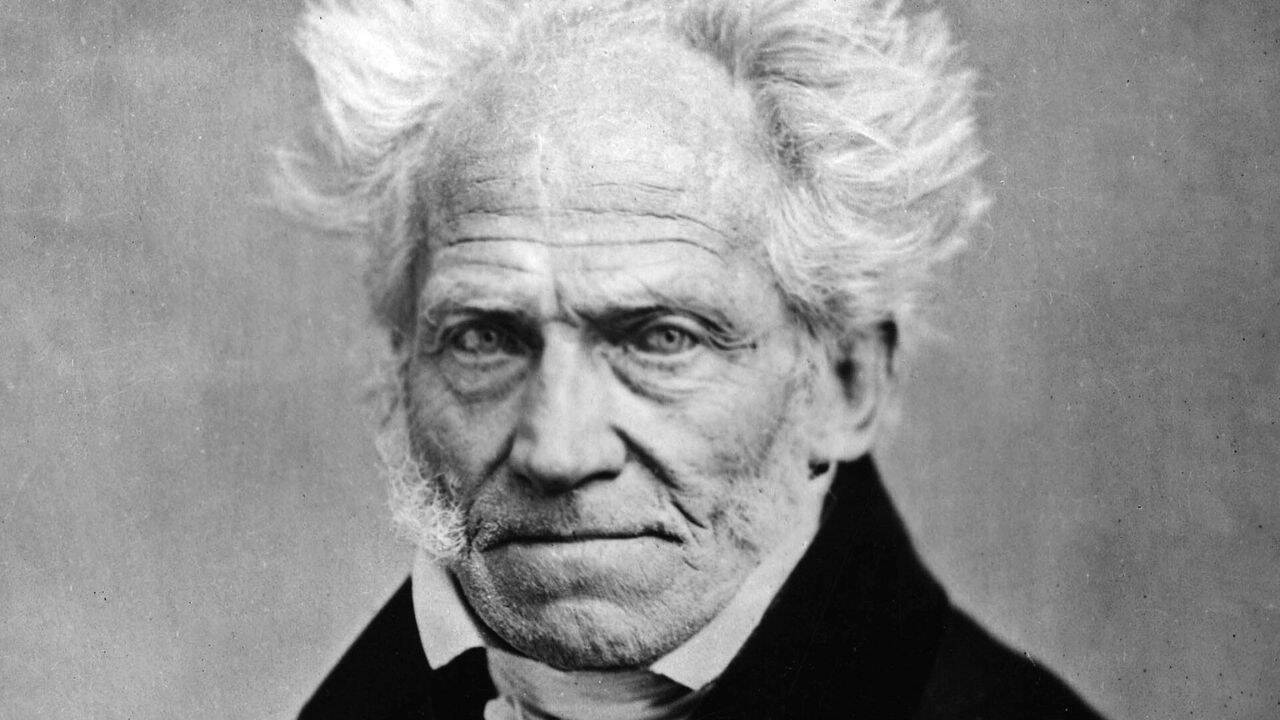
Arthur Schopenhauer famously observed that great men are like eagles, building their nests on high and lonely peaks. This imagery of the solitary genius is often romanticized, yet it hides a grueling reality. Exceptional achievement requires a deliberate withdrawal from the noise of the masses, but this isolation is rarely a peaceful retreat. It is a functional necessity that imposes severe psychological, social, and professional taxes on those who pursue it.
When we examine the lives of visionaries, we see a recurring pattern of self-imposed exile. The reason is not merely personal preference; it is a calculated measure to protect the integrity of their output. When you live among the herd, your ideas inevitably become diluted by the constant, low-level hum of group consensus. To produce something truly singular, you must starve yourself of the validation that comes from social belonging.
The Mechanism of Intellectual Isolation
The human brain is wired for social synchronization. We mirror the emotions, opinions, and behaviors of our peers to ensure survival within a tribe. This is an evolutionary asset for most, but a catastrophic liability for the outlier. If your goal is to disrupt an industry or push a creative boundary, your primary obstacle is your own instinct to fit in.
Schopenhauer understood that the crowd possesses a gravitational pull toward mediocrity. To move against that current, you must detach. This separation acts as a sensory deprivation chamber for the intellect. By cutting off the daily feedback loops—the petty office politics, the reflexive social media commentary, the immediate gratification of public approval—you force your mind to rely on its own internal metrics of quality.
Consider a software architect tasked with building a system that requires a fundamental change in how data is processed. If that architect spends their time in collaborative, consensus-driven meetings, they will subconsciously steer toward solutions that the team already understands and accepts. They will sacrifice the radical, risky innovation for the comfortable, incremental upgrade. True progress happens only when the architect leaves the building, shuts off the notifications, and subjects their logic to the unforgiving scrutiny of reality rather than the soft applause of colleagues.
The Hidden Price Tag
The cost of this distance is paid in the currency of human connection. We are told that we can have it all, but the history of high-level achievement suggests otherwise. The eagle on the peak does not socialize with the field mice.
Isolation triggers a specific kind of internal friction. Without the external regulation of a social circle, high achievers are prone to intense bouts of doubt. There is no one nearby to confirm that the path is correct. This is where most people quit. They interpret the silence of isolation as an indication that they are on the wrong track, whereas the genius recognizes the silence as the necessary space for the work to manifest.
The strain on personal relationships is arguably more severe. Friends and family operate on the assumption that time is a shared resource. When you pull back to preserve your mental bandwidth for your work, you are viewed as distant, arrogant, or unstable. You are effectively breaking the social contract. This is why many people who possess the raw talent for excellence never reach it. They lack the cold-blooded willingness to lose the approval of people they care about.
Navigating the Vacuum
It is a mistake to view solitude as a permanent state. Total, long-term isolation often leads to madness or a complete loss of touch with the world you are trying to influence. Instead, the most effective high achievers practice rhythmic withdrawal.
They oscillate. They dive into the deep, isolating work, stripping away distractions to refine their ideas in the dark. Then, they re-enter the social sphere, not to seek comfort, but to gather raw material. They observe the crowd. They listen to the frustrations, the illogical behaviors, and the failures of the status quo. They bring that data back to the mountain, use it to hone their work, and then vanish again.
This is a professional strategy, not a spiritual one. You are not searching for enlightenment on a summit. You are executing a tactical retreat to gain an objective advantage.
The Trap of Intellectual Narcissism
There is a significant danger in this approach. When you spend too much time listening only to your own internal monologue, you become susceptible to delusions of grandeur. You begin to believe that your ideas are inherently superior because they have not been challenged.
This is the point where the eagle falls. If your solitude is not balanced by a ruthless commitment to empirical truth—to testing your work against the cold, hard mechanics of your craft—you will build something that has no value to anyone but yourself. You become a recluse with a library of irrelevant theories.
To avoid this, you must treat your work as an object separate from your ego. Invite the criticism only when the work is finished, and invite it from people who have no stake in your personal happiness. Do not ask friends for feedback. Seek out the people who are currently doing the best work in the world and ask them to tear yours apart. It will be painful. It will be the opposite of the comfort you sought by leaving the crowd. But it is the only way to ensure that your isolation has produced something of substance.
The Reality of Modern Competition
We operate in an environment that incentivizes constant connectivity. Every tool at our disposal is engineered to keep us tethered to the feedback loop of the crowd. The temptation to check in, to see what people are saying, to participate in the conversation is a constant, low-grade addiction.
To succeed, you must be capable of radical uncoupling. You have to be comfortable with the feeling of being left behind while everyone else engages in the daily dance of status signaling. You must be willing to let your reputation in social circles decay in exchange for the solidification of your work.
It is a quiet, brutal process. There are no cameras to capture the moment you choose to walk away from a group discussion because it is wasting your time. There is no applause when you spend a weekend in total silence while your peers are networking. The reward is not social standing. The reward is the ability to see things that others cannot, because they are too busy looking at each other.
The peak is empty for a reason. Most people cannot stand the cold. If you are going to climb, ensure you are doing it for the work and not for the view from the top. Once you have reached the altitude required to see the patterns others miss, the only thing that matters is how you use that clarity to execute. Keep the focus narrow. Keep the mission clear. Leave the crowd to their noise.