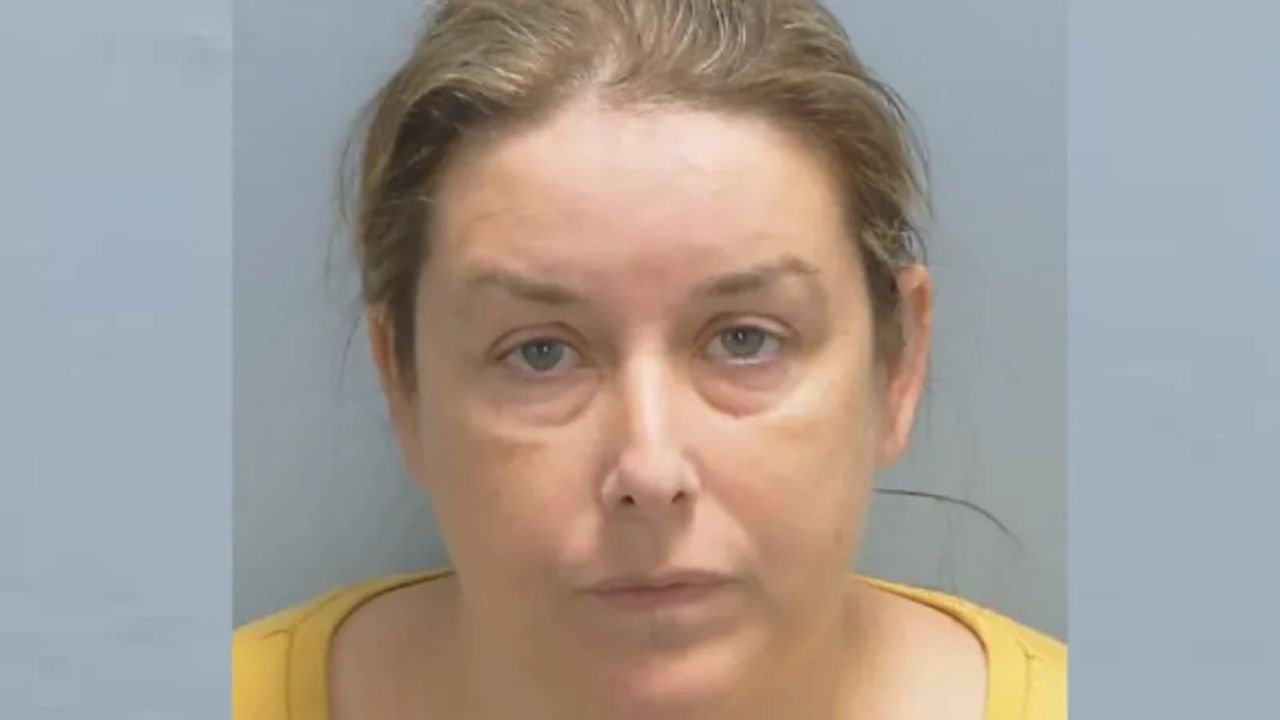
Trust is the invisible currency of the travel industry, and Lyne Barlow spent years spending money that wasn’t hers until the bill finally came due. The former owner of a namesake independent travel agency is now serving a nine-year prison sentence for orchestrating a £1.2 million fraud that functioned as a classic Ponzi scheme. While headlines focused on the £300,000 she diverted to pay for private school fees and a lifestyle beyond her means, the systemic failure reveals a much darker reality about how easily the UK travel sector can be manipulated by a charismatic operator with a laptop and a desperate need for social validation.
Barlow didn't just steal money. She weaponized the personal relationships she built with hundreds of holidaymakers in County Durham, selling them discounted dreams while using their deposits to pay off earlier clients or fund her own household expenses. This was not a business that went south; it was a criminal enterprise built on the deliberate recycling of capital. By the time the North East Regional Organised Crime Unit caught up with her, the trail of financial wreckage included 1,400 victims and a local community left questioning how a seemingly successful entrepreneur could be a calculated predator.
How the Discount Trap Snared Hundreds
The mechanics of the Barlow fraud relied on a simple, devastating bait: prices that were too good to be true. In an industry where profit margins on package holidays are notoriously thin—often hovering between 1% and 5%—Barlow was offering luxury getaways at significant discounts. She was effectively selling a product for less than it cost her to procure it from legitimate wholesalers.
To bridge the gap, she needed a constant influx of new cash. This is the hallmark of the Ponzi structure. A new customer would book a high-end trip to Dubai or the Maldives, and instead of that money being ring-fenced for their flights and hotels, it was immediately diverted. It went toward settling the debts of a previous customer who was due to fly out that week, or it paid for the private education of Barlow’s children.
It worked as long as the volume of new bookings grew. When the momentum slowed, the facade crumbled. Customers arrived at airports to find their bookings didn't exist. Families showed up at luxury resorts only to be told their rooms hadn't been paid for. Barlow’s response was a masterclass in gaslighting, often blaming "technical glitches" or "wholesaler errors" while she scrambled to find the next victim to plug the hole.
The Myth of the Independent Expert
Barlow cultivated an image of the "local hero" travel agent. In a world dominated by Expedia and Booking.com, many travelers still crave the personal touch. They want an expert who knows their preferences and provides a safety net. Barlow exploited this desire for intimacy. She used her position in the community to build a brand based on reliability, which made the eventual betrayal feel more like a personal assault than a financial loss.
Her expertise was a mirage. Behind the glowing social media reviews and the professional-looking invoices, there was no sound business logic. She wasn't finding "secret deals." She was simply subsidizing her clients' holidays with other people's life savings. The travel industry is heavily regulated to prevent exactly this, but Barlow found the cracks in the system.
The Failure of Financial Safeguards
The UK has some of the most robust travel protection laws in the world, specifically the ATOL (Air Travel Organiser’s Licence) scheme and the Package Travel Regulations. These are designed to ensure that if a company goes bust, the consumer isn't left stranded or out of pocket. Barlow managed to bypass these protections by operating as an agent for other ATOL holders while simultaneously acting as a principal without the necessary licensing for her own "discounted" packages.
This regulatory gray area is where many fraudulent independent agents operate. If an agent is merely a middleman, they don't necessarily need their own ATOL. However, the moment they start "dynamic packaging"—buying flights from one place and hotels from another to create a bespoke deal—they become an organizer in the eyes of the law. Barlow was creating these packages without the required bonds or insurance that would have protected her customers’ money.
Why the Audit Trail Went Cold
Barlow was a sophisticated liar. She didn't just deceive her customers; she deceived her family and her business partners. During her trial, it emerged that she even faked a terminal cancer diagnosis to garner sympathy and deflect questions when the financial pressure became unbearable. This level of pathological deception makes traditional due diligence nearly impossible for the average consumer.
Most of her victims paid via bank transfer or cash. This is a massive red flag. Credit card payments offer protection under Section 75 of the Consumer Credit Act, which makes the card provider jointly liable if the goods or services aren't delivered. By steering clients toward direct transfers—often incentivized by further "discounts"—Barlow ensured the money was instantly accessible and unrecoverable.
The High Cost of Private Ambition
The most galling aspect of the case for many was the destination of the stolen funds. This wasn't a "Robin Hood" scenario where a struggling business owner tried to keep the lights on. Significant portions of the £1.2 million were used to fund a middle-class fantasy.
- Private School Fees: Thousands were funneled into elite education for her children.
- Designer Goods: A lifestyle of luxury handbags and high-end fashion funded by the pensions of her victims.
- Property and Renovations: Enhancing her personal estate while her clients were being evicted from holiday villas they thought they had paid for.
This highlights a specific type of white-collar crime driven by the "aspirational trap." Barlow lived in a social circle where status was measured by where your children went to school and where you went on holiday. To maintain the illusion of success, she turned to theft. The tragedy is that her children’s education was bought with the money intended for other families' only break of the year.
Psychological Impact on the Community
The fallout in Durham and the surrounding areas was profound. Investigative work into the victim impact statements revealed more than just financial loss. There were stories of cancelled weddings, missed final visits to dying relatives abroad, and the total erosion of trust within a tight-knit community. For some, the £2,000 or £5,000 lost represented years of disciplined saving.
The betrayal by a "friend" or a "local business leader" leaves a psychological scar that a court sentence cannot heal. The nine-year sentence handed down at Durham Crown Court was a recognition of the scale of the "misery and heartbreak" caused, as the prosecution aptly described it.
Spotting the Next Lyne Barlow
The travel industry is currently seeing a surge in "independent travel consultants" who work from home. While many are legitimate, the Barlow case serves as a warning that the barriers to entry are dangerously low. Anyone with a social media account and a professional-looking logo can claim to be a travel expert.
To avoid the next Ponzi scheme, travelers must look past the personality and scrutinize the paperwork.
Essential Verification Steps
- Demand an ATOL Certificate: If you are booking a flight-inclusive package, the agent must provide an ATOL certificate the moment you pay any money. If they delay or make excuses, walk away.
- Verify Membership: Check the ABTA (Association of British Travel Agents) website to see if the firm is actually a member. Don't just trust a logo on a website; search the database.
- The Credit Card Rule: Never pay for a holiday via bank transfer to an independent agent. If they claim their "system is down" or offer a discount for cash, it is a sign that they are desperate for immediate liquidity.
- Cross-Reference Pricing: If an agent is offering a luxury villa for £2,000 when every other site lists it for £4,000, they aren't better at their job. They are likely using your money to pay for someone else’s trip.
The reality is that "secret" discounts in the travel industry are largely a myth. Wholesalers have strict pricing parity agreements. An agent might shave off a small portion of their commission to win your business, but they cannot magically cut the price of a British Airways seat by 50%.
The Systemic Fix That Isn't Coming
The sentencing of Lyne Barlow is a victory for the police, but it doesn't solve the underlying vulnerability in the travel sector. There is still no mandatory central registry for every individual selling travel in the UK. The industry relies on a patchwork of self-regulation and secondary checks.
The rise of social media marketing has made it easier than ever for fraudsters to bypass traditional gatekeepers. High-gloss Instagram feeds replace the physical high-street office, removing the overhead but also removing the physical accountability. As long as consumers prioritize a "deal" over security, the door remains open for the next operator to start recycling deposits.
Barlow’s downfall was inevitable because the mathematics of a Ponzi scheme are unforgiving. You eventually run out of new people to rob. For the 1,400 victims she left behind, the lesson came at an astronomical price. The travel industry doesn't need more "influencer" agents; it needs a return to transparent, bonded, and verifiable financial structures where a customer’s money is treated as a trust, not a slush fund.
Always verify the merchant ID on your credit card statement matches the name of the company you think you are booking with.