The room was likely quiet, save for the hum of high-end servers and the soft clack of mechanical keyboards. It was 2015. A group of the world’s most brilliant minds sat around a table, bound by a shared, terrifying realization: artificial intelligence was coming, and if left in the hands of monolithic tech monopolies, it could spell the end of human agency. They signed an agreement. They pledged billions. They shook hands on a sacred vow to build an open, non-profit fortress that would safeguard humanity’s future.
Now, those same men are paying armies of lawyers millions of dollars to tear each other apart in a Delaware courtroom.
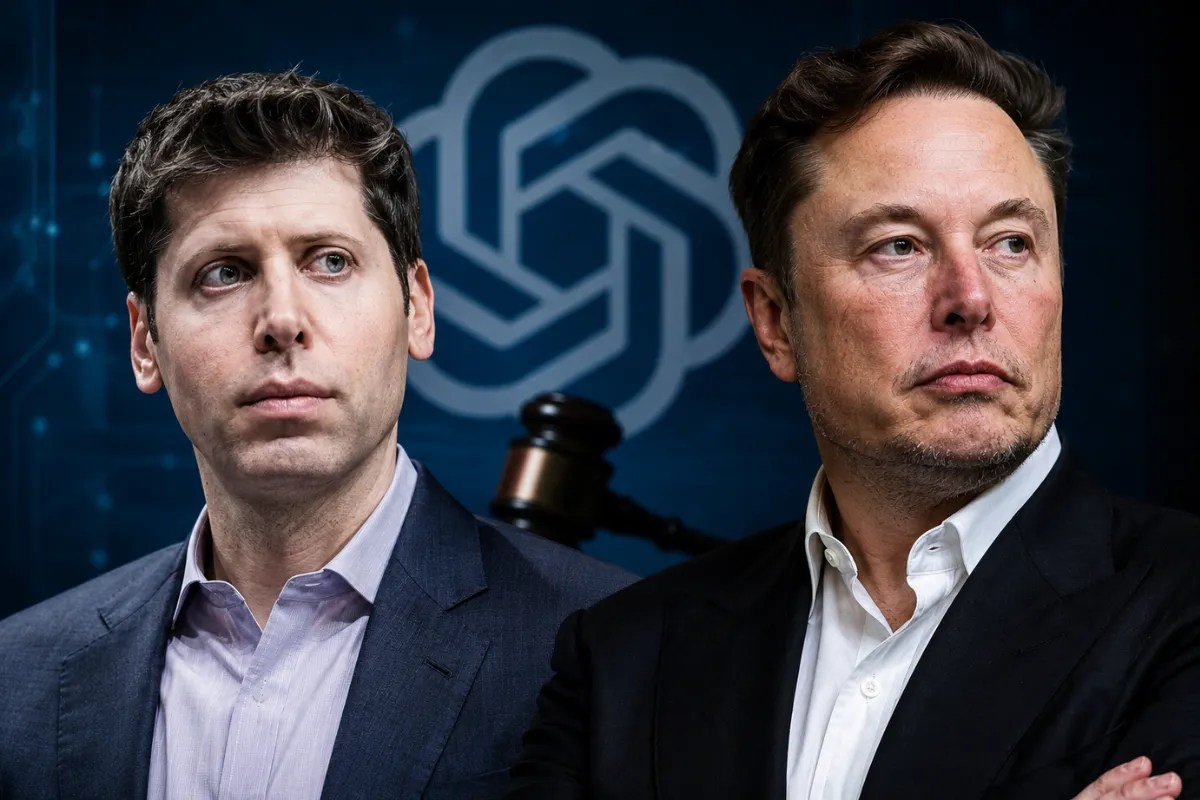
Elon Musk’s legal war against OpenAI, Sam Altman, and Greg Brockman is not just a corporate dispute over intellectual property or breached contracts. It is a messy, deeply personal divorce between former ideological soulmates. It is a battle for the soul of the next technological revolution. When the wealthiest man on earth sues the fastest-growing startup in history, the stakes are not measured in mere stock prices. The stakes are the future of human intelligence itself.
To understand how we arrived at this courtroom betrayal, we have to look past the dense legal filings and look at the fragile human egos that built the machine.
The Genesis of a Holy War
Silicon Valley has always run on a potent mix of messiah complexes and existential dread. In the mid-2010s, Elon Musk was increasingly consumed by a single, terrifying thought: Google was going to accidentally build a digital god, and that god would not care about humanity. Larry Page, then-CEO of Google, allegedly dismissed Musk’s fears as "specist," arguing that digital life was just the next stage of evolution.
Musk panicked. He did what any billionaire would do: he funded the resistance.
Enter Sam Altman and Greg Brockman. Together with Musk, they founded OpenAI. The mission was baked right into the name. It would be an open-source, non-profit research laboratory. It would share its code with the world. It would ensure that the power of Artificial General Intelligence—machines that can outperform humans at almost any economically valuable task—would belong to everyone, not just a select few boardrooms in Mountain View.
Musk injected tens of millions of dollars into this dream. He used his personal star power to recruit top-tier talent away from lucrative Big Tech salaries. Imagine a brilliant young researcher, fresh out of MIT, choosing to take a massive pay cut because a visionary billionaire looked them in the eye and told them they were saving the world. That was the romance of early OpenAI.
Then, the money ran out.
The Pivot That Sparked the Fire
Building a digital god is an incredibly expensive endeavor. Supercomputers require staggering amounts of electricity. Top AI researchers command seven-figure salaries. By 2018, OpenAI’s non-profit model was burning through cash at a rate that made Musk’s initial funding look like pocket change.
Musk proposed a solution: absorb OpenAI into Tesla to leverage the automaker's massive cash reserves and engineering talent. Altman and the board refused. They feared Musk would take total control, shifting the focus of the safety-first lab toward Tesla’s autonomous driving ambitions.
Betrayed and frustrated, Musk walked away. He cut off his financial pipeline, leaving the infant laboratory stranded on the beach without oxygen.
But instead of suffocating, OpenAI adapted. In 2019, Altman pulled off a restructuring that was either an act of pure survival or a deal with the devil, depending on who you ask. He created a "capped-profit" arm under the non-profit umbrella. This allowed OpenAI to attract billions of dollars in venture capital, eventually leading to a massive, multi-billion-dollar partnership with Microsoft.
Suddenly, the open-source rebel group was funded by the ultimate legacy software monopoly. The code was locked behind proprietary walls. The non-profit fortress had become a commercial juggernaut.
Musk watched from the sidelines as ChatGPT took over the world. He watched as the company he helped birth, name, and fund became a trillion-dollar ecosystem’s crown jewel. The legal complaint filed by Musk alleges that this pivot was a textbook breach of contract. He claims OpenAI flipped from a humanitarian mission to a profit-maximizing engine for Microsoft, violating the "Founding Agreement."
OpenAI’s defense is simple, sharp, and brutal: there was no formal founding agreement. They argue Musk is merely suffering from a severe case of revisionist history and corporate envy, furious that the revolution succeeded without him.
What is an Agreement Worth in the Digital Age?
The legal mechanics of this trial turn on a fascinating question. Can a series of emails, shared philosophies, and public declarations constitute a binding contract?
Musk’s legal team points to years of correspondence where Altman and Brockman repeatedly reassured him that OpenAI would always remain open. They argue that Musk’s financial backing and public endorsement were explicitly conditioned on this non-profit ethos. To Musk, those promises were a blood oath.
OpenAI’s lawyers view those same emails as aspirational brainstorming. In the high-stakes world of corporate law, hope is not a contract. They contend that as the technological realities changed, the company had to evolve or die. If they hadn't commercialized, ChatGPT would not exist today. The world would still be waiting for the open-source utopia while traditional tech monopolies locked up the market anyway.
Consider the psychological weight of this standoff. On one side, you have a founder who feels his benevolence was weaponized against him. On the other, you have executives who feel they did the hard, pragmatic work of saving a dying project, only to be vilified by the man who abandoned them.
The Ghost in the Legal Machine
Beneath the arguments over corporate structure lies a deeper, far more unsettling debate about the technology itself. Musk’s lawsuit hinges on a highly specific definition: GPT-4, OpenAI’s flagship language model, constitutes a form of Artificial General Intelligence.
Why does this specific label matter? Because OpenAI’s contract with Microsoft explicitly excludes AGI from their commercial licensing. If a court rules that OpenAI has achieved AGI, Microsoft’s legal right to profit from that technology instantly evaporates. The keys to the kingdom would revert to the non-profit board.
This forces a surreal spectacle. OpenAI must actively argue in court that its technology is not as advanced as it seems. They have to downplay their own historic achievements, painting their models as sophisticated pattern-matchers rather than true, autonomous minds. Meanwhile, Musk—the man who frequently warns that AI could destroy humanity—is in the bizarre position of arguing that OpenAI has successfully created a digital intellect.
The truth is elusive. We are watching lawyers try to define human-level intelligence using statutory frameworks written decades before neural networks even existed. It is like trying to regulate supersonic flight using the laws of the maritime shipping industry.
The Invisible Stakes for the Rest of Us
It is tempting to look at this trial as a clash of titans that has zero relevance to the average person trying to pay rent or navigate a shifting job market. That is a mistake.
The outcome of this legal battle will dictate who owns the cognitive infrastructure of the twenty-first century.
If OpenAI wins decisively, it signals to every tech founder that idealistic founding missions are entirely disposable. It means that any non-profit or open-source initiative can pivot to private commercialization the moment the financial incentives become large enough. It solidifies a future where the most powerful intellectual tools in human history are hidden behind corporate paywalls, accessible only to those who can afford the subscription fees.
If Musk wins, it could throw OpenAI into corporate chaos, potentially forcing them to open-source their proprietary models. While that sounds like a victory for democratization, it carries its own dark shadow. If highly advanced AI models are suddenly made freely available to anyone with a laptop, the guardrails disappear. Bad actors, rogue states, and chaotic forces would have unregulated access to tools capable of generating mass disinformation, engineering cyberweapons, or destabilizing financial systems.
We are caught in a pincer movement between corporate secrecy and chaotic exposure.
The trial exposes a profound vulnerability in the way we develop civilization-altering technology. We have outsourced the ethical governance of our future to a handful of eccentric billionaires and venture capitalists. We are watching their personal vendettas, shifting alliances, and bruised egos play out in real-time, knowing that the debris from their explosion will land squarely on us.
The Silicon Valley prophets promised us a temple built for the benefit of all mankind. Instead, we got a courtroom floor covered in broken promises, where the architects argue over who gets to keep the bricks.