The heavy scent of damp earth and stale exhaust lingers long after the motorcade has passed down the cracked asphalt of Miranda. For years, the streets of Caracas have functioned as an open-air waiting room. People queue for hours under a merciless sun just to secure a fraction of what they used to take for granted. Bread. Gasoline. A future that doesn't require a passport and a perilous journey across a border.
When power fractures at the top, the shockwaves do not register immediately in government ministries. They hit first in the quiet, desperate calculus of a mother pacing a linoleum kitchen floor, wondering if tomorrow's currency will buy enough flour to feed her children.
Months have bled past since the dramatic disruption that swept Nicolás Maduro from the presidential palace. In the vacuum left behind, foreign capitals drafted roadmaps and projected timelines. Yet, high above the friction of daily survival, Washington delivered a blunt assessment. The nation, by current metrics, remains profoundly unequipped for a ballot box.
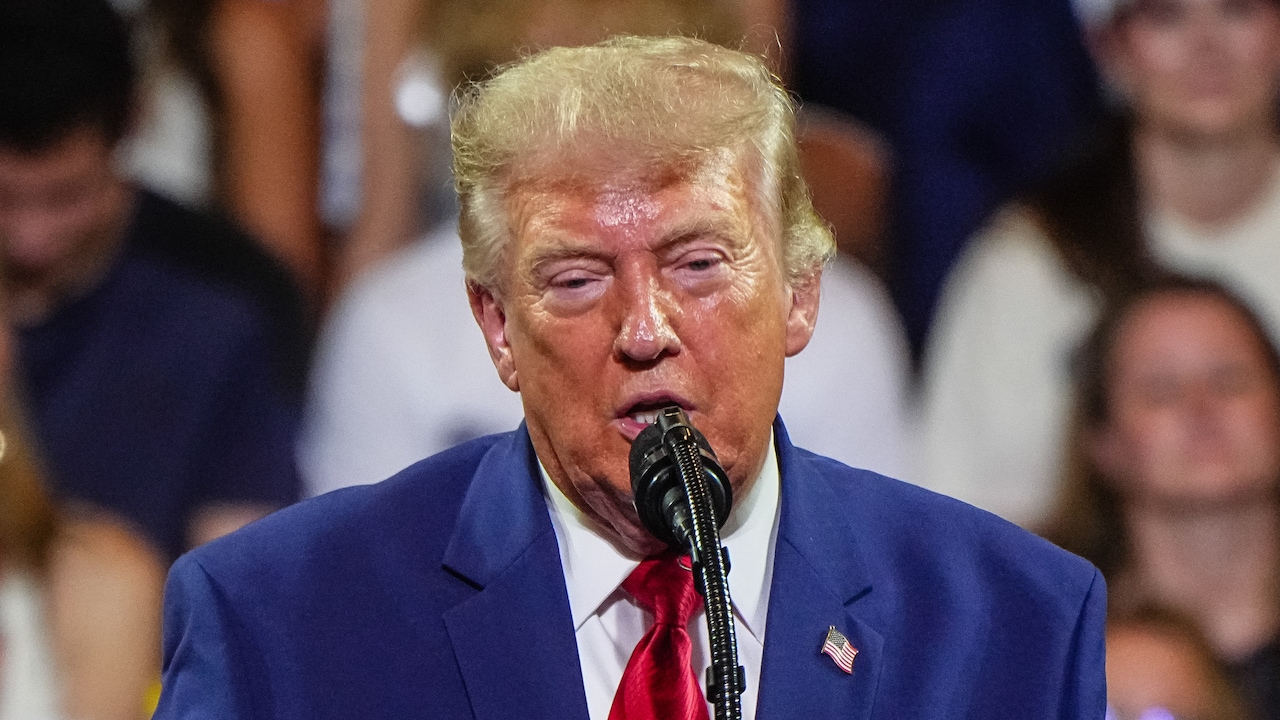
President Donald Trump addressed reporters at the White House with a characteristic lack of diplomatic varnish. The sentiment was stark. The apparatus of the state is too fractured, too bruised, and too deeply dependent on emergency scaffolding to sustain an immediate democratic exercise.
Elections, in theory, represent a clean break. A sudden, healing shock that resets a broken system. But reality operates differently when the institutional wiring has been systematically stripped from the walls.
Consider what happens next: a government attempts to organize a national vote while its basic grid flickers, its judicial branch obeys only political survival, and millions of its most skilled citizens live scattered across foreign diasporas. Voting requires an infrastructure of trust. Trust cannot be manufactured overnight by decree.
Instead, a delicate and deeply controversial stewardship has taken root. Acting President Delcy Rodríguez administers the daily functions of the state, navigating an uneasy partnership with foreign oversight that dictates the parameters of survival. Praise from Washington arrives framed around administrative cooperation and an escalating flow of oil exports. Crude once locked behind layers of sanctions and administrative decay now pumps outward once more, fueling an arrangement designed to nurse a collapsed economy back from the brink.
Critics argue that postponing democracy indefinitely risks cementing a new iteration of authoritarianism under a different mask. They point to the millions who voted in past cycles only to see their choices dissolved into procedural mist. Hope, deferred too often, curdles into cynicism.
Yet the administration insists that rushing toward a vote without institutional floorboards would only invite total collapse.
The machinery of oil and power grinds on beneath a tropical sky that offers no answers. Down below, in the fading light of a Caracas afternoon, the line outside the bakery grows shorter only because the shelves are empty. The citizens wait. Not just for a leader, or a ballot, or an election that keeps receding into the distance, but for the quiet day when the ground beneath their feet finally stops shifting.
[We'll Have Elections]: The Truth About Venezuela's Future (https://www.youtube.com/watch?v=JPMwzKG6RrQ)
This video provides additional context regarding the ongoing political and infrastructural developments in Venezuela following recent U.S. intervention.