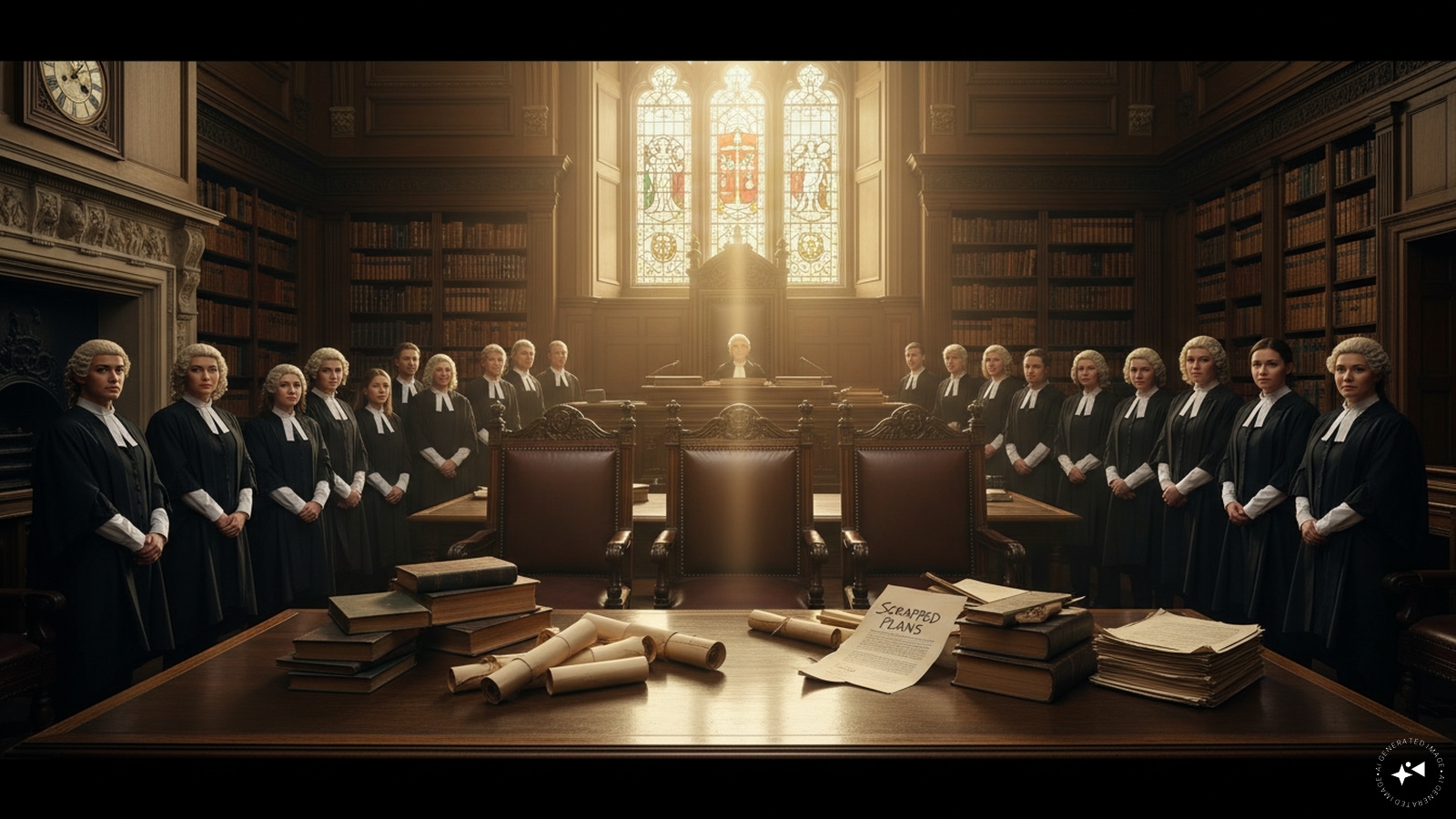
The British legal establishment dodged a massive bullet when the government quietly backed away from its most controversial criminal justice proposals. Ministers had floated the idea of curtailing jury trials for certain indictable offenses to clear crushing crown court backlogs.
It sounded like a pragmatic administrative fix on paper. It was a constitutional disaster in reality.
Backlash from barristers, civil liberties groups, and seasoned judges forced a humiliating climbdown. If you think the right to be judged by your peers is some minor legal technicality, you haven't spent time watching how power operates in a courtroom. Stripping ordinary citizens of their power to hold state accusations to account is a slippery slope.
Let's look at why this plan sparked such fierce pushback, what the government actually tried to do, and why preserving the jury system remains non-negotiable for a functioning democracy.
The Backlog Crisis That Started the Panic
Crown courts across England and Wales face unprecedented delays. Tens of thousands of defendants wait months or even years for their day in court. Victims suffer in limbo. Defendants sit on remand in overcrowded prisons while cases stall.
The Ministry of Justice faced mounting pressure to show movement. Someone looked at the stats, saw that jury trials take longer on average than bench trials overseen by a single judge, and decided that efficiency trumped tradition.
The proposal aimed to strip juries from specific mid-tier offenses where sentences wouldn't cross a certain threshold, pushing those cases before magistrates or single judges. The pitch was simple: speed up justice.
The reality is much messier. Speed isn't justice if the process bypasses the public conscience.
Why Jurors Matter More Than Efficiency
Efficiency worship destroys institutions. Judges are legal experts, but they also belong to the state apparatus. They work within the system every single day. They rub shoulders with prosecutors and defense counsel.
That professional proximity breeds a certain institutional fatigue. A judge sees hundreds of routine theft or assault cases a year. To them, it's a docket. To a jury of twelve ordinary people pulled from the electoral register, it's a profound, solemn duty.
Juries bring community standards into the courtroom. They act as a constitutional circuit breaker against heavy-handed or unpopular laws.
Think about historical jury nullification cases where ordinary citizens refused to convict people under unjust laws. That check on state power vanishes the moment you replace jurors with career magistrates or solitary judges appointed by the government.
When ministers suggested watering down this safeguard, the legal community didn't just grumble. They organized.
The Backlash That Broke the Policy
The resistance was swift and broad. Criminal defense barristers threatened industrial action. Retired judges penned scathing op-eds warning of a creeping authoritarian drift. Civil rights organizations pointed out that marginalized communities already face systemic disadvantages in the justice system, and removing lay oversight would only erode trust further.
Public trust in British institutions is already hovering near historic lows. Introducing a two-tier justice system where your right to a jury depends on the severity or type of charge would have torpedoed whatever legitimacy the crown courts had left.
Faced with united opposition and the threat of severe courtroom disruption, Downing Street blinked. The proposals were shelved. The official line from Whitehall framed the retreat as listening to stakeholders, but everyone knows it was a strategic retreat from a policy that backfired politically.
What This Means for the Future of Criminal Justice
Fixing the court backlog requires money, infrastructure, and personnel, not shortcuts that gut constitutional rights.
If the government genuinely wants to speed up trials, they need to invest in legal aid so defense teams aren't drowning in unmanaged caseloads. They need to recruit more administrative staff, upgrade ancient IT systems in courtrooms, and stop treating the justice sector as a bottom-line expense to be slashed.
You cannot starve a public service of funding for a decade, watch it collapse under its own weight, and then use that manufactured crisis as an excuse to dismantle foundational civil liberties.
Citizens aren't obstacles to an efficient trial. They are the entire point of the system.
Protecting your rights means staying alert when authorities try to chip away at them under the guise of modernization. The next time a government tries to trade away your fundamental protections for administrative convenience, call it out immediately.


