The chalk line on a football pitch is supposed to be the great equalizer. Inside those white boundaries, borders dissolve, passports stay locked in hotel drawers, and the only currency that matters is the weight of a rolling ball and the quickness of a foot.
Then came the island of Hispaniola.
Picture a stadium light cutting through the heavy Caribbean dusk, throwing long, skeletal shadows across a manicured turf. Thousands of voices are singing—not just cheering, but chanting an anthem born of shared geography and deep, fractured history. On this field, the Dominican Republic and Haiti are about to play what sports commentators call a derby. But call it a derby, and you miss the blood underneath the cleats. Call it a game, and you ignore the weight pressing down on every single player stepping onto that grass.
Weeks ago, that grass became forbidden.
Following a volatile storm of crowd friction, political tension, and administrative friction surrounding the very concept of the Hispaniola clash, the Dominican authorities slammed a door shut. Haiti’s national football team was barred from playing their home or neutral-fixture matches on Dominican soil. Just like that, a match meant to be a showcase of regional athletic pride was exiled.
To understand why a patch of turf can trigger such an abrupt political padlock, you have to step away from the stadium lights and walk the border.
Imagine standing at Dajabón, where the Massacre River separates two starkly different realities. On one side, the Dominican Republic pulses with paved roads, bustling commerce, and a thriving tourist economy. On the other side, Haiti stands under the heavy, agonizing weight of institutional collapse, gang-controlled streets, and a vacuum where governance ought to be. It is an economic canyon disguised as a national frontier.
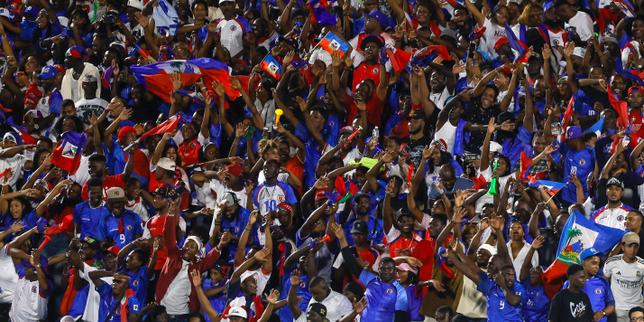
When the Haitian national team looks for a place to host an international match, they often look west or north, but logistical nightmares and security crises at home mean they frequently have had to rely on the generosity and proximity of their eastern neighbor. Thousands of Haitian expatriates live, work, and breathe football in the Dominican Republic. For them, a match against their team isn't just a ninety-minute diversion. It is an umbilical cord. It is a rare, breathing reminder of home, wrapped in the colors of the blue and red flag.
When you cut off that venue, you do not just punish a football federation. You sever a nerve.
The official bulletins spoke in the sterile language of bureaucracy. Security concerns. Public order incidents on the margins of the match. Administrative protocols. The vocabulary of men in suits who watch the world from behind polished mahogany desks, miles away from the sweat and roar of the terraces. They talk about risk mitigation the way a surgeon talks about amputation—clinical, necessary, cold.
Yet, on the ground, the reality feels entirely different.
Consider what happens when politics swallows sport whole. A young striker, born in Port-au-Prince, trains through power outages and unpaved roads, carrying the dreams of a neighborhood that has forgotten what peace looks like. He earns his jersey. He imagines the roar of a stadium in Santo Domingo, filled with compatriots who will scream his name until their throats bleed. He packs his boots. He prepares to run.
And then the decree drops. The stadium gates are bolted.
We have seen this script before across the globe. Whenever nations drift into friction, the first casualty is almost always cultural exchange. Sports are supposed to be the bridge built over troubled waters. When politicians decide that the water is too rough and burn the bridge instead, they leave behind two populations staring at each other across an ever-widening chasm of suspicion.
The Dominican Republic is grappling with its own internal pressures. Migration, security, and sovereignty dominate political discourse in Santo Domingo. Every government has a duty to protect its citizens and maintain civil order. But there is a profound, tragic irony in treating a football match as a national security threat. It sends a message that proximity is dangerous, that the other side of the island is not just a neighbor with problems, but an infectious hazard to be quarantined.
When you quarantine a game, you quarantine hope.
Football in the Caribbean is more than entertainment. It is an outlet for a region that punches above its weight in resilience. To take that away is to choke the few remaining channels where youth from both sides can look each other in the eye as equals, bound by the universal rules of the game rather than the bitter history of geopolitics.
The stadium lights in Santo Domingo will stay dark for the visiting team tonight. The pitch will sit empty, save for the nightly dew and the occasional stray breeze sweeping in from the coast.
Somewhere miles away, a Haitian player laces up his boots on a makeshift pitch, the red dust rising around his ankles instead of manicured turf. He doesn't have the luxury of a grand stadium or thousands of roaring expatriate fans. He just has the ball.
And as long as that ball rolls, the border remains an artificial line drawn on a map by men who never had to run for a dream across broken ground.