If you walk the concrete bank of the Oder River where Frankfurt an der Oder meets Slubice, you can hear the water doing what humans took decades to learn. It just flows. It does not check passports. It does not carry the weight of 1939.
For generations, this border was an open wound covered by a thin bandage of diplomatic politeness. Older folks in Warsaw still have grandparents who remember the sky turning black with German bombers. Older folks in Berlin still carry the quiet guilt of an ancestry that broke Europe.
But history has a way of moving the ground beneath your feet while you are busy looking backward.
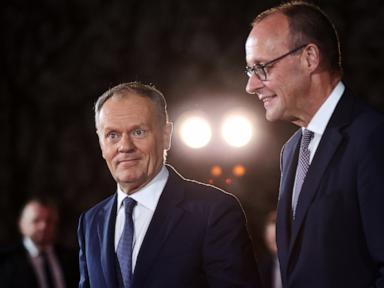
On June 17, 2026, Polish Prime Minister Donald Tusk and German Chancellor Friedrich Merz sat at a table to sign a defense agreement. On paper, it looks like a standard piece of bureaucratic machinery. It talks about Baltic Sea security, joint cyber initiatives, and logistical frameworks. To the casual observer reading a news ticker, it is just another dull meeting between two European suits.
Look closer. This meeting happened on the exact 35th anniversary of the German-Polish Treaty on Good Neighbourship. That original 1991 treaty was a handshake between a reunited Germany and a Poland trying to breathe after decades of Soviet strangulation. Back then, Germany was the wealthy big brother. Poland was the survivor trying to catch up.
That dynamic is dead. The balance of power on the European continent has fundamentally shifted, and it changed because the threat to the east grew too loud to ignore.
Consider Tomasz, a composite of the young logistics officers currently working out of Rzeszow in southeastern Poland. He doesn’t spend his days looking at old maps of the Second World War. He spends his days tracking columns of hardware moving toward the Ukrainian border. He watches satellite feeds. He knows that if the frontline in Ukraine buckles, his own hometown becomes the front line. For men like Tomasz, defense is no longer a theoretical exercise discussed in university lecture halls. It is a matter of calendar pages.
For decades, Poland begged western Europe to understand the reality of Russian ambition. Those warnings were often dismissed in Berlin as historical paranoia. Then came February 2022. The illusions shattered.
Now, Washington is quietly signaling a desire to pull back, looking toward the Pacific and leaving Europe to manage its own backyard. The protective umbrella that Europeans took for granted for three-quarters of a century is shrinking.
This reality forced Berlin into a painful awakening. Germany is attempting to rebuild the Bundeswehr, its military, after thirty years of deliberate neglect. It wants to build the strongest conventional army on NATO’s European side. But iron and gunpowder take time to manufacture. Trust takes even longer.
And that is why Germany needs Poland. Not as a buffer zone. Not as a junior partner. As an equal.
Poland has spent the last few years transforming itself into a military powerhouse. While Western European capitals debated budget percentages, Warsaw went on a shopping spree for tanks, artillery, and airspace defense. Poland became the indispensable logistics hub keeping Ukraine alive. The country stepped out from the shadow of its own tragic past to become the anchor of NATO’s eastern flank.
But the signature on Wednesday wasn't easy. The ink is wet, but the paper is fragile.
If you talk to political observers in Warsaw, you quickly learn that cooperation with Germany is a tightrope walk over broken glass. Nationalist politicians and figures like President Karol Nawrocki look at Berlin with deep skepticism. To them, any agreement that allows German boots back on Polish soil—even to construct the "Eastern Shield" defensive fortifications along the border—stirs up ancient, terrifying ghosts. The right-wing opposition still remembers the recent demands for over a trillion dollars in World War II reparations.
To navigate this, Tusk’s government had to trim the sails of this defense pact. It is a scaled-back agreement. It focuses heavily on the cold, practical realities of the Baltic Sea and infrastructure rather than a massive, sweeping military integration. It is a compromise born of necessity.
The deal is a direct answer to a question Europeans hoped they would never have to ask again: Who stands next to you when the night gets dark?
The agreement expands the NATO pipeline system from Germany into Poland. It synchronizes rail lines so that armored divisions can move across the continent without getting stuck in logistical bottlenecks. It ensures that German Patriot missile batteries can sit on Polish dirt to watch the skies.
It is easy to get lost in the spreadsheets of military spending and the tactical language of troop movements. But the emotional core of this moment sits in the quiet realization that survival requires forgiveness. It requires a nation that was systematically destroyed by its neighbor to look across the river and say, "We will guard the line together."
No one expects the scars of the twentieth century to vanish because of a signature in Warsaw. The older generation will still look at German uniforms with a slight tightening in their chests. The legal arguments over reparations will linger in the background of diplomatic dinners.
But on the banks of the Oder, the water continues to move. The security of Europe no longer depends on American promises or historical grievances. It depends on whether two neighbors, separated by a bloody century and connected by a vulnerable frontier, can learn to rely on each other's strength.