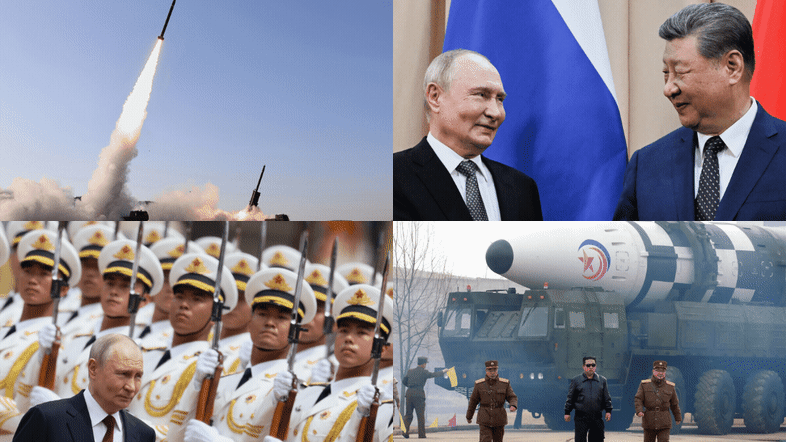
Poland and Ukraine are facing a dangerous new baseline following intense Russian missile and drone strikes dangerously close to NATO’s eastern frontier. Warsaw and Kyiv have formally accused Moscow of a deliberate escalation, pointing to munitions repeatedly wandering into or detonating within striking distance of sovereign Polish airspace. This is not merely a localized artillery dispute or a stray projectile gone off course. It is a calculated stress test of Western resolve, designed to discover precisely how close a missile can fly to a NATO member state before triggering a kinetic response.
Behind the diplomatic cables and emergency ambassadorial summons lies a grim operational reality. Air defense networks spanning Western Ukraine and Eastern Poland are operating at the absolute limit of their capacity. Interceptors are scarce, radar pictures are cluttered with electronic countermeasures, and decision-makers in command bunkers have mere seconds to determine whether a falling radar signature is a malfunctioning guidance system or an intentional provocation. When ordnance impacts miles from the border, the margin for error shrinks to zero.
The Mechanics of Strategic Provocation
Moscow understands the legalistic hesitation built into the architecture of the North Atlantic Treaty. Article 5 is formidable, but invoking it requires consensus, proof of intent, and a threshold of damage that politicians in capitals hundreds of miles away are reluctant to formally establish over a few shattered windows or a crater in a wheat field. By keeping strikes consistently near the frontier, the Russian military command extracts maximum psychological value with minimum political risk.
Consider the geography of the western supply corridors. Railheads, fuel depots, and logistics hubs in regions like Lviv are the literal lifeline of Ukraine's defense. Striking them requires cruise missiles and loitering munitions to navigate erratic flight paths that frequently flirt with international borders. When these weapons cross over—even momentarily—they force Polish and allied air patrols to scramble, burning precious flight hours and exposing electronic signatures.
Military analysts often understate the exhaustion factor in protracted modern conflicts. Radar operators in southeastern Poland have spent years staring at green scopes, watching high-speed blips trace erratic vectors toward their territory. The psychological attrition is real. Every alarm that sounds in a border village chips away at the psychological buffer that NATO citizens rely upon for a sense of safety.
The Air Defense Bottleneck
The immediate bottleneck is not political will; it is industrial capacity. Interceptor missiles like the Patriot system's PAC-3 variants or the AMRAAMs used by NASAMS are consumed faster than assembly lines in the United States and Europe can replenish them. Firing a multi-million-dollar interceptor at a cheap Iranian-designed drone is a losing economic proposition, but letting it through risks civilian casualties and infrastructure collapse.
This resource scarcity creates a dangerous vulnerability. If border regions are stripped of coverage to protect interior cities like Kyiv or Kharkiv, the frequency of cross-border incidents will inevitably rise. Conversely, concentrating air defense batteries along the Polish frontier invites accusations of regional partiality from Ukrainian commanders fighting in the east.
Warsaw finds itself trapped in a difficult strategic posture. The Polish military has rapidly modernized, acquiring high-end hardware from South Korea and the United States, yet peacetime rules of engagement govern airspace management. Peacetime protocols are poorly suited for a neighbor waging a total war inches from your backyard. When a missile breaches airspace for thirty-nine seconds, defense ministers do not have the luxury of bureaucratic deliberation. They need instantaneous authorization frameworks that do not currently exist.
Shifting Thresholds of Escalation
The diplomatic fallout from these border incidents reveals a widening chasm between immediate frontline perception and distant allied caution. Ukrainian officials argue that every unpunished border violation greenlights bolder moves. Today it is a stray drone; tomorrow it could be a targeted strike on a logistics hub inside NATO territory, framed as a navigation error.
Moscow watches these reactions closely. The Kremlin's foreign policy calculus relies heavily on probing actions to map the boundaries of adversary tolerance. If Western capitals respond only with stern communiques and diplomatic reprimands, the message received in military headquarters is clear: the threshold for kinetic retaliation remains exceptionally high.
This dynamic transforms the Polish-Ukrainian border into a silent testing ground for future conflict design. Conventional deterrence theory assumes that a clear red line will deter aggression. But when the line is blurred by high-speed projectiles, electronic spoofing, and the fog of war, deterrence becomes an exercise in guesswork.
The consequences extend far beyond Eastern Europe. Every nation watching the architecture of European security strain under these near-misses is taking notes. If a nuclear-armed power can casually lob cruise missiles over the fence of a major defensive alliance without facing direct military consequences, the credibility of collective security guarantees faces an unprecedented stress test.
There is no clean diplomatic off-ramp for this friction point as long as the broader war continues unchecked. Poland will continue scrambling jets. Ukraine will continue demanding more air defense batteries. Moscow will continue pushing the envelope of proximity. Until the calculus of risk shifts decisively on the battlefield itself, the frontier will remain a hair-trigger zone where a single mechanical failure or miscalculated trajectory could turn a regional crisis into a continental conflagration