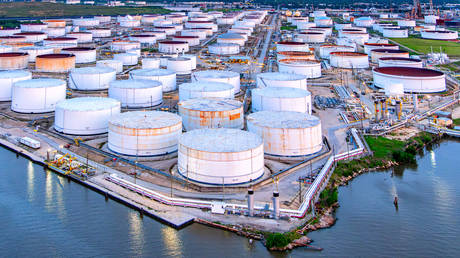
Bolivia is currently the site of a radical, unplanned experiment in transportation. While the rest of the world debates carbon credits and emissions targets, Bolivian drivers are ditching internal combustion engines for a much grimmer reason: the country is literally running out of usable fuel. What looks like an environmental success story on paper is actually a desperate flight from a collapsing energy infrastructure. Chronic shortages, the sudden death of long-standing price subsidies, and a scandal involving contaminated "junk gas" have turned the dream of the open road into a logistical nightmare. For the average person in La Paz or El Alto, an electric vehicle (EV) is no longer a luxury statement. It is a hedge against a state that can no longer keep the pumps running.
The numbers tell a stark story of forced evolution. Over the last five years, the EV population in Bolivia jumped from a negligible 500 to over 3,350 units. The steepest part of that curve occurred within the last 24 months, perfectly mirroring the depletion of the nation’s foreign currency reserves. When a country can no longer afford to import the very fuel that keeps its economy moving, the citizens stop waiting for a policy fix and start looking for a plug.
The Toxic Legacy of Junk Gas
The tipping point for many wasn't just the lack of fuel, but the quality of what remained. Following the repeal of subsidies by President Rodrigo Paz in late 2025—a move that saw gasoline prices nearly double and diesel shoot up by 160%—the situation took a turn for the surreal. Drivers who managed to secure a few liters after hours in line found their engines sputtering and failing.
The "junk gas" scandal revealed that the state-owned oil company, Yacimientos Petrolíferos Fiscales Bolivianos (YPFB), was distributing fuel contaminated with manganese and residual "gum" from poorly maintained storage tanks. This wasn't just a minor technical glitch; it was a fleet-killing event. For transport operators and families alike, the cost of the fuel was now compounded by the cost of catastrophic engine repairs. In this environment, a Chinese-made EV or a domestic Quantum Motors micro-car isn't just "cleaner." It is safer. You cannot contaminate an electron.
The Subsidy Trap and the Dollar Drought
To understand why Bolivia is pivoting so hard, you have to look at the math that broke the previous administration. For decades, the government maintained a fiction: that gasoline should cost roughly $0.50 per liter regardless of global market fluctuations. This was achieved through massive state subsidies that cost the country upwards of $2 billion annually.
By 2024, the bill became unpayable. Bolivia, once a net exporter of natural gas, saw its domestic production crater due to years of underinvestment and political mismanagement. As the country transitioned to importing 80% of its diesel and over half of its gasoline, it ran out of the US dollars required to pay international suppliers. Tankers were left idling at the borders because the central bank couldn't clear the payments.
President Paz’s decision to end the subsidies was an admission of bankruptcy. While the move was meant to stabilize the economy and restore investor confidence, it effectively offloaded the state’s financial crisis onto the gas tanks of the working class. The result was a series of national strikes that paralyzed major hubs like Cochabamba and Santa Cruz. In the chaos, the value proposition of an EV became undeniable. If you own an electric car, you are no longer a hostage to the central bank’s dollar reserves or the geopolitical whims affecting the Strait of Hormuz.
The Irony of the Lithium Triangle
There is a deep, systemic irony in Bolivia’s current predicament. The country sits atop the world’s largest untapped lithium resources, primarily in the Salar de Uyuni. This "white gold" is the essential ingredient for the batteries that power the global EV revolution. Yet, for years, Bolivia has struggled to extract and process this mineral at scale, hampered by a high magnesium-to-lithium ratio and a lack of technical infrastructure.
While the government continues to chase a future where Bolivia is a global battery powerhouse, the domestic market is being flooded by imports. To combat the fuel crisis, Paz eliminated import tariffs on all automobiles, including EVs. This has triggered a gold rush for importers. High-end buyers are opting for $36,000 SUVs to bypass the gas lines, while the working class is eyeing smaller, utilitarian models from manufacturers like Quantum Motors, which has seen its revenue grow by more than 30% as it scales production to meet local demand.
The infrastructure, however, remains a massive bottleneck. In a metropolitan area of 1.6 million people like La Paz and El Alto, there are still only a handful of public charging stations. This has birthed a secondary economy of "garage electricians"—technicians like Marcelo Laura, who has pivoted his entire business to installing home and commercial chargers. The transition is being built from the ground up, one private garage at a time, because the state is too busy managing the fuel riots to build a national charging grid.
A Fragile Momentum
The surge in EV adoption in Bolivia is not a sign of a healthy, forward-thinking economy. It is a symptom of a breakdown. The total number of EVs is expected to triple in the next three years, but this growth is occurring in a vacuum of regulation and support. Most of the energy powering these vehicles comes from the national grid, which still relies heavily on the very natural gas reserves that are currently in decline.
If Bolivia cannot stabilize its power generation or solve the logistical hurdles of lithium extraction, the EV surge might eventually hit a different kind of wall. For now, the motivation is simple survival. When the choice is between a line at a gas station that may never move and a vehicle that can be charged from a wall socket, the market has already made its decision. The internal combustion engine is becoming a liability that the Bolivian people can no longer afford to carry.
The era of subsidized fossil fuels is dead. What replaces it isn't necessarily a green utopia, but a hard-wired necessity born from the ashes of a failed energy policy.