Silence.
That is the first thing you notice about a diplomatic security alert—not the sirens, not the shouting on cable news, not the frantic packing of suitcases, but the sudden, heavy quiet that settles over an apartment in Manama or a compound in Riyadh when a few hundred words of bureaucratic prose land on your phone screen at 2:14 in the morning.
I have lived in the Gulf long enough to recognize the exact cadence of a U.S. State Department reissue. You wake up to the vibration against the nightstand, squint through the glare of a lock screen, and read the familiar, measured phrasing telling American citizens in Bahrain and Saudi Arabia to exercise heightened caution, review personal security plans, and keep a low profile. Nothing has exploded outside your window. The espresso machine in the lobby downstairs still hisses at seven sharp. Yet the air inside the room has changed pressure.
Most news outlets treat these reissued security warnings like weather reports from a distant coast—a three-paragraph wire dispatch, a stock photo of an embassy seal, a list of boilerplate reminders to enroll in the Smart Traveler Enrollment Program. They miss the entire human story unfolding between the lines. Because when Washington reissues a security alert across the Persian Gulf, it is rarely announcing a Hollywood emergency; it is quietly recalibrating the invisible margin of safety that tens of thousands of ordinary people rely on to go to work, walk their children to school, and sleep through the night.
The Architecture of an Ordinary Tuesday
To understand what a reissued warning actually does to a life, consider a hypothetical scenario involving two Americans living on opposite sides of the King Fahd Causeway—the sixteen-mile ribbon of concrete and steel linking Saudi Arabia’s Eastern Province to the island kingdom of Bahrain.
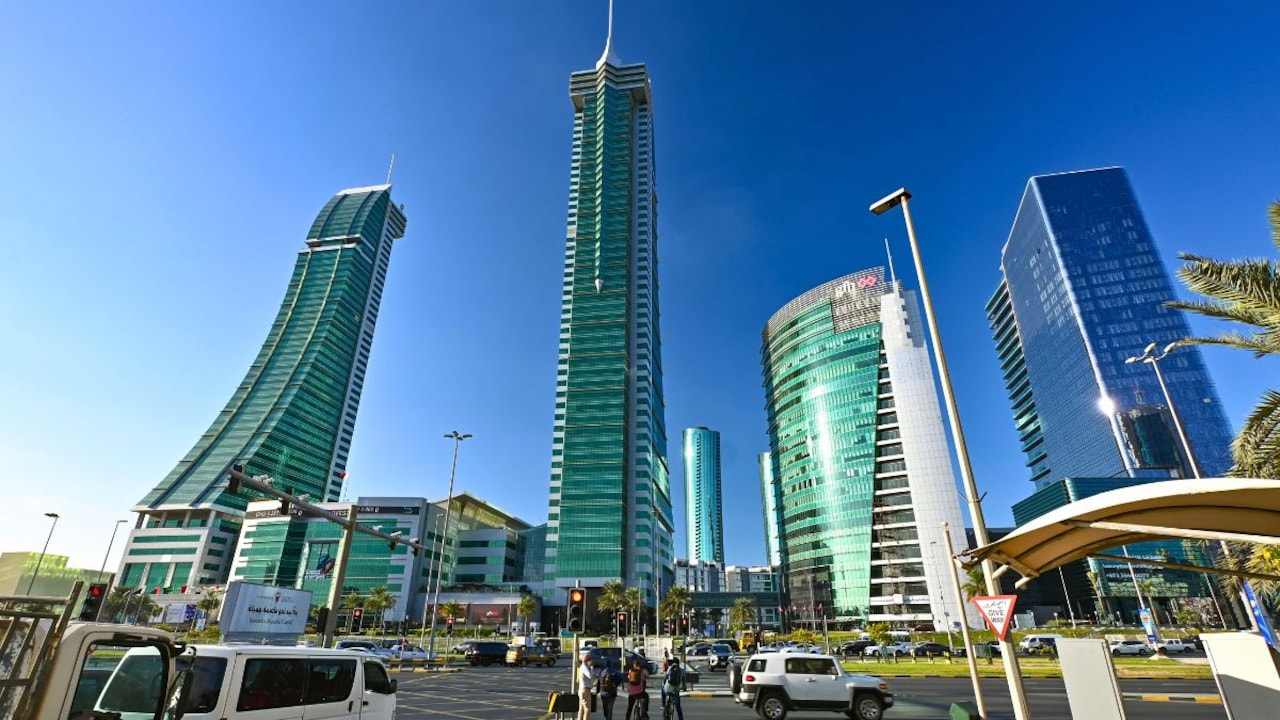
Call the first one Maya. She is a thirty-four-year-old structural engineer from Houston working on a desalination expansion outside Al Khobar, three years into a contract that has finally paid off her student loans and funded her parents' retirement buffer. Call the second one David, a retired Navy logistics officer turned defense contractor living in Juffair, a neighborhood in Manama where high-rise apartment towers stand within walking distance of the U.S. Navy’s Fifth Fleet headquarters.
Neither Maya nor David is a thrill-seeker. They are part of the quiet, sprawling diaspora of roughly seventy thousand American citizens living across Saudi Arabia and several thousand more in Bahrain—teachers, petroleum engineers, hospital administrators, cybersecurity consultants, and spouses who built normal routines inside gleaming, hyper-modern cities where violent street crime is almost nonexistent.
That contrast is the first paradox outsiders struggle to grasp. Walk through the Avenues mall in Manama or down Tahlia Street in Riyadh on a Thursday evening and you will see families lingering over cardamom coffee past midnight, luxury cars idling unlocked outside bakeries, and security guards half-asleep beside spotless glass doors. By everyday urban metrics, both countries feel remarkably orderly.
Then the embassy notice refreshes.
When the U.S. Mission to Saudi Arabia and the U.S. Embassy in Bahrain reissue security warnings—whether triggered by regional military escalation, missile and drone threats across the Arabian Peninsula, maritime friction in the Strait of Hormuz, or intelligence pointing toward potential retaliatory strikes—they are speaking to a threat that does not look like a mugger in an alley. They are speaking to geopolitical weather. And like barometric pressure dropping before a desert shamal wind, the warning arrives hours or days before the dust actually hits the glass.
Why Reissues Matter More Than First Alerts
People who have never lived under an embassy’s consular umbrella often assume a "reissued" warning is stale news—a bureaucratic copy-paste job meant to cover official backsides.
They have it completely backward.
In diplomatic practice, an initial alert is often reactive, pushed out in the messy fog of a breaking event when intelligence is half-formed and rumors outrun verified facts. A reissue, by contrast, is deliberate. It means analysts in Washington, Riyadh, and Manama have reviewed updated threat streams, consulted regional defense counterparts, and concluded that the elevated risk window has not closed—or has subtly shifted in geography or form.
Think of it like a structural engineer inspecting a bridge after a tremor. The first alarm tells drivers to slow down because the ground shook. The second notice, issued forty-eight hours later after sensors have been read, tells you which lanes remain open and how much weight the spans can safely carry.
In Bahrain and Saudi Arabia, that distinction carries immediate, practical weight. Bahrain is an archipelago smaller than New York City, housing a critical naval command center just across the water from Iran. Saudi Arabia is a vast kingdom spanning eight hundred thousand square miles, home to sprawling energy infrastructure in the east, diplomatic quarters in Riyadh, and Red Sea ports in the west. A single regional flashpoint—a drone launch in the Red Sea, an exchange of strikes between regional rivals, a spike in militia rhetoric—ripples differently through a tightly packed island than it does across a continental desert.
When the embassies reissue guidance advising citizens to avoid demonstrations, limit non-essential movement near military installations, monitor local media, and ensure travel documents are current, they are translating classified risk assessments into civilian choreography. Nobody is ordering an evacuation. An evacuation—what diplomats call "ordered departure"—is a sledgehammer that shatters business confidence, grounds commercial aviation, and signals imminent catastrophe. A reissued warning is a scalpel. It asks you to change how you move without telling you to abandon your life.
The Invisible Math Inside Every Expat Kitchen
Here is what happens at the kitchen table once the alert hits the community WhatsApp groups.
First comes the translation. Official advisories are written in a dialect of deliberate understatement, engineered to inform without triggering a bank run or clogging highway checkpoints. "Maintain a high level of vigilance" means stop taking the same route to the office at 7:45 every morning. "Avoid areas where Westerners congregate" means skip the Friday brunch at the five-star hotel downtown this week. "Ensure your passport has at least six months of validity" means if commercial flights thin out on forty-eight hours' notice, you do not want to be stuck arguing at a passport office.
I remember sitting at my own table during an earlier cycle of Gulf alerts, staring at a half-packed duffel bag beside the front door while trying to decide whether filling the car’s gas tank at ten at night made me prudent or paranoid. That is the quiet psychological tax nobody puts into a relocation package. You become an amateur intelligence analyst of your own neighborhood, weighing the reassurance of local hosts—who insist, often accurately, that domestic security services have everything locked down—against the cold, actuarial caution of your own government’s consular officers.
And confusion is part of the terrain. Even seasoned diplomats will privately admit that threat advisories walk an impossible tightrope. Warn too early or too often, and citizens develop alert fatigue, treating genuine danger like another car alarm echoing off concrete walls. Wait until smoke rises on the horizon, and the same citizens will ask why their embassy failed to give them a forty-eight-hour head start.
For Maya in Al Khobar, the calculus is intensely practical. Her company’s security director sends an email twenty minutes after the U.S. Embassy notice, tightening travel approvals between the Eastern Province and Riyadh. She checks her daughter’s school emergency contact form, verifies that her Saudi exit-reentry visa is active—a bureaucratic detail that catches newcomers off guard every single crisis—and tops off two cases of bottled water in the pantry.
Across the causeway in Manama, David’s routine shifts in smaller, quieter ways. He moves his evening run from the open waterfront corniche to the indoor treadmill on the fourth floor of his building. He checks the expiration dates on his family’s passports, downloads offline maps of the highway toward the Saudi border, and calls his sister in Ohio before she sees a sensationalized ticker crawl across her television screen at dinner.
That phone call home is its own miniature crisis. Relatives five thousand miles away rarely distinguish between a Level 2 or Level 3 travel advisory and an active war zone. Explaining to your mother over FaceTime that the embassy just reissued a security warning, while simultaneously insisting that you are about to drive to the grocery store for avocados and sparkling water, requires a diplomacy no Foreign Service exam ever tests.
What the Boilerplate Actually Asks You to Do
Strip away the diplomatic varnish, and every reissued security warning for Bahrain and Saudi Arabia rests on a handful of non-negotiable habits that separate prepared residents from panicked ones.
The first is registration—specifically, the Smart Traveler Enrollment Program, known as STEP. Tourists and even long-term contractors frequently skip it, assuming their employer or airline knows where they are. In a fast-moving airspace closure or localized security lockdown, consular sections do not call every American individually; they push SMS and email alerts through STEP lists to coordinate assembly points, charter flights, or border transit guidance. If your phone number changed six months ago and you never updated your profile, you are invisible to the people tasked with finding you.
The second is documentation. Living in the Gulf means navigating a dual layer of paperwork: your U.S. passport and your host-country residency permit—the iqama in Saudi Arabia or the Bahraini CPR card—along with valid exit permissions where required. During periods of heightened tension, administrative offices can close abruptly, and border crossings like the King Fahd Causeway can experience sudden inspection bottlenecks. Keeping physical copies of every document in a waterproof pouch, alongside digital scans stored offline on your phone, turns a potential bureaucratic trap into a ten-minute delay.
The third is situational humility. Both Bahrain and Saudi Arabia maintain strict laws governing photography near security installations, public gatherings, and social media commentary during security incidents. Pulling out a smartphone to film air-defense activity in the night sky or forwarding unverified rumors in a public chat group can land a foreign national in legal jeopardy faster than the underlying threat itself. In moments of tension, the safest posture is boring, predictable, and offline.
Finally, there is financial and logistical redundancy. Keep enough local currency—Saudi riyals or Bahraini dinars—in cash at home to cover a week of fuel, groceries, and hotel nights in case payment networks hiccup during an infrastructure disruption. Keep your vehicle above half a tank. Know two routes out of your neighborhood that do not pass major diplomatic compounds, energy terminals, or military gates.
None of these steps require panic. All of them buy time. And in every regional crisis across the Middle East over the past four decades—from the Tanker War of the 1980s to the missile scares of the 1990s and the drone strikes of the late 2010s—time has been the single scarcest commodity on the market.
Living Between Two Realities
What makes the Gulf endlessly compelling, and occasionally nerve-racking, is how seamlessly extreme modernity coexists with ancient fault lines. You can stand on the observation deck of a skyscraper in Riyadh watching autonomous delivery pods glide across manicured plazas while knowing that three hundred miles away, naval radar operators are tracking fast-moving contacts across warm, narrow waters.
Reissued security warnings do not mean the sky is falling. They mean the margin for error has narrowed. They are a reminder that comfort is not the same thing as immunity, and that living well abroad requires holding two truths in your head at the exact same moment: that tomorrow morning will almost certainly look just like yesterday, and that you should still know where your passport is before you turn off the lamp.
In Manama, David finishes his phone call with Ohio, sets his keys beside his wallet on the entryway console, and steps onto his balcony for a breath of warm sea air. Down below, taillights trace smooth red ribbons along the coastal highway, uninterrupted, unhurried, carrying thousands of people home through the dark. He locks the sliding glass door behind him, checks the battery percentage on his phone one last time, and goes to sleep with his shoes lined up neatly beside the bed.