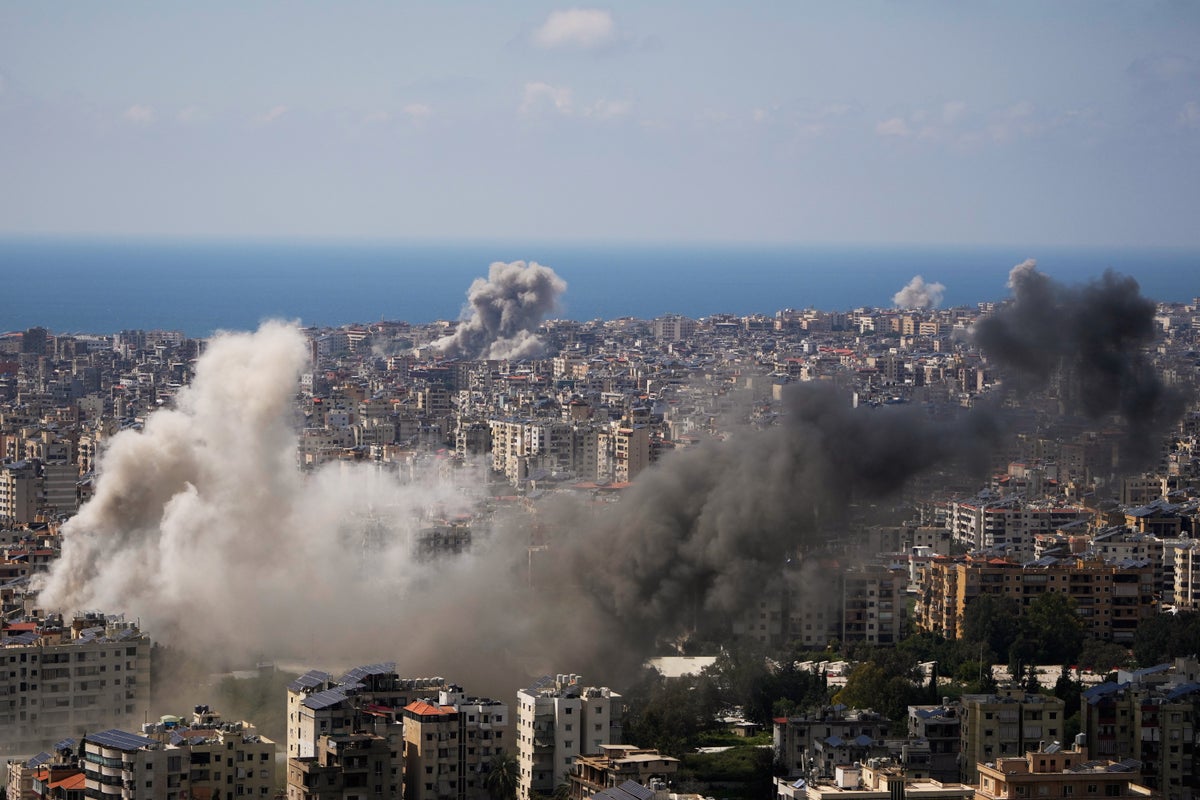
The phone vibrates on the nightstand at 3:14 a.m. in Dearborn, Michigan. Or Sydney. Or London. Before the eyes even open, the hand reaches out. It is a reflex honed by decades of inherited trauma, a biological imperative passed down through generations of Lebanese families who have learned that the night is rarely silent.
The screen glows with a harsh, artificial blue. It illuminates a face etched with the specific, agonizing exhaustion of someone living in two time zones at once. On the screen, a WhatsApp group chat—titled "Family" or "The House"—is a stream of green bubbles and terrifying voids. One tick means the message hasn't reached the server. Two ticks mean it’s delivered. The blue ticks, the ones that signify "read," are the only currency that matters now.
Living in the Lebanese diaspora is an exercise in existing as a ghost in your own life. You walk through a grocery store in a peaceful suburb, surrounded by the mundane luxury of choice between fifteen types of cereal, while your thumb scrolls through a feed of smoke rising over the Dahiyeh or the ancient stones of Tyre crumbling into dust. You are physically safe, yet your nervous system is thousands of miles away, vibrating with every notification that signals another round of bombardment.
The Geography of the Heart
There is a specific kind of survivor’s guilt that attaches itself to the soul of an expat. It isn't rational. It shouldn't be there. But it grows in the silence between news cycles.
Consider a woman we will call Maya. She is a software engineer in Montreal. She moved there six years ago for the stability, the career, the dream of a life where the electricity stays on for twenty-four hours a day. Now, she spends her lunch breaks staring at Google Maps, zooming in on her parents' village in the south of Lebanon. She looks for the familiar orange roof of her childhood home, wondering if the satellite imagery is current enough to show if the walls are still standing.
The statistics tell a story of escalation. Over 2,000 lives lost. More than a million people displaced—nearly a fifth of the entire population—squeezed into schools, parked cars, or the sidewalks of Beirut. But Maya doesn't see statistics. She sees the way her mother’s voice thinned out over the phone yesterday, brittle and forced, as she insisted everything was "Hamdullah," even as the windows rattled in the background.
Maya’s reality is fractured. She attends meetings about "scalable architecture" while calculating the distance between the latest strike and her grandmother’s apartment. The cognitive dissonance is a physical weight. To the world, she is a productive professional. To herself, she is a tethered cord, pulled taut across the Atlantic, waiting for the snap.
The Ghost of 2006 and the Weight of 2024
Lebanon is a country that has been forced to become an expert in its own destruction. The memory of 2006—the last major conflict with Israel—is not a history lesson for the diaspora. It is a scar that aches when the weather turns.
In 2006, the world was different. Social media was in its infancy. News came in batches. Today, the carnage is serialized. It is streamed in high definition on Instagram Stories. You can watch a neighborhood vanish in the time it takes to brew a cup of coffee. This immediacy doesn't provide clarity; it provides a relentless, unyielding trauma.
The current bombardment feels different to those watching from afar. There is a sense of "no mercy," a phrase that echoes through the voice notes sent from Beirut to Paris. It isn't just the military targets. It’s the infrastructure of a life. It’s the bakeries. It’s the roads used for evacuation. It’s the feeling that the rules of engagement have been discarded in favor of a totalizing erasure.
For the expat, the helplessness is the sharpest blade. You offer money, but the banks in Lebanon are already a graveyard of frozen accounts and "lollar" conversions. You offer to fly them out, but the airport is a bottleneck of soaring ticket prices and the looming threat of a total blockade. You realize that your passport, the very thing that was supposed to be your family’s safety net, cannot bridge the gap created by a falling bomb.
The Invisible Stakes of a Phone Call
Communication in a war zone is a fragile thing. When the cellular towers are hit or the electricity fails, the silence is deafening.
The diaspora has developed a shorthand for survival.
- "We are fine" means "We are alive for now."
- "It’s a bit loud" means "The building is shaking."
- "Don't worry" is a plea for the listener to stop asking questions they can't handle the answers to.
The psychological toll of this "mercy-less" campaign is not just felt by those under the drones. It is felt by the son in London who has to explain to his boss why he is crying in the breakroom. It is felt by the daughter in Dubai who is obsessively checking the "Last Seen" status of her brother.
This is the hidden cost of conflict: the systematic dismantling of the mental health of an entire global community. The Lebanese diaspora is one of the largest in the world, with millions scattered across every continent. When Lebanon bleeds, the world feels the pulse.
The Fiction of Distance
We like to believe that distance provides a buffer. We think that being "away" means being "safe." But for the Lebanese expat, distance is merely a magnifying glass.
Everything is amplified. The anger at the international community’s silence. The frustration with a political class at home that has left the country defenseless and bankrupt. The grief for a landscape that is being systematically altered.
There is a specific trauma in watching a place you love be reduced to "strategic targets." To the generals and the news anchors, a village is a dot on a map or a suspected stronghold. To the expat, that village is the smell of jasmine in June. It’s the specific way the light hits the mountains at dusk. It’s the neighbor who used to bring over extra figs because he knew you liked them.
When those villages are leveled, a piece of the expat’s identity is leveled too. They are no longer from a place; they are from a memory.
The Burden of the Middleman
Expats often find themselves acting as amateur diplomats and historians in their adopted homes. They have to explain the "nuance." They have to remind their coworkers that the people dying have names, dreams, and degrees. They have to push back against the dehumanizing rhetoric that treats Middle Eastern lives as collateral in a grander geopolitical game.
This labor is exhausting. It is the work of humanizing your own family to a world that often views them as icons on a map. You find yourself showing photos of your cousins—not as victims, but as people at a wedding, laughing, holding glasses of arak—trying to prove that they are worthy of the mercy the headlines say is missing.
But even this effort feels futile when the next notification pings.
The Cycle of the Unspoken
The most harrowing part of this experience is the realization that this is not a new story. It is a remake. The parents of today’s expats lived through the 1982 invasion. Their grandparents lived through 1948 and the civil war.
This intergenerational trauma means that the fear isn't just about the current bomb. It’s about the knowledge of what comes after. The years of rebuilding. The brain drain as the best and brightest—the ones who stayed—finally decide to leave. The hollowing out of a culture.
The expat sits in a quiet apartment in a city that doesn't know war, feeling like a traitor for having a warm bed and a full fridge. They carry the weight of being the "lucky one," a title that feels more like a sentence than a blessing.
The Light That Never Goes Out
There is no "after" for the Lebanese diaspora. There is only the "during."
They will continue to send the money. They will continue to lobby their governments. They will continue to fill the WhatsApp chats with hearts and prayers and desperate "Where are you?" messages.
The blue light in the bedroom will stay on.
Until the sun rises over Beirut and the checks can be made, until the voices on the other end of the line confirm they survived another night without mercy, the diaspora remains in a state of suspended animation. They are a people defined by their ability to endure the unendurable, tethered to a home that is breaking, watching from a distance as the world moves on, while their own hearts remain under the rubble.
In the end, the story of the Lebanese expat isn't about politics or borders. It is about the stubborn, agonizing refusal to let go of a hand that is being pulled away by the tide of history.
It is 4:00 a.m. now. The phone vibrates again.
Two blue ticks.
For tonight, at least, they can breathe.