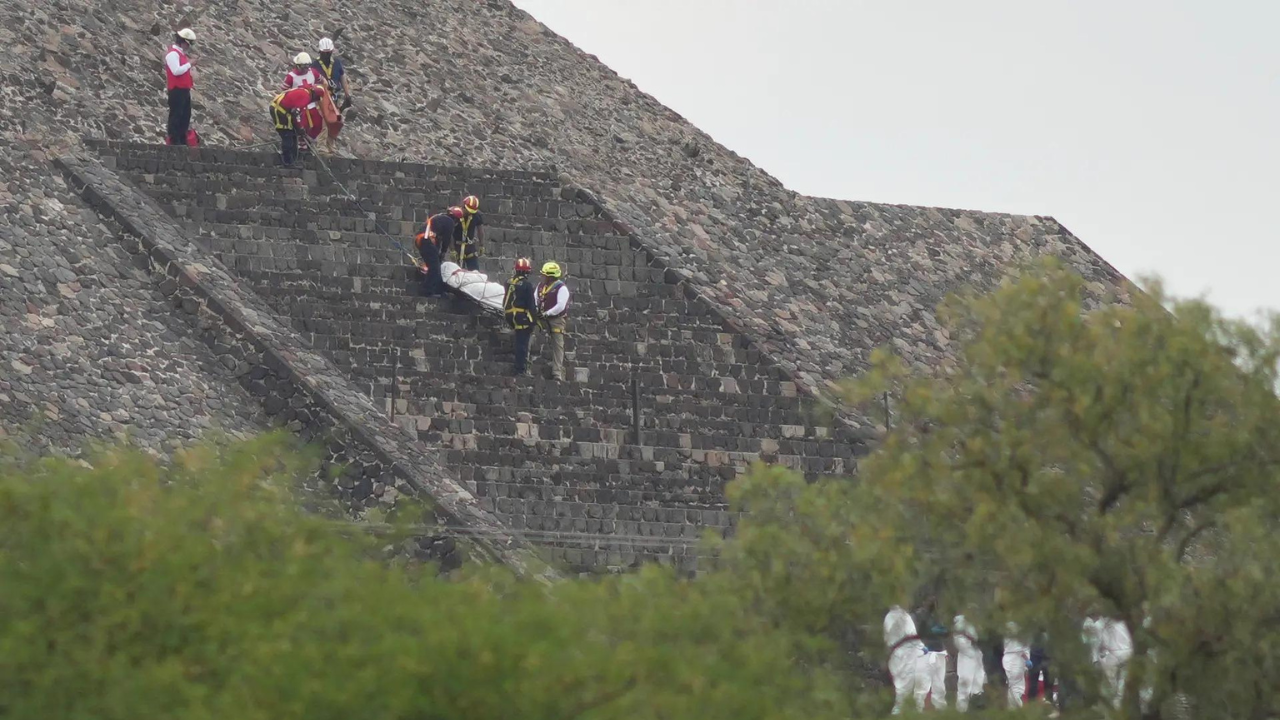
The recent tragedy at a high-profile archaeological site in Mexico, where a Canadian tourist was killed and 13 others were wounded in a targeted shooting, represents a collapse of the informal security pact that once shielded the country's most profitable industry. For years, a silent understanding existed between organized crime and the state. Ancient ruins and coastal resorts were off-limits. Violence was a localized affair, kept to the shadows of border towns and rural transit corridors. That border has now been crossed. The incident highlights a brutal shift in how cartels operate and the inability of the Mexican National Guard to secure the very "safe zones" the government promises to international visitors.
The Myth of the Sacred Zone
Archaeological sites have long been considered the crown jewels of Mexican tourism. They are symbols of national pride and massive revenue generators. When gunfire erupts at a pyramid, it isn't just a crime; it is a direct assault on the economic engine of the state.
The shooting follows a pattern of creeping territorial expansion by criminal groups. We are seeing a move from the "plazas" of the north to the "corridors" of the south. These groups no longer care about the optical fallout of killing a foreigner. In their view, every square inch of territory is a marketplace for extortion, drug sales, and human trafficking. The ruins, which draw thousands of wealthy targets daily, are simply too lucrative to ignore.
Travelers are often told that if they stay within the confines of organized tours and official sites, they are safe. This is a half-truth that has become increasingly dangerous. While the statistical probability of being caught in a crossfire remains low for the average visitor, the frequency of these "high-impact" events is rising. The security theater of a few soldiers with rifles at the entrance to a park does little to deter a determined hit squad or a rival gang attempting to seize control of local vendor rackets.
The Extortion Economy Beneath the Ruins
To understand why a tourist dies at a pyramid, you have to look at the ground level. Beneath the surface of every major Mexican tourist site is a complex economy of "derecho de piso," or protection money.
Criminal organizations exert control over the local vendors, the tour guides, and even the transportation networks that bring people from their hotels to the sites. If a local gang demands a cut of every bottle of water sold and the state fails to provide a counter-force, that gang eventually feels emboldened to settle internal disputes right in front of the Temple of the Sun.
The Failure of the National Guard
The militarization of tourism security has been the primary strategy of the current administration. However, the National Guard is often reactive rather than proactive.
- Static Positioning: Soldiers often stand in fixed spots, making them easy to bypass or predict.
- Lack of Intel: Real security comes from deep intelligence on local gang dynamics, not just boots on the ground.
- Corruption Sinks: At the local level, police forces are often underfunded and easily compromised by the very groups they are meant to fight.
When a shooting occurs, the standard response is to flood the area with troops for seventy-two hours. Once the international headlines fade, the troops move to the next crisis, leaving the same vulnerable infrastructure in place. It is a cycle of crisis management that solves nothing.
Canada and the Warning Label Reality
The Canadian government, along with the United States, has been forced to constantly update travel advisories. Yet, these advisories often lack the granular detail required for a modern traveler to make an informed decision. They use broad strokes, warning against "non-essential travel" to entire states while ignoring the specific risks of "safe" transit hubs.
For the Canadian victim in this specific incident, the tragedy was not a result of "risky behavior." They were following the rules. They were at a sanctioned site during daylight hours. This is what makes the industry tremble. When the rules no longer protect the customer, the product becomes unsellable.
Industry analysts are already seeing a shift in booking patterns. Travelers are not necessarily canceling their trips to Mexico, but they are retreating further into the "all-inclusive" bubble. This "fortress tourism" might keep people safe, but it starves the local economy, which in turn creates more desperation and feeds the recruitment efforts of the cartels. It is a self-cannibalizing system.
The Logistics of the Shooting
Eyewitness accounts suggest a level of brazenness that was previously rare. The gunmen did not wear masks. They did not wait for a secluded moment. They opened fire in a crowded plaza, hitting bystanders with the chilling indifference of those who know they will not be caught.
This level of impunity is the result of a judicial system that fails to prosecute over 95% of crimes. When the "cost" of killing a tourist is zero, the "benefit" of eliminating a rival or sending a message becomes overwhelming. The thirteen injured survivors will go home with physical and psychological scars, serving as walking anti-advertisements for a country that desperately needs their dollars.
Reforming the Safety Narrative
Mexico cannot fix its security problem overnight, but it can stop lying to itself and its visitors. The current strategy of "hugs, not bullets" has clearly failed to protect the borders of the tourism zones.
A hard-hitting investigative look at the budget allocations shows that while billions are spent on the "Maya Train" and other infrastructure projects, the actual spend on specialized tourism police—officers trained in de-escalation, foreign languages, and intelligence-led patrolling—is abysmal.
The industry must move toward:
- Vetted Transportation Corridors: Private-public partnerships that ensure the journey to the ruins is as secure as the ruins themselves.
- Real-Time Threat Assessments: Moving away from static government warnings toward dynamic, data-driven security apps for travelers.
- Financial Transparency: Tracking the flow of money from tourist vendors to ensure it isn't being siphoned off into cartel coffers.
The tragedy in Mexico is a warning shot for the entire global travel industry. Safety is not a static condition; it is a constant effort that requires more than just a uniform and a rifle. If the Mexican government cannot guarantee that a family can walk through an ancient city without dodging bullets, the ruins will eventually be all that is left of the economy.
Travelers need to stop asking if a destination is "safe" and start asking who is in control of the ground they are walking on. In the case of the Mexican pyramids, the answer is increasingly unclear. The blood on the stone won't wash off with a press release.