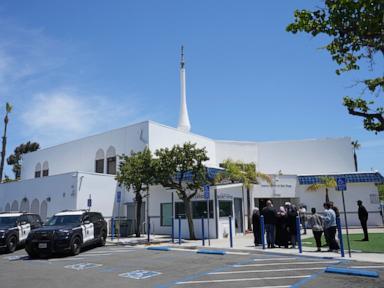
Every legal blog in the country is currently hyperventilating over a defense attorney complaining that prosecutors have not handed over enough details regarding a teenager's alleged ties to the San Diego mosque shooters. Headlines scream about transparency, due process, and the sanctity of open-file discovery. It makes for great cable news outrage. It also completely misses how modern criminal investigations actually work.
The lazy consensus in the legal commentary class is simple: if the state is withholding specifics, the state is hiding a weak case or acting in bad faith. Defense attorneys love this narrative because it casts them as noble underdogs fighting a secretive machine. Prosecutors hate it because it paints them as bureaucratic villains. Both sides are playing a theatrical game that ignores structural reality.
I have spent years watching defense teams blow hundreds of hours chasing ghost documents while missing the actual mechanics of the state's case. The obsession with early, granular discovery leaks is a trap.
The Myth of the Complete File
Let us define what discovery is actually designed to do. Under constitutional frameworks and local rules, prosecutors must hand over exculpatory evidence and material witness statements. They do not have to hand over a neatly organized dossier that explains their theory of the conspiracy on Tuesday morning.
The media treats a prosecutor's office like an open corporate ledger where every piece of data is cataloged and ready for export. That is fantasy. In a complex, multi-jurisdictional terrorism or hate crime investigation involving radicalized minors, digital forensics take months. Cell phone extractions, encrypted messaging app backups, cloud server warrants, and financial tracing do not arrive in a clean PDF attachment. They arrive as terabytes of raw data fragments.
When a defense lawyer stands up in court and whines that the state has not provided details on a teenager's specific ties, two things are usually true at once. First, the defense is posturing for the press to shape public perception before trial. Second, the prosecution genuinely might not have a finished narrative yet because the digital evidence is still being processed by federal agencies.
Demanding detailed disclosures before the state has even synthesized its own raw data is a fool's errand. You end up forcing the prosecution to hand over premature theories that they will later have to amend, creating unnecessary friction and endless evidentiary hearings that help neither side find the truth.
The Danger of Winning the Wrong Argument
Imagine a scenario where the defense successfully bullies a judge into forcing an immediate, comprehensive dump of every investigative lead, tip sheet, and preliminary interview concerning this teenager's network.
What happens next?
The defense gets thousands of pages of raw police notes. Half of those notes contain unverified tips from frightened informants, uncorroborated social media rumors, and contradictory witness statements taken in the immediate aftermath of a crisis. Now, the defense team has to spend weeks vetting hundreds of dead ends just to prove they are dead ends.
Information overload is a weapon, and defense attorneys are constantly begging to be hit by it because it sounds good in a press release.
In high-profile conspiracy cases involving radicalized youth, the early evidence is notoriously messy. A teenager linked to a violent extremist event does not operate like a traditional criminal co-conspirator with a clear paper trail and documented meetings. They operate in decentralized chat rooms, anonymous forums, and encrypted channels. The physical and digital footprints are chaotic.
If prosecutors handed over every raw tip about this teenager's alleged ties today, the defense would likely look at a pile of noise. When that noise gets leaked to the press, it poisons the jury pool with half-baked theories that either unfairly demonize the kid or create wild conspiracy theories that collapse under scrutiny.
The Real Battleground
The smart play in a high-stakes conspiracy case is never about crying over missing disclosure deadlines in a courtroom hearing. The real battleground is independent technical analysis.
If you represent a teenager accused of tying into a mass shooting conspiracy, waiting around for the District Attorney to explain those ties is professional malpractice. The state's digital forensics units are backlogged. Their analysts are generalists.
The defense should be deploying its own independent forensic experts to mirror whatever hard drives, devices, and cloud accounts have been seized—or fighting for court-ordered access to do so. If the state claims there are digital ties, the code and the metadata will tell the real story. Metadata does not lie, and it does not care about what prosecutors are willing to disclose or what defense lawyers are whining about on television.
We need to stop pretending that criminal discovery is a game of honor where both sides sit across a mahogany table exchanging polite notes. It is an adversarial contest of resource allocation and technical competence.
The outrage over missing details in the San Diego mosque shooter case is a symptom of a legal culture that prefers performative complaining to hard, unglamorous investigative work. While everyone is arguing about what the prosecution is hiding, the actual evidence is sitting in a server queue waiting for someone competent enough to analyze it. Stop demanding paperwork from prosecutors who are still figuring out what happened. Build your own case from the metal up.