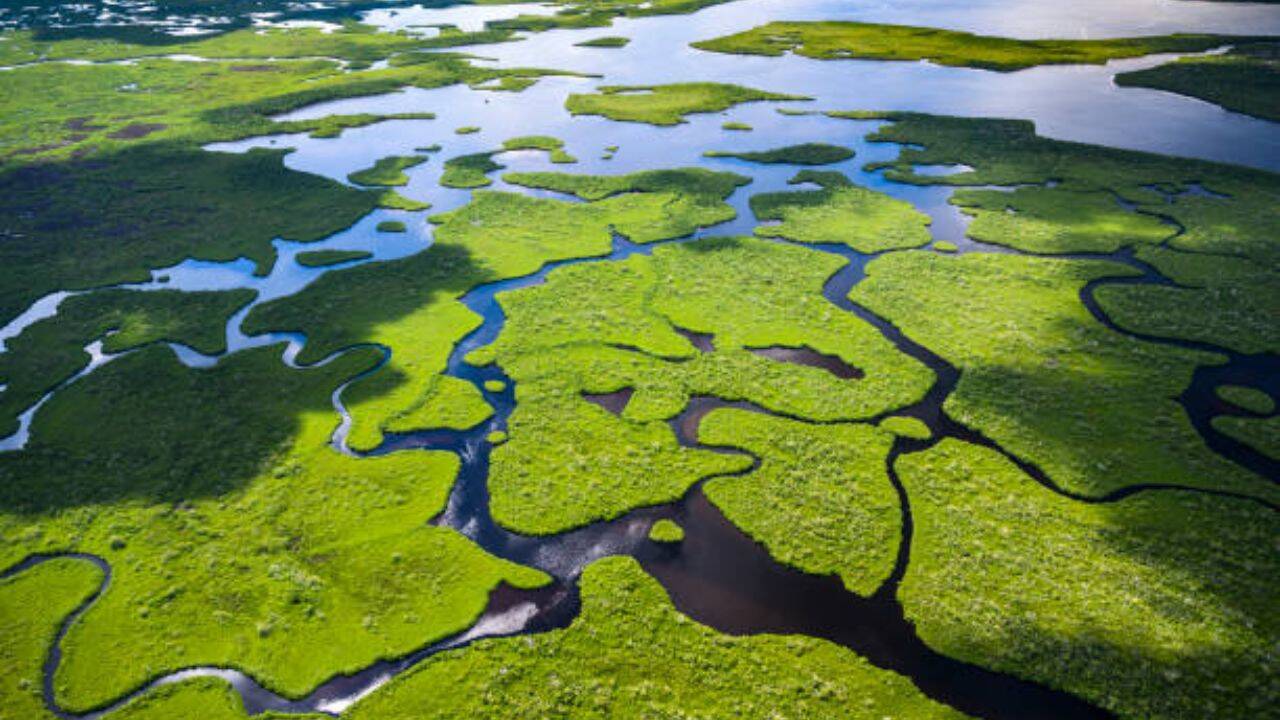
Every few months, a breathless headline hits the wire claiming that three American coasts are bleeding out, losing eighty-four percent of their wetlands to rising sea levels. It is clean. It is terrifying. It fits nicely into a twenty-four-hour news cycle designed to keep your thumb scrolling through digital panic.
It is also largely wrong.
I have spent decades watching planners, bureaucrats, and armchair environmentalists point their fingers at the ocean, wringing their hands over thermal expansion and melting ice sheets while the actual executioners of our coastal ecosystems operate entirely unnoticed right under their noses. We are staring at the tide gauge while our feet are sinking into concrete.
The lazy consensus is that water goes up, marsh goes down. Physics does not work that simple.
The Sediment Starvation Conundrum
To understand why the sea-level panic misses the mark, you have to look at what actually builds a marsh. Wetlands do not survive by sitting there and hoping the water stays away. They survive through vertical accretion. They are biological accumulation machines, trapping suspended sediment brought down by rivers and pushed in by tides, building their own elevation year after year to match the creeping water.
When a marsh drowns, the immediate culprit is rarely the ocean invading. It is the river starving.
We locked our major river systems in concrete straitjackets. We built upstream dams that trap the vast majority of the sediment load before it ever sniffs the estuary. We engineered levees that funnel floodwaters straight past the floodplains and shoot them miles out into the deep continental shelf, dropping millions of tons of dirt where it does zero ecological good.
If you cut off a wetland's food supply—mud—it starves. A starved marsh cannot keep pace with even baseline subsidence, let alone acceleration in sea levels. Blaming the ocean for a wetland starving to death because you trapped its dirt behind a concrete wall fifty miles inland is like starving someone to death and blaming their funeral on their lack of appetite.
The Subsidence Sucker Punch
Let us talk about the dirty secret nobody in the climate movement wants to shout from the rooftops: the coast isn't just sinking because the sea is rising. The ground is dropping out from under us.
Take the Gulf Coast and parts of the Atlantic seaboard. We are dealing with glacial isostatic adjustment—the earth's crust still rebounding from the melting of ice sheets that vanished ten thousand years ago, tilting the continent like a seesaw. Add massive groundwater extraction, oil and gas fluid withdrawal, and the immense weight of urban sprawl pressing down on unconsolidated deltaic mud.
When you pump billions of gallons of water out of the underlying aquifers, the clay layers compress. The ground drops by inches, sometimes feet, in a single decade.
Against that kind of local tectonic and anthropogenic sinking, global sea level rise is a secondary actor. A marsh losing a half-inch of elevation every year due to fluid extraction and zero sediment input will drown whether global oceans rise by three millimeters or stay dead flat. Yet the narrative remains stubbornly monomaniacal. Every loss of green to blue is instantly filed under the climate change ledger, absolving local policymakers, zoning boards, and civil engineers of their terrible management choices.
The Levee Trap
Here is where the conventional approach becomes actively destructive. How do we respond to coastal erosion? We build more walls. We drop riprap, pour concrete seawalls, and engineer massive storm surge barriers.
This is ecological malpractice.
Marshes need room to migrate inland as water levels fluctuate. That is how they have survived millennia of shifting shorelines. When sea levels rose in the past, a healthy wetland simply crept further up the gentle slope of the coastal plain, colonizing low-lying forests and fields.
Today, what sits behind our coastal wetlands? Multi-million-dollar housing developments, interstate highways, industrial parks, and hardened bulkheads.
When the rising tide hits a vertical concrete sea wall, wave energy doubles through reflection. The scour at the base of the wall eats away whatever sediment remains, turning a gradual transition zone into a vertical drop-off. The marsh is trapped between an advancing ocean it cannot fight and a concrete wall it cannot climb.
We are killing the patient with the treatment. Every dollar spent on hardening a static shoreline is a dollar spent accelerating the destruction of the natural buffer that protected us in the first place.
Rethinking the Playbook
If we want to stop treating symptoms while ignoring the disease, we have to flip the script entirely.
First, stop measuring coastal health solely by water depth. Start measuring suspended sediment capture rates and upstream trapping efficiency. If you want to save coastal marshes, you do not need more beach nourishment sand pumped from offshore borrow sites at millions of dollars per mile. You need to blow up or notch upstream dams strategically, let rivers do what they evolved to do, and allow controlled floods to spill sediment back onto the historical delta plains.
Second, embrace managed retreat as an economic imperative, not a defeatist surrender. We cannot armor our way out of geography. Continuing to subsidize flood insurance for luxury beachfront properties while desperately trying to sandbag sinking wetlands is fiscal and ecological insanity.
Third, rewrite zoning laws to mandate rolling easements. Give wetlands the legal right of way to move inland. If private property blocks the migration path of a marsh, the marsh wins, or the coast loses everything.
The eighty-four percent statistic makes for great activism, but poor diagnosis leads to useless prescriptions. Stop fighting the tide. Start feeding the dirt.