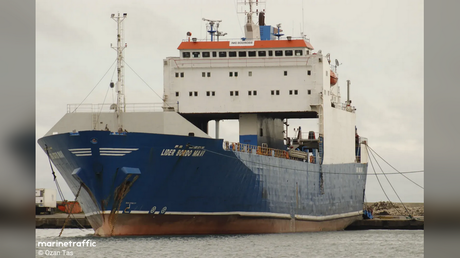
The diplomatic summons issued by Ankara to Kyiv’s ambassador following kinetic strikes on Turkish-operated commercial carriers marks a critical friction point in the geopolitics of the Black Sea corridor. When the container ship Lider Bordo Mavi was struck by drones off the Russian port of Tuapse, followed immediately by a secondary strike on the rescue vessel Lider Kocatepe dispatching tow operations, the operational calculus shifted from localized attrition to systemic maritime hazard. This escalation exposes the structural fragility of neutral commercial navigation under asymmetric drone warfare.
The Three Pillars of Maritime Risk in the Basin
Navigational safety across the Black Sea basin currently relies on fragile assumptions that fail to account for modern autonomous weapon vectors. Understanding why commercial assets like Turkish-managed cargo haulers are repeatedly caught in the crossfire requires deconstructing the operational theatre into three core risk vectors.
- Asymmetric Targeting Tolerances: Long-range maritime drones and loitering munitions operated by belligerents possess variable terminal guidance limitations. In high-clutter coastal environments, distinguishing between logistics chains supplying adversarial state war-efforts and neutral commercial transit carrying raw agricultural goods or non-sanctioned commodities introduces unacceptable margin-of-error rates.
- The Secondary Rescue Vulnerability: The targeting of the recovery vessel Lider Kocatepe demonstrates an escalatory logic where salvage operations are treated as tactical extensions of maritime logistics. When emergency response vectors are militarized or suppressed through kinetic interdiction, maritime insurance markets instantly reprice risk premiums, threatening immediate trade strangulation.
- Geopolitical Balancing Constraints: Ankara maintains a doctrine of active neutrality, enforcing the Montreux Convention to restrict foreign warship access while keeping trade channels open to both Moscow and Kyiv. This posture creates a strategic vulnerability: Turkish commercial operators fill the vacuum left by Western shipping lines, absorbing disproportionate exposure to kinetic spillover.
The Economic Cost Function of Unregulated Interdiction
The fundamental tension driving Turkish Foreign Minister Hakan Fidan’s persistent calls for a bilateral maritime moratorium is rooted in the economics of littoral transit. When sovereign states or proxy forces treat regional transit lanes as contested operational zones, the cost function expands beyond hull and machinery losses into systemic macroeconomic drag.
Marine underwriters evaluate risk through high-frequency loss expectations. Every drone impact on a civilian carrier in the eastern or northern Black Sea alters the probability distribution function of maritime disaster. Underwriters respond by adjusting War Risk Surcharges upward, which compresses profit margins for regional exporters and forces vessel operators to bypass profitable routes.
Turkey’s diplomatic intervention is an effort to re-establish deterrence against collateral damage before insurance markets price Turkish tonnage out of the basin entirely. The mechanism of the diplomatic summons serves as a formal signaling device, moving private warnings into the public domain to force a tactical recalibration by Ukrainian military planners.
Strategic Realities of the Bilateral Impasse
Kyiv’s strategic objective in the Black Sea relies heavily on degrading Russian logistics networks, naval staging areas, and export terminals through asymmetric drone campaigns. As Russian maritime traffic adapts by utilizing flags of convenience or mixed-manifest civilian hulls, the identification problem for Ukrainian operators compounds.
When a vessel such as the Lider Bordo Mavi transits from Samsun toward Tuapse, it traverses a zone where automated targeting systems register commercial utility to the adversary state. The operational failure lies in the absence of a verified, real-time deconfliction channel for neutral commercial shipping. Without transparent transponder mandates, pre-cleared humanitarian and commercial corridors, or third-party verification mechanisms, kinetic strikes will continue to hit non-combatant infrastructure.
Operational Execution for Basin Stability
To insulate commercial supply lines from total paralysis, regional stakeholders must abandon vague appeals for restraint and implement rigid operational parameters.
- Mandatory Continuous AIS Broadcasting: All commercial vessels operating north of the parallel passing through Istanbul must maintain unencrypted, unalterable Automatic Identification System tracking visible to all littoral command centers, removing ambiguity regarding vessel classification.
- Bilateral Corridor Verification: Establish a neutral verification clearinghouse hosted under an independent maritime framework to pre-screen manifest data for foodstuffs and non-military bulk goods, granting them certified safe-passage tokens recognizable by optical and thermal drone guidance systems.
- Enforced Salvage Immunity: Codify absolute operational immunity for recognized towing and emergency rescue assets, ensuring that humanitarian recovery actions are explicitly segregated from combat engagement rules.
Enforce an immediate, verified dual-party moratorium on all kinetic actions within designated commercial shipping boxes, backed by joint naval escort protocols or automated aerial surveillance guarantees funded by littoral commercial stakeholders.