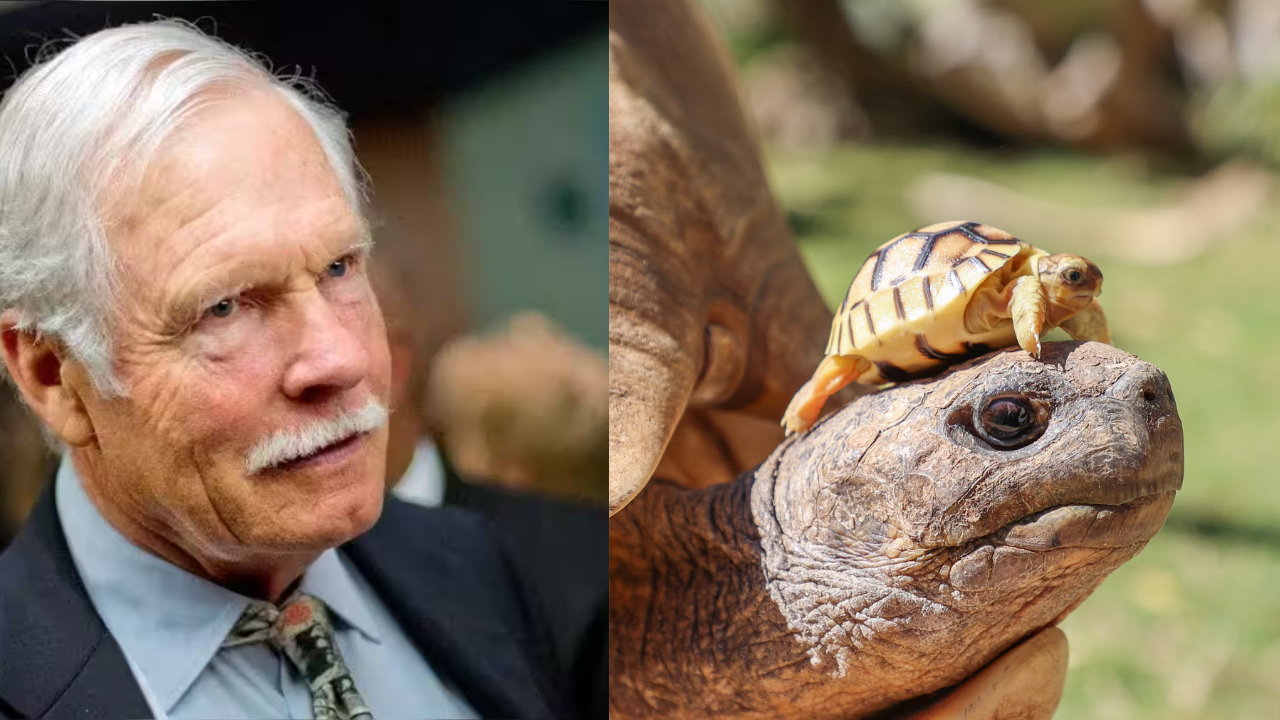
Media outlets love a neat, digestible fable. They want you to believe that if a billionaire buys enough acreage, fills it with charismatic megafauna or obscure reptiles, and slaps a conservation easement on the deed, ecological salvation has been achieved. The lazy consensus surrounding Ted Turner’s vast landholdings and his work with rare tortoises treats private land philanthropy as an unmitigated triumph.
It is not. It is often a masterclass in tax-advantaged vanity masking systemic ecological stagnation.
I have spent decades watching how capital moves through environmental sectors. I have seen corporations and ultra-high-net-worth individuals blow millions on high-profile flagship species management while ignoring the systemic rot beneath their boots. When you worship the billionaire savior model, you miss the quiet, unglamorous mechanics of actual habitat resilience.
The Myth of the Private Ark
The core premise of the Turner ranch narrative relies on a comforting fallacy: that private fiefdoms insulated from the public are better stewards than functioning, messy public ecosystems or cooperative regional management frameworks.
Let us look at the mechanics. When a billionaire acquires hundreds of thousands of acres, they create an isolated island. Tortoises, bison, or pronghorn do not care about property lines, but biological genetics do. An enclosed or heavily managed private ranch restricts movement, interrupts natural dispersal corridors, and creates artificial population bottlenecks.
Conservationists love to talk about head-starting programs and protected acreage numbers because they fit nicely into a quarterly PR brief. They rarely talk about genetic stagnation. When a population of rare tortoises is pinned inside a curated billionaire’s playground, you are not establishing a wild, self-sustaining demographic. You are running an open-air zoo with high-end tax write-offs.
The financial engineering behind these conservation easements deserves a harsher spotlight. A conservation easement allows wealthy landowners to restrict development on their property and claim massive charitable deductions based on the supposed loss of property value. While the land is technically protected from strip malls, the owner retains exclusive control, privacy, and hunting or viewing rights. We are subsidizing the private playground of the ultra-wealthy under the guise of ecological altruism.
The Danger of Charismatic Megafauna Bias
Why do we celebrate tortoise and bison preservation on private ranches while ignoring the collapse of subterranean micro-ecosystems? Because tortoises have faces.
Media coverage fixates on the individual animal—the lone reptile making its slow march across private dirt roads. It creates an emotional hook. But ecology is not built on emotional hooks; it is built on redundancy, soil chemistry, hydrological function, and landscape-scale connectivity.
When capital concentrates on a single high-profile species championed by a famous name, resources are diverted away from unsexy, foundational conservation work. Funding goes toward fencing, security, and media relations for the flagship animal. Meanwhile, the watershed that feeds the region dries up because upstream agricultural lobbying remains unchallenged.
Imagine a scenario where every dollar spent on private media-friendly rescue campaigns was instead pooled into regional water rights acquisition and public land connectivity corridors. The tortoise would not need a billionaire's permission slip to survive. It would have a functional, contiguous habitat.
The Accountability Vacuum
Public lands are imperfect. They suffer from political interference, grazing lease abuses, and underfunding. But they possess one redeeming quality that a billionaire's private ranch lacks: public accountability.
When a government agency mismanages a habitat, journalists, NGOs, and citizens can sue, protest, or demand congressional oversight through the Freedom of Information Act. When a private rancher mismanages an endangered species behind a twelve-foot game fence, nobody knows. There are no public records requests for private ledger sheets. We simply take the press releases at face value.
We have traded democratic oversight for benevolent feudalism. We are expected to clap because a rich man decided to use a fraction of his fortune to keep a few reptiles alive on his personal estate, as if we should be grateful for the crumbs of aristocratic stewardship.
Real conservation is messy, public, and democratic. It requires fighting for policy changes, reforming water laws, and restoring connectivity across fragmented public-private boundaries. It does not look like a glossy magazine profile of a media mogul tending to his private menagerie.
Stop romanticizing the billionaire land grab. Strip away the PR veneer, and you find a system that protects capital gains just as fiercely as it protects carapaces.
Tear down the fences. Open the corridors. Stop waiting for a savior with a checkbook.


