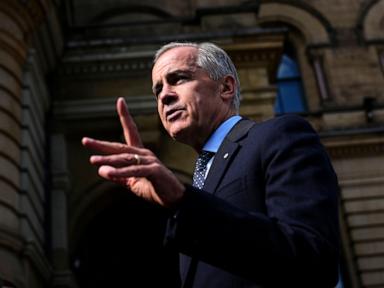
Bilateral trade negotiations operate under strict constraints of supply chain integration and political signaling. When formal talks between Ottawa and Washington collapsed following the introduction of punitive US import duties, Prime Minister Mark Carney’s immediate deployment of retaliatory tariffs shifted the diplomatic conflict into an institutional war of attrition. To understand this escalation, one must move past public rhetoric and examine the structural mechanics, economic vulnerabilities, and cost functions governing both sovereign states.
The Cost Function of Tariff Escalation
Tariffs act as an inefficient tax on domestic consumers and intermediate manufacturers, yet they are deployed as tactical instruments of coercion. The recent cycle features a 50 percent American levy on approximately $20 billion to $28 billion of Canadian goods, met by Canada's pledge to match duties dollar-for-dollar across nearly 900 American product categories.
The immediate economic impact is dictated by the elasticity of substitution. When Washington taxes Canadian steel, aluminum, and automotive components, downstream American manufacturing plants face an immediate cost spike. Because North American automotive supply chains cross borders multiple times prior to final assembly, input substitution is structurally constrained in the short term. Factories cannot instantly retool or source equivalent inputs domestically without suffering steep margin compression or production delays.
Conversely, Canada’s counter-tariffs target specific American consumer goods, appliances, and agricultural products where alternative domestic or international supply streams exist. By focusing on fungible goods, Canadian trade strategists attempt to minimize domestic inflationary pressures while maximizing localized political pain for targeted US constituencies, such as agricultural exporters and regional manufacturing hubs.
The Non-Economic Variables and Sovereignty Demands
The breakdown of talks was precipitated not merely by numerical disputes over trade deficits, but by non-economic structural demands. Reports from the negotiating table indicate that Washington sought terms designed to restrict Canada's sovereign right to establish independent trade agreements with third parties, alongside modifications to domestic cultural subsidies and bilingual product labeling requirements.
From a game-theoretic perspective, these demands altered the nature of the negotiation from a standard positive-sum tariff reduction exercise into a zero-sum game concerning national autonomy. Under Prime Minister Carney, Ottawa's utility function placed an infinite cost on accepting a subordinate economic status. The political calculus required an aggressive, highly visible counter-offensive to deter future coercion, even if economic modeling suggests a minor dampening effect on gross domestic product growth for both nations.
Supply Chain Interdependence as a Double-Edged Sword
The structural depth of the US-Canada economic corridor creates unique vulnerabilities. Key sectors illustrate this systemic linkage:
- Automotive Manufacturing: Integrated assembly lines depend on frictionless component transit. A 25 percent baseline tariff, with threats of escalation to 50 percent, disrupts inventory management systems and forces dealerships to absorb or pass along unprecedented cost increases.
- Energy and Raw Materials: Canada supplies critical inputs, including refined petroleum, natural gas, and softwood lumber. While tariffs on lumber immediately exacerbate housing affordability crises in the United States by driving up construction material costs, restrictions or export taxes on energy impose severe supply shocks on northern US states.
- Consumer Goods: Cross-border flows of paper products, dairy, and seasonal produce face immediate price adjustments, testing the limits of consumer price tolerance ahead of upcoming electoral cycles.
Strategic Horizon and Structural Off-Ramps
Resolution requires a renegotiation framework that decouples bilateral trade metrics from extraneous sovereignty demands. Because executive posturing and social media diplomacy have raised the reputational costs of backing down for both administrations, a face-saving diplomatic off-ramp is necessary. Historically, third-party mediation or the utilization of trusted diplomatic channels has served to depoliticize technical trade disputes.
Until structural concessions are tabled regarding independent foreign trade policy and industrial subsidies, supply chain friction will persist. Stakeholders must model operations around persistent border friction, rising input costs, and accelerated supply chain diversification toward non-North American markets.