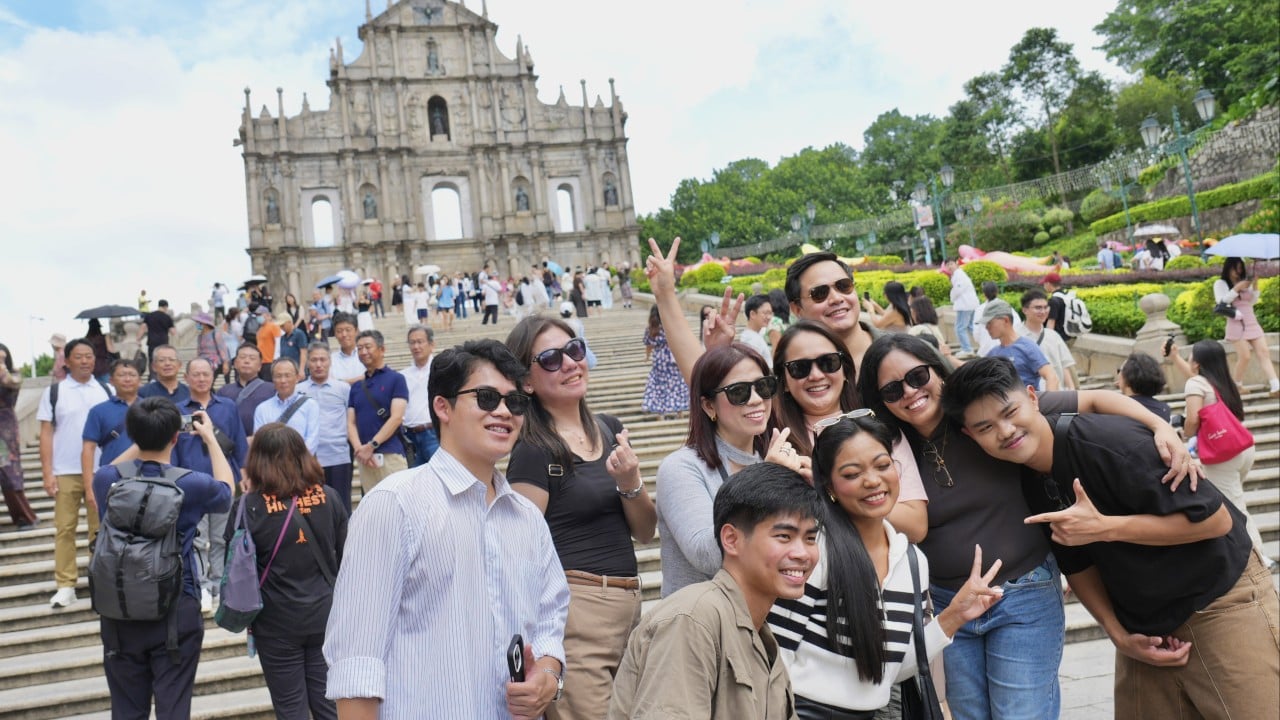
For decades, the standard narrative pushed by tourism boards across the Pearl River Delta has been a tidy exercise in diplomatic consensus. Hong Kong provides the financial muscle, global aviation connectivity, and high-street luxury. Macau offers the neon-lit gaming tables, Portuguese heritage, and rapid-fire hospitality. They are presented as a natural pairing, an effortless twin-city itinerary for the international traveler.
The official line is that they do not compete.
That comforting illusion is falling apart under the pressure of shifting consumer habits, economic mandates from Beijing, and a post-pandemic reality where tourist dollars are increasingly scarce. While industry heads smile for promotional photos and talk of regional unity, a quiet war for visitor spending is playing out across the waters of the estuary. The opening of the Hong Kong-Zhuhai-Macau Bridge shattered the geographic insulation that used to protect both territories. Today, they are hunting the exact same demographic, and the old dividing lines no longer apply.
The Myth of Mutual Complementarity
Look closely at the numbers from 2025 and early 2026. Macau smashed through its historical ceiling, drawing over 40 million visitors in a single year. Its massive integrated resorts are no longer just places to drop money on baccarat. They have transformed into entertainment arenas hosting international concert tours, massive lifestyle festivals, and major sporting events.
Hong Kong, meanwhile, clawed its way back to roughly 50 million arrivals, still noticeably below its historical peaks. The city finds itself in an uncomfortable position. It is no longer the undisputed retail capital of Asia. Visitors from mainland China, who once arrived with empty suitcases waiting to be filled with designer goods, are now arriving looking for experiences, street food, and social media backdrops.
This structural shift directly challenges the idea that the two cities fill different niches. When Macau builds world-class arenas to host regional pop icons and international artists, it is directly stealing entertainment revenue that historically belonged to Hong Kong. When Hong Kong attempts to revitalize its nightlife and street-level culture, it is fighting to keep travelers from boarding the one-hour ferry or bus across the delta.
The competition is raw, immediate, and financial.
The Diversification Trap
Macau is currently operating under a strict mandate known as the 1+4 strategy. The goal is simple on paper but incredibly difficult in execution. Reduce the city's existential dependence on casino gaming by building up four non-gaming sectors, specifically health and wellness, modern finance, technology, and convention and exhibition business.
To make this work, Macau needs space. It lacks land, a domestic workforce, and the physical capacity to scale up these industries within its own narrow borders. The solution has been Hengqin, a neighboring island under mainland jurisdiction that is now deeply integrated with Macau's economic framework.
This expansion creates a direct overlap with Hong Kong’s traditional strengths. Consider the lucrative Meetings, Incentives, Conventions, and Exhibitions market. Hong Kong has historically dominated this space due to its legal system, language capabilities, and massive exhibition centers. Now, Macau and Hengqin are pitching a joint model that offers cheaper space, brand-new facilities, and the allure of integrated casino resorts right next door.
It is a direct play for Hong Kong's bread and butter.
The Zero Sum Reality of the Regional Transport Network
Infrastructure was supposed to bind these cities together. Instead, it has made it incredibly easy for travelers to bypass one destination in favor of the other.
The Hong Kong International Airport remains the primary gateway for long-haul international visitors entering the region. For years, this meant travelers spent at least two nights in Hong Kong before moving on. Now, a passenger landing in Hong Kong can step off the plane, clear customs, and board a direct bus across the bridge to Macau without ever truly stepping foot into the city of Hong Kong itself.
The transit network has turned Hong Kong into a glorified lobby for Macau’s resorts.
This reality has forced a quiet panic among Hong Kong operators. They are realizing that connectivity is a two-way street that currently favors the city with cheaper hotel rooms and newer attractions. A traveler looking at room rates in Central or Tsim Sha Tsui often decides that staying in Macau and taking a day trip to Hong Kong is the more economical choice.
The Cultural Battle Ground
As retail margins shrink, both cities are desperately trying to monetize local culture. This has led to an odd situation where both are launching almost identical heritage initiatives.
Macau is leaning into its unique blend of Portuguese and Chinese traditions, highlighting its UNESCO creative city status for gastronomy and funding massive restorations of historic shipyards and firecracker factories. Hong Kong is countering with neighborhood tourism campaigns, emphasizing its independent arts scene, local heritage trails, and junk boat history.
The problem is that the average international tourist has a finite amount of time and attention. They are unlikely to visit two separate museums dedicated to South China's maritime past or eat two slightly different versions of regional pastry within a three-day window. The city that tells its story loudest wins the weekend.
The Changing Face of the Mainland Traveler
The ultimate arbiter of this unspoken conflict is the changing preference of the mainland Chinese consumer. The era of reckless luxury spending is gone. The new generation of travelers values authenticity, cost-effectiveness, and what social media users call the emotional value of a destination.
Macau understood this shift early. The city aggressively pivoted toward lifestyle festivals, K-pop concerts, and family-friendly attractions. They recognized that the modern traveler wants an all-inclusive, frictionless weekend where accommodation, dining, and entertainment exist under one roof.
Hong Kong has struggled to adapt to this new mindset. The city's famous street culture is highly fragmented. Navigating its crowded sidewalks, high hotel prices, and distinct service culture requires effort. For an older generation of travelers, that effort was worth it for the duty-free shopping. For a twenty-something traveler from Shanghai looking for an easy weekend escape, Macau’s massive, air-conditioned complexes present a much lower barrier to entry.
The cooperation touted by regional leaders is real only at the highest bureaucratic levels. On the ground, hotel operators, event organizers, and retail associations are locked in a relentless fight for market share. Assuming that travelers will naturally split their time equally between both sides of the delta is a strategy based on nostalgia, not modern economic realities. The regional tourism market is no longer expanding fast enough to sustain two giants without one eating into the other's plate.
Victory will go to the city that stops pretending it has no rivals.