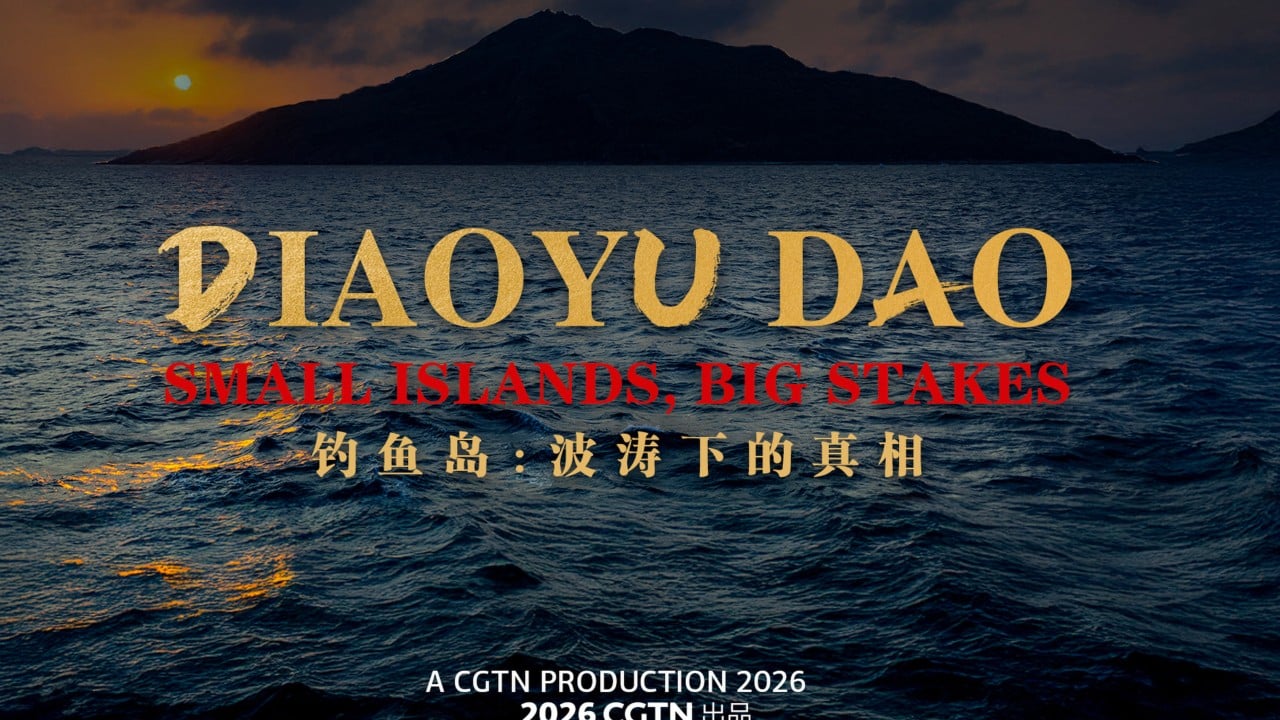
Every time Beijing drops a new documentary on the Diaoyu Islands, or Tokyo fires back through a diplomatic channel, international media outlets scramble to write the exact same script. They frame it as an escalation, a ticking time bomb, a prelude to a kinetic showdown in the East China Sea. This is lazy, surface-level analysis. It mistakes theater for strategy and noise for intent.
I have spent years watching defense analysts and geopolitical pundits obsess over maritime maps, historical parchment from the Ming Dynasty, and San Francisco Peace Treaty clauses. They treat sovereignty like a football match where possession of a rock dictates the winner.
They are missing the entire plot.
The islands themselves are legally and economically irrelevant. No one is fighting over barren volcanic outcroppings because of the gull guano or the recreational fishing potential. What we are witnessing is not a territorial dispute in the traditional Westphalian sense. It is a masterclass in domestic pressure release valves and baseline maritime boundary engineering.
The Sovereignty Myth That Keeps Pundits Employed
Let us dismantle the core premise right now. The mainstream narrative tells you that China and Japan are locked in an existential struggle over ownership. This implies that if one side suddenly backed down, the other would plant a flag, exploit the resources, and call it a day.
Nonsense.
If Beijing were handed undisputed administrative control of the Diaoyu Islands tomorrow, their strategic headache would multiply by a factor of ten. Why? Because control forces responsibility, and responsibility exposes vulnerability. Right now, the dispute serves a dual-purpose utility that neither capital actually wants to resolve.
For Beijing, maintaining a persistent maritime presence around the islands normalizes coast guard patrols near the First Island Chain. It establishes a factual baseline of operations without crossing the threshold of armed conflict. Every documentary, every official protest note, and every media campaign is calibrated to shift the status quo incrementally. It is death by a thousand paper cuts, applied to international cartography.
For Tokyo, the dispute provides an invaluable justification for regional security realignment. For decades, Article 9 of Japan’s postwar constitution constrained its military ambitions. By framing the Diaoyu Islands as an acute external threat, Tokyo has steadily normalized expanded defense budgets, closer integration with United States regional strike groups, and a more active maritime defense posture.
Both sides are using a cluster of uninhabited rocks to achieve domestic political consolidation and strategic positioning. The argument over who discovered the islands first is a historical sideshow designed for public consumption.
The Legal Fiction of Exclusive Economic Zones
If you listen to cable news, the fight is about undersea oil reserves and rich fishing grounds. Let us look at the actual data.
While seismic surveys conducted decades ago suggested potential hydrocarbon deposits in the East China Sea, commercial extraction in contested deep-water maritime boundaries is an economic disaster. Extracting resources under a cloud of ongoing sovereignty disputes and naval harassment makes zero financial sense. Energy conglomerates do not touch projects with high political risk profiles and contested jurisdictional lines.
The fishing rights argument fares no better. Modern commercial fishing fleets do not need to risk international incidents over local coastal waters when industrial trawlers operate on a global scale.
The real prize is not what sits under the water around the Diaoyu Islands. It is what the water allows you to control in terms of maritime jurisdiction.
Under the United Nations Convention on the Law of the Sea, maritime features generate Exclusive Economic Zones and continental shelf claims. By pushing patrols right up to Japan's administered perimeter, China is challenging the median line doctrine. Tokyo draws an equidistant boundary between its mainland and China's coast. Beijing argues that the continental shelf dictates the natural boundary.
This is where the real battle happens. It is a silent, bureaucratic war fought through maritime law, radar signatures, and sonar arrays. The documentaries and press conferences are just the smoke. The sonar mapping is the fire.
The Danger of Escalation Dominance
Let us address the people who believe this will inevitably trigger a hot war.
Imagine a scenario where a routine coast guard standoff results in a hull collision, a disabled vessel, and casualties. Pundits love to game this out into World War Three. They assume automatic escalation because treaties demand it and national pride requires it.
This ignores how great powers manage friction in the modern era.
Both China and Japan understand the concept of escalation dominance. They know precisely where the red lines are, and they go to great lengths to stay three steps back from them. Coast guard vessels carry heavy hulls and water cannons, not anti-ship cruise missiles, for a reason. They are designed for shoving matches, not sinking matches.
The risk is not a calculated blitzkrieg. The risk is operational fatigue. When you keep dozens of heavily armed paramilitary vessels operating in a confined maritime space day after day, the probability of a human error accident skyrockets. A tired junior officer misinterprets a radar blip, a warning shot is fired, and institutional momentum takes over.
That is how unintended conflicts start. Not from grand master plans, but from operational exhaustion and poor communication links during a crisis.
What the Media Refuses to Tell You About the East China Sea
If you want to understand how this dynamic will actually evolve over the next decade, stop reading headlines about historical grievances. Look at ship construction rates and maritime law enforcement budgets.
China's coast guard has integrated former naval warships into its fleet, creating the largest maritime law enforcement force on earth. Japan has responded by upgrading its own patrol capabilities and reinforcing its Nansei Island chain with anti-ship and anti-air missile batteries.
They are militarizing the neighborhood while pretending to argue over history.
Tokyo cannot back down because doing so signals weakness to regional neighbors and shatters the domestic consensus on security normalization. Beijing cannot back down because doing so validates the containment architecture that the United States and its allies are building across the Pacific.
The conflict is structurally locked in place. It is a permanent state of managed tension.
The next time you see a breathless news report about a documentary release or a diplomatic protest over the Diaoyu Islands, remember what is really happening. It is routine maintenance on a geopolitical machine that neither side wants to dismantle.
Stop looking at the rocks. Watch the ships.