The administrative state does not often pick fights with the pulpit, but when it does, the machinery deployed is usually financial. In a high-stakes escalation that merges public health policy with the architecture of school choice, the Florida Attorney General's office has placed the Roman Catholic Church squarely in its crosshairs.
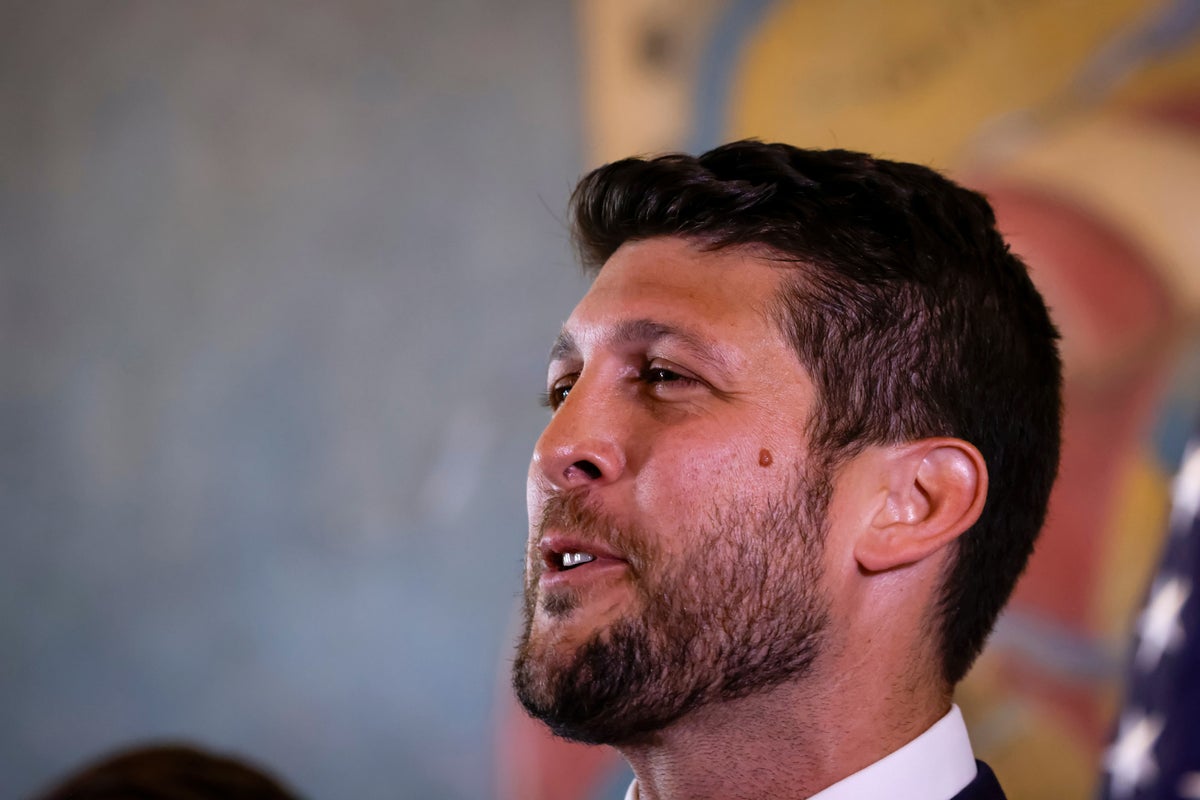
At issue is a July 2026 letter sent to the Florida Conference of Catholic Bishops by State Attorney General James Uthmeier. The directive is simple in its menace: accept religious vaccine exemptions for students, or watch the state systematically dismantle your access to billions in taxpayer-funded scholarship money. This is not a casual policy disagreement. It is a calculated coercion test, pitting executive power against private institutional autonomy.
To understand why this friction matters, one must look beyond the immediate political theater. Over the past several years, Florida has aggressively expanded its private school voucher system. Today, more than half a million students rely on state-backed educational scholarships, with roughly a quarter of the state budget flowing into these programs. When the state subsidizes private education on this scale, the traditional wall separating state oversight from private religious administration begins to fracture. The state's position is transactional: if you take our public dollars, you play by our administrative rules on public health.
The immediate trigger for the Attorney General's intervention centers on institutional policies within specific dioceses, such as the Diocese of Pensacola-Tallahassee, which reportedly sought to limit or deny exemptions requested solely on the grounds of historical vaccine manufacturing ties to fetal cell lines. Church teaching on this matter has long navigated a complex theological corridor. While official Vatican guidance states that receiving vaccines developed from historical cell lines is morally permissible when no alternatives exist, Catholic doctrine also fiercely protects individual conscience and parental authority.
State officials weaponized this very theology. In his correspondence, the Attorney General cited the Catechism, papal statements, and scripture to argue that Catholic doctrine does not actually command schools to reject parental objections. In a remarkable display of legalistic exegesis, a secular state official took it upon himself to lecture the hierarchy of the Catholic Church on how to properly interpret their own moral theology.
The strategy is transparent. For years, executive leadership in Florida has pushed to eliminate school immunization mandates entirely, frequently running into legislative roadblocks. When broad legislative overhauls failed to clear the statehouse, the administration pivoted. If they could not wipe out mandates through standard lawmaking, they could use the immense leverage of voucher eligibility to force compliance from the ground up. Private religious schools, historically prized by conservative families for their independence from state educational orthodoxy, now find themselves economically dependent on the very government seeking to alter their admission standards.
This dynamic exposes the underlying fragility of the universal voucher model. When public funds constitute the lifeblood of private and parochial institutions, true independence becomes an illusion. The state holds the purse strings, and strings always come with tension.
Consider the operational reality for a mid-sized parochial school network operating on razor-thin margins. Stripping access to state scholarship funds would not merely inconvenience these institutions; it would shutter them. Thousands of families would be thrown back into a public school system that state leadership frequently decries. Knowing this, the administration calculated that the bishops would fold rather than absorb an existential financial blow.
Yet the resistance from the Conference of Catholic Bishops highlights a deeper institutional dread. Capitulating to the Attorney General's interpretation means relinquishing control over internal governance. Once a secular government dictates how a religious school must interpret conscience exemptions, the boundary protecting religious institutions from state capture is permanently breached.
Public health advocates, meanwhile, watch the maneuver with mounting alarm from a different angle. They argue that normalizing broader exemptions undermines herd immunity, setting the stage for the resurgence of preventable conditions like measles, pertussis, and polio. From their perspective, the administration's crusade—whether pursued through legislative rollbacks or executive pressure on private schools—sacrifices community safety on the altar of political ideology.
We are left with a strange political inversion. A movement that spent decades championing religious liberty and institutional insulation from government interference is now deploying the heavy arm of the state to compel a religious body to alter its enrollment practices. The state wants absolute freedom for parents to opt out of public health mandates, but it is willing to restrict the institutional freedom of religious organizations to achieve it.
The August deadline set by the Attorney General has passed, and responses from the bishops remain measured as lawyers comb through the administrative threats. Whether the Church chooses compromise or confrontation will set a monumental precedent for how far executive power can reach inside sacred walls.
The voucher gold rush was pitched as the ultimate liberation from government bureaucracy. Instead, it has become a golden leash.