The ink on a Colombian voter’s thumb is supposed to be a badge of pride. It is a purple stain that says, "I was here. I chose." But as the sun creeps over the jagged peaks of the Cordillera Central this May, that stain feels less like a mark of democracy and more like a target.
In the small town of Argelia, tucked into the creases of the Cauca department, the morning air usually smells of damp earth and roasting coffee. Today, it smells of cordite and adrenaline. A shopkeeper, let us call her Elena—a woman whose hands are mapped with the wrinkles of sixty years of mountain life—reaches for the corrugated metal shutter of her storefront. She hesitates. Her fingers tremble, just slightly. It is not the age. It is the silence.
The silence in rural Colombia is never empty. It is heavy. It is a physical weight that settles in the lungs when the local factions decide that the upcoming presidential election on May 31 is not a civilian affair, but a tactical battlefield.
The Geography of Fear
For those watching from glass towers in Bogotá or through the sterilized lens of international news feeds, the surge in rebel attacks is a statistic. A line graph trending upward. A "security concern."
To Elena, it is the sound of a motorcycle engine idling too long outside her door.
Colombia is currently caught in a pincer movement of history. On one side, the promise of the 2016 peace accords remains a fragile, translucent thing, like a dragonfly’s wing. On the other, a jagged reality of fragmented groups—dissidents of the FARC, the ELN, and the Gulf Clan—are vying for control of the lucrative shadows left behind in the power vacuum. They do not want your vote. They want your absence.
The strategy is as old as the mountains themselves: control the movement, control the mind. By launching a series of coordinated strikes—roadblocks in Chocó, IEDs in Norte de Santander, and targeted assassinations of local leaders—the rebels are sending a memo written in fire. The message is simple: The state cannot protect you here.
The Invisible Stakes
Why now? Why this May?
The May 31 election isn't just another change of guard. It is a referendum on the soul of the country. The candidates represent polar extremes of how to handle the "subversives." One side offers the iron fist of increased military presence; the other suggests a deeper, more complex social integration and negotiation.
When the stakes are this high, the bullet tries to veto the ballot.
Consider the "Armed Strike." This is a term that sounds like a labor dispute but functions like a prison sentence for entire regions. When a rebel group declares an paro armado, the world stops. Trucks carrying milk and fruit are burned on the highways. Schools close. The local doctor stays home. If you move, you are a collaborator. If you stay still, you are a victim.
This is the "invisible keyword" of Colombian politics: territorial control. It isn't about who sits in the Casa de Nariño in Bogotá. It’s about who owns the road that leads to Elena’s shop. If the rebels can prove that the government is powerless to stop a surge of violence in the weeks leading up to the vote, they have already won. They have delegitimized the very idea of a Republic.
The Weight of the Paper
Imagine standing in a wooden voting booth, the thin plywood rattling in the wind. In your hand is a piece of paper. It weighs almost nothing. But in a region where the ELN has just detonated a bridge ten miles away, that paper feels like lead.
To vote is an act of defiance.
Critics often argue that the military should simply "flood the zones." But you cannot fight a ghost with a tank. The rebels move through the jungle like water through fingers. They are the sons and cousins of the villagers. They are embedded in the ecology. When a surge in attacks happens, it’s often a theatrical display—a way of marking territory before the international observers arrive with their clipboards and blue vests.
The statistics are sobering. Reports indicate a 25% increase in "violent events" compared to the previous election cycle. But numbers are cold. They don't capture the feeling of a mother hiding her son under the floorboards because the local commander is looking for new "recruits" to help disrupt the polling stations.
The Disconnect of the City
In Bogotá, the restaurants are full. People argue over Malbec and craft beer about the merits of the candidates' fiscal policies. They talk about inflation. They talk about the exchange rate. The violence in the "periphery" is a news crawl at the bottom of a television screen.
This is the Great Colombian Divide. The country is split between those for whom the state is a provider of services, and those for whom the state is a distant, fickle god that only appears when it’s time to collect votes or fire bullets.
The rebels exploit this resentment. They tell the farmers that the politicians in the capital don’t know their names. And they are often right. But the rebels don't offer a name either—only a rank and a rifle.
The Arithmetic of Survival
What does a surge look like on the ground?
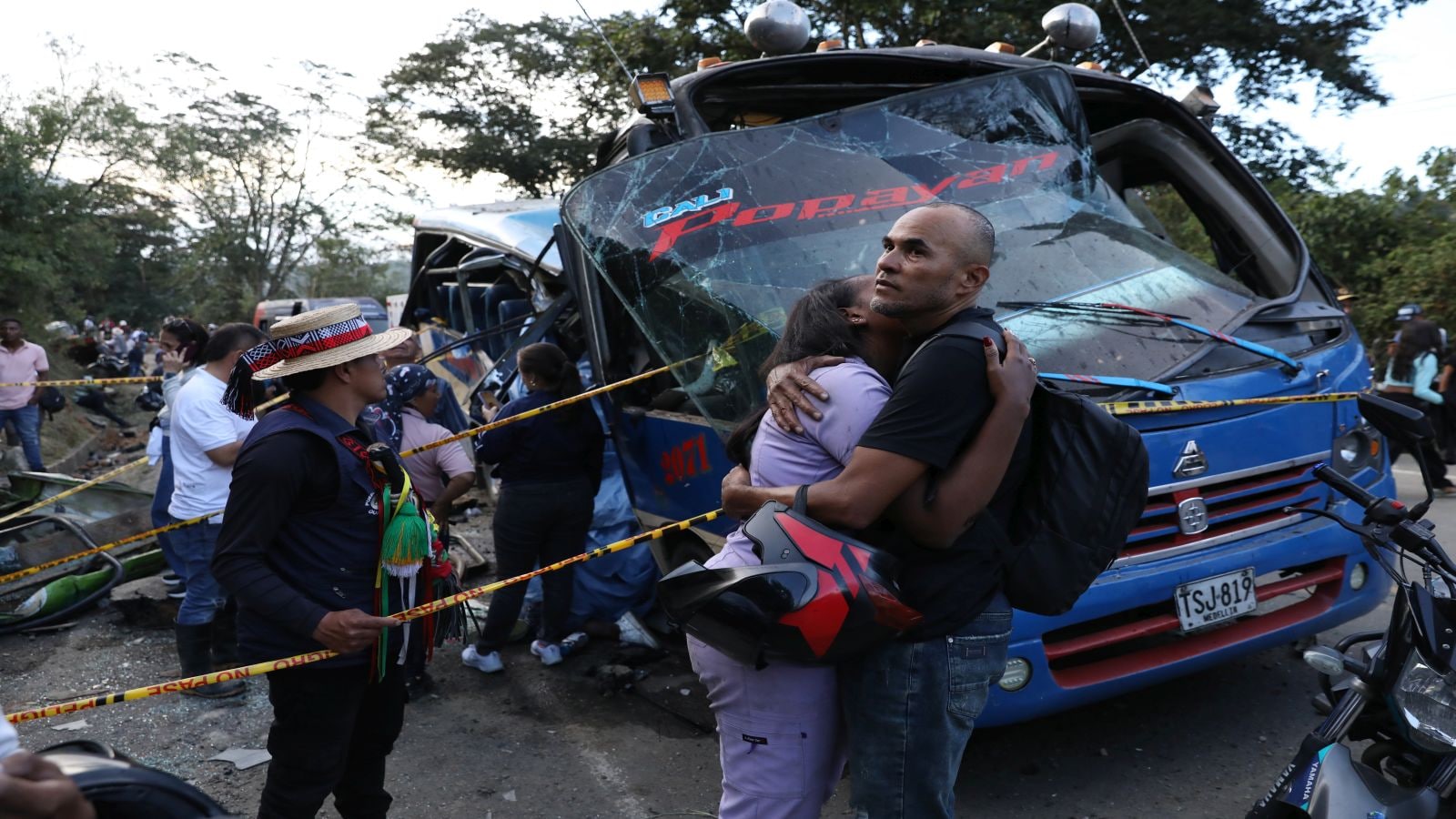
- The Roadblock: A burnt-out bus across a two-lane highway. It stops the economy, but more importantly, it stops the flow of information.
- The Pamphlet: A poorly photocopied sheet of paper slipped under doors at night. It warns that anyone seen at a polling station will be considered a military target.
- The Precision Strike: The killing of a community organizer. Not a famous person. Just someone who encouraged people to believe that things could be different.
These aren't random acts of cruelty. They are calculated subtractions. If you subtract the leaders, you divide the community. If you divide the community, you conquer the future.
We often think of security as the presence of soldiers. But true security is the absence of the need for them. In the departments of Putumayo and Arauca, the "security fears" mentioned in the headlines are actually a crisis of trust. People are caught in the middle of a three-way shadow box between the military, the paramilitaries, and the rebels.
The Choice Behind the Curtain
The complexity is exhausting. It is tempting to look at the surge in attacks and see a country sliding backward. But that is too simple. The violence is a reaction to the possibility of change. You don't fight this hard to stop something that doesn't matter.
The rebels are terrified of a successful election. They are terrified of a mandate. Whether that mandate is for a hardline military response or a social olive branch, any functioning democracy is a threat to the warlord’s ledger.
So, Elena stands at her storefront. She watches the mist roll off the mountains. She thinks about the purple ink. She thinks about the fact that her nephew joined the dissidents two years ago because there were no jobs, and now he might be the one planting the landmines on the road to the school.
Her heart is a battlefield.
The international community will send observers. The headlines will continue to count the dead. The candidates will give speeches in bulletproof vests behind walls of plexiglass. But the real story of the May 31 election is being written in the quiet, terrifying moments in the mountains. It is being written by people who have to decide if a mark on their thumb is worth the risk to their lives.
Blood is easy to spill. It runs fast and stains deep. But ink? Ink is harder. It requires a steady hand. It requires the courage to believe that a piece of paper can eventually outweigh a mountain of lead.
Elena reaches up. She grips the handle of the metal shutter. With a sudden, metallic scream that echoes through the valley, she pulls it up. She opens for business. She will wait for the 31st. She will wait for her turn to speak in a language the guns cannot translate.