Australia’s foreign affairs establishment loves a good stern lecture. Whenever Beijing rattles the saber in the South Pacific, Canberra trots out its trusted script: express "strong concerns," summon an ambassador, issue a solemn press release about regional stability, and wait for the news cycle to wash it away.
It is a comfortable routine. It is also an absolute sham.
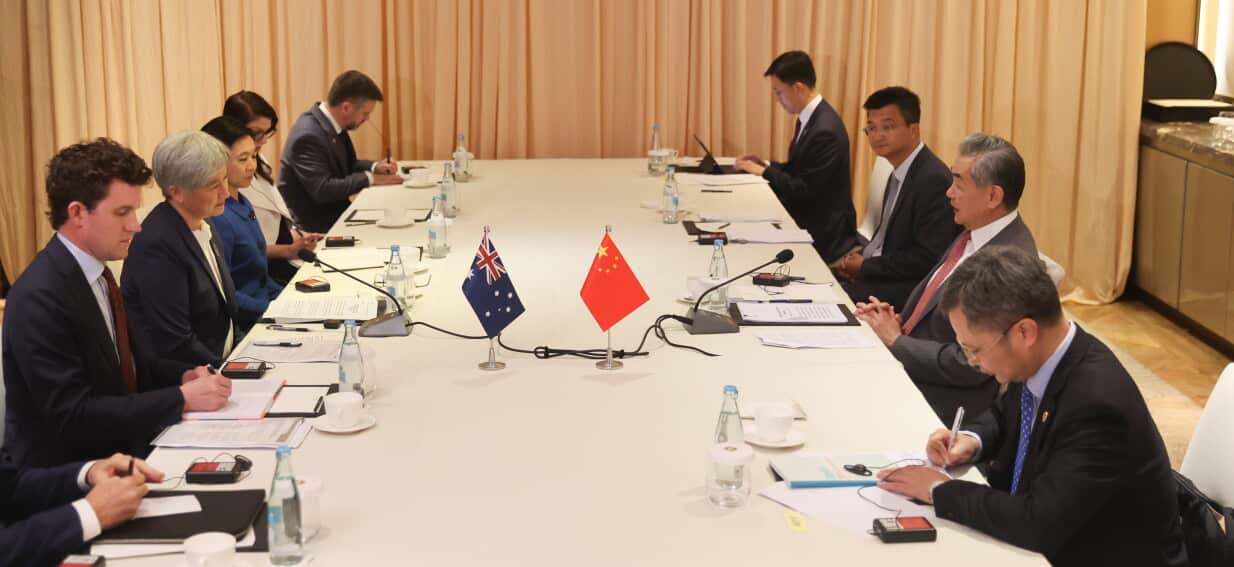
When China test-fired an intercontinental ballistic missile into the Pacific Ocean—dropping a dummy warhead into international waters for the first time in over forty years—the establishment media panicked right on cue. Pundits wrung their hands over Beijing’s audacity. Defense commentators lined up to demand formal apologies. Australian diplomats met with Chinese officials to air their grievances.
Here is the uncomfortable truth: Beijing does not care about Canberra’s concerns. In fact, Beijing relies on them. Every time a Western middle power responds to a massive display of strategic force with a diplomatic stern letter, it confirms what China’s military strategists already know. The West is substituting rhetoric for power, substituting diplomatic theater for hard deterrence, and hoping nobody notices the difference.
Stop mistaking official outrage for strategic capability. Australia’s reaction to China's ballistic test was not a sign of moral leadership—it was a confession of geopolitical impotence.
The Outrage Ritual Is Broken
The lazy consensus across Australian commentary goes something like this: China’s test was an unprecedented escalation that violated international norms, and Australia must lead a coalition of concerned Pacific nations to condemn Beijing’s recklessness.
This argument is intellectually bankrupt.
First, test-firing a weapon into international waters is not illegal. The United States does it. France does it. Russia does it. The United States Air Force routinely test-fires unarmed Minuteman III ICBMs from Vandenberg Space Force Base in California toward the Kwajalein Atoll in the Marshall Islands. When Washington launches a missile across the Pacific, Western diplomats call it a routine validation of strategic deterrence. When Beijing does it, the same diplomats call it a provocative threat to regional peace.
Hypocrisy aside, the mechanics of deterrence require testing. An ICBM force that never flies is a paper tiger. By firing a long-range missile deep into the South Pacific, the People's Liberation Army Rocket Force was accomplishing two concrete objectives:
- Validating the reliability of their second-strike nuclear arsenal under operational conditions.
- Sending an unmistakable message to every American ally in the Indo-Pacific.
That message was not hidden. It was typed in bold font: We can reach your capitals, we can reach your defense infrastructure, and your maritime buffers no longer protect you.
Responding to that message with a press release saying Australia is "deeply concerned" is like bringing a stern letter to a knife fight. It reveals a political class terrified of confronting the hardware reality of twenty-first-century war.
The Illusion of the Rules-Based Order
For two decades, Australian defense strategy has leaned on a cozy phrase: "the rules-based international order." Politicians chant it like a protective spell. They believe that as long as Canberra follows the rules, quotes international conventions, and attends regional summits, the architecture of global security will remain intact.
That order is dead. If it ever existed outside of Western policy papers, it certainly does not govern the Pacific today.
China’s grand strategy is guided by realpolitik, raw industrial output, and hard military capacity. Beijing operates on the principle that sovereignty is defined by capability, not treaties. When the PLA Rocket Force selected a target zone in international waters near Polynesia, they stayed within international law specifically to highlight the Western dilemma: Australia could complain, but it could not point to a single broken treaty.
+-----------------------------------------------------------------------+
|                       THE DIPLOMATIC FEEDBACK LOOP                     |
|                                                                       |
|   China conducts ICBM test in Pacific                                 |
|         │                                                             |
|         ▼                                                             |
|   Australia issues "Strong Concerns" statement                        |
|         │                                                             |
|         ▼                                                             |
|   Domestic media covers "Diplomatic Pushback"                         |
|         │                                                             |
|         ▼                                                             |
|   No change in force posture, missile stocks, or acquisition speed    |
|         │                                                             |
|         ▼                                                             |
|   China confirms Australia has no hard counter-capability             |
+-----------------------------------------------------------------------+
Look at the feedback loop above. This cycle has repeated itself after every major Chinese military milestone over the last decade—from the militarization of the South China Sea to live-fire exercises around Taiwan. Australia registers official protest. The domestic media praises the government for standing up to Beijing. Then, absolutely nothing changes on the water or in the air.
This feedback loop serves politicians, not national security. It gives the public the illusion that their leaders are actively managing a crisis, when in reality, those leaders are managing public relations.
Australia’s Defense Timelines Are a Tragic Joke
If Canberra were genuinely shocked by China’s missile test, it would fundamentally alter its defense procurement schedule tomorrow. It hasn't.
Instead, Australia remains locked into procurement timelines that belong in the mid-twentieth century. Consider the contrast between Beijing's acceleration and Canberra’s bureaucratic drift:
- Naval Fleet Modernization: Australia’s planned surface fleet expansion and nuclear-powered submarine acquisition through AUKUS will not yield operational, battle-ready assets in significant numbers until the late 2030s and 2040s.
- Long-Range Strike: While Australia is acquiring Naval Strike Missiles and HIMARS platforms, its total long-range strike inventory remains tiny compared to the saturation capabilities deployed by the PLA Rocket Force.
- Domestic Missile Manufacturing: Despite years of announcing guided weapons initiatives, Australia still relies heavily on overseas supply chains for high-end munitions that would be depleted within days of a major conflict.
I have sat in meetings with defense analysts and procurement officials who talk about capability drops scheduled for 2038 as if 2038 is just around the corner. Meanwhile, the PLA builds naval vessels and ballistic platforms at a industrial pace not seen since American shipyards during World War II.
China operates on a schedule measured in months. Australia operates on a schedule measured in decades.
When an adversary tests an ICBM that can hit every major city on your continent today, telling your electorate that a new fleet of frigates will arrive in 2036 is not a defense strategy. It is an admission of failure.
Deconstructing the "Pacific Neighbors" Narrative
Whenever Beijing flexes its military muscle in the Pacific, Australian commentators default to another comfortable myth: that Australia is the natural security partner of choice for Pacific island nations, and China’s moves are turning those nations against Beijing.
This is self-serving wishful thinking.
Pacific island capitals—from Suva to Port Moresby to Honiara—are not interest-free zones waiting for Western guidance. They are pragmatic actors navigating a bipolar strategic competition. When Australia expresses "strong concerns" about a Chinese missile test, many Pacific leaders see something very different than what Canberra intends.
They see a middle power that spends billions aligning itself with distant Western capitals, yet struggles to offer immediate, tangible infrastructure, climate adaptation funding, or economic development to its own immediate neighborhood.
To a small Pacific nation, a Chinese ICBM test in international waters is certainly unsettling. But an Australian government that preaches about security while offering slow-moving aid frameworks is equally unconvincing. Beijing offers direct investment, deep-water ports, and immediate security assistance. Australia offers moralizing speeches and warnings about debt traps.
If Canberra wants to lead the South Pacific, it must stop lecturing these nations on how they should feel about China, and start offering hard economic and security alternatives that match the speed of Beijing’s diplomacy.
The Real Cost of Being Soft on Strategy
There is a downside to calling out this diplomatic theater, and it must be admitted honestly.
Directly confronting the reality of China's military expansion requires painful sacrifices that most political leaders refuse to discuss with the public. It means admitting that quiet diplomatic protests are free, but real deterrence is enormously expensive and uncomfortable.
If Australia actually wants to deter China rather than just complain about it, the national conversation must shift immediately. That shift requires facing brutal economic and strategic trade-offs:
1. Defense Spending Must Surge Beyond Political Comfort
Talking about spending 2.3% or 2.5% of GDP on defense by the end of the decade is inadequate for the threat environment. True deterrence against a superpower with vast industrial capacity requires defense budgets closer to 3.5% or 4% of GDP. That money has to come from somewhere: higher taxes, cuts to social spending, or increased national debt. No politician wants to tell voters that funding long-range anti-ship missiles means scaling back domestic programs, but that is the real price of sovereignty.
2. Radical Procurement Overhaul
The Department of Defence’s acquisition process must be gutted. Spending seven years studying a frigate design before laying a single keel is strategic suicide. Australia needs off-the-shelf, low-cost, mass-producible strike systems today, not exquisite, hyper-complex platforms that arrive twenty years too late.
3. Hard Truths About National Vulnerability
Governments must stop pretending that Australia can be insulated from regional conflict without severe domestic impacts. Fuel reserves, supply chain resilience, fuel refining capability, and sovereign manufacturing are glaring vulnerabilities. An ICBM test is a reminder that in a high-intensity Pacific conflict, trade routes close instantly. Australia currently holds only weeks of fuel reserves under operational conditions.
Stop Complaining and Build Deterrence
China did not launch an ICBM into the Pacific to shock Australian diplomats. It launched that missile because it could, because its defense industrial base supported it, and because its strategic posture demands visible, undeniable power projection.
Meetings behind closed doors will not alter that trajectory. Press conferences expressing "concern" will not alter that trajectory. Whispering warnings into the ears of Chinese ambassadors will not alter that trajectory.
The only language a rising superpower respects is the language of credible, immediate cost. Until Australia builds the industrial capacity, the stockpiles, the long-range strike capability, and the political will to impose real strategic costs on an aggressor, its complaints will remain what they have always been: a noisy cover for systemic weakness.
Put away the press releases. Build the missiles.