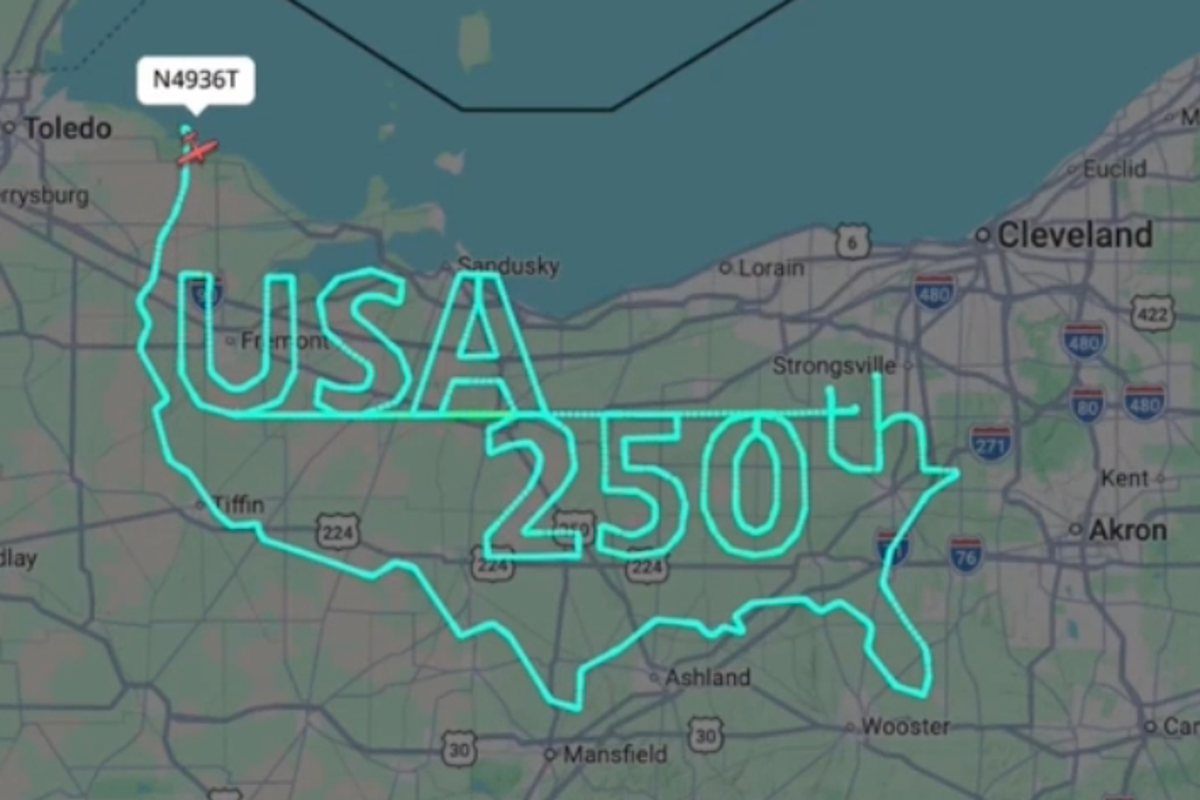
A lone pilot recently converted hundreds of miles of open airspace into a massive, temporary canvas to commemorate the upcoming America 250 celebrations. Using precise flight tracking technology as a digital paintbrush, the flight path traced a giant tribute across the sky, charting an enormous visual salute to the nation's 250th anniversary. While casual observers saw a viral internet stunt, the feat actually required a sophisticated combination of high-altitude navigation, strict fuel management, and meticulous airspace coordination. This was not a spontaneous Sunday flight, but a calculated execution of modern skywriting that showcases how pilots are using global positioning data to create monumental public art.
The Invisible Architecture of GPS Art
Flight tracking art, often called sky art, relies on the same technology that commercial airlines use to navigate global routes. The pilot pre-programs a series of highly specific waypoints into a flight management system or a handheld GPS device. As the aircraft flies from one coordinate to the next, its transponder broadcasts its position to ground stations and satellites.
When aggregated by flight tracking software, the resulting breadcrumb trail forms a cohesive image.
The scale of this tribute presented immediate physical challenges. To draw a crisp geometric pattern spanning multiple counties or states, a pilot cannot simply look out the window. They must rely entirely on instruments. A single premature turn or an uncorrected crosswind can warp a straight line into a jagged mess, ruining hours of precision flying.
Navigating the Regulatory Maze
The sky looks empty from the ground, but it is actually a highly regulated grid governed by Federal Aviation Administration (FAA) classifications. Crafting a giant tribute means cutting through various types of airspace, each with its own strict entry requirements.
- Class B and C Airspace: These zones surround busy commercial airports. Pilots must maintain constant radio communication with air traffic control and receive explicit clearance to enter.
- Restricted and Prohibited Areas: Military bases, national security zones, and sensitive infrastructure cannot be penetrated, forcing the pilot to design the route around these invisible walls.
- Military Operations Areas: These sectors feature high-speed military training jets, requiring extreme vigilance and frequent communication with radar controllers.
Air traffic controllers prioritize commercial passenger jets over recreational flights. If a controller orders a pilot to alter their heading to avoid an oncoming Boeing 737, the artistic flight path is instantly broken. Securing a window of clear airspace requires studying traffic patterns and choosing off-peak hours, often flying in the predawn darkness or late evening when the skies are quietest.
Wind Drift and Fuel Logistics
Beyond the paperwork, the laws of physics dictate the success of high-altitude art. Wind is the constant enemy of precision flight. An aircraft moves through a mass of air that is itself moving. If a pilot encounters a 30-knot crosswind while trying to draw a perfect straight line for the America 250 tribute, the plane will drift sideways.
To counteract this, the pilot must crab the aircraft into the wind, angling the nose away from the actual path of travel to maintain a true ground track. Flight planning software helps calculate these corrections, but real-time adjustments are mandatory as wind speed and direction shift at different altitudes.
Wind Direction ---> [ Aircraft Nose Angled Into Wind ] ===> Actual Desired Track
Fuel management introduces another layer of risk. Drawing a massive design requires hours of continuous flight. Smaller general aviation aircraft typically carry enough fuel for four to five hours of operation, including mandatory safety reserves. The pilot must carefully balance the weight of the fuel against the required range. A heavier plane burns more fuel per hour, meaning the route must be optimized to prevent running dry before the final lines of the tribute are connected.
The Evolution of Aerial Celebration
Using aircraft for public spectacle dates back to the early 20th century, when pilots burned light oil in exhaust pipes to create smoke trails over state fairs. Traditional skywriting, however, is severely limited by weather. The smoke dissipates within minutes if the wind picks up, and the messages are restricted to a few short words visible only to a small local crowd.
Digital sky art flips this dynamic. By utilizing GPS data logs, the artwork remains completely invisible to anyone looking up at the sky in real time. It exists purely as a digital artifact, archived on global tracking platforms for millions of people to view simultaneously online. The durability of the art shifts from fleeting smoke to permanent digital code.
This modern approach changes how we interact with national milestones. Rather than gathering in a single physical plaza to watch a brief fireworks display, citizens across the country engage with a shared digital image built from raw aviation data. The pilot transforms a routine cross-country flight into a national gallery piece, proving that the tools of modern transportation can double as instruments of cultural expression.