The marble halls of Washington do not echo with answers. They echo with a calculated hush.
Step into the room where power shifts. The air smells of old paper, floor wax, and the quiet sweat of men who know their words will be weighed by historians and weaponized by cable news hosts before the sun sets. The television cameras sit like silent predators on heavy metal tripods, their red recording lights blinking in a steady, monotonous rhythm. Every person in a suit is waiting.
They are waiting for Todd Blanche.
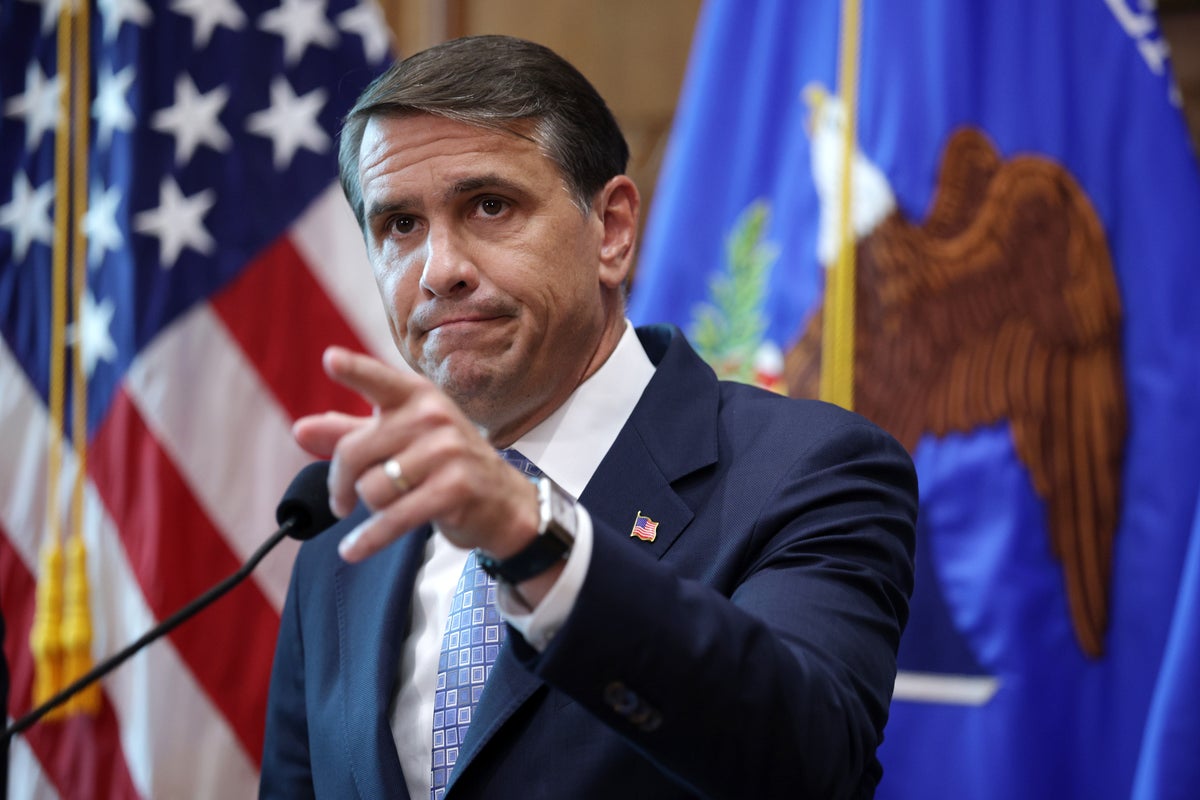
He walks in with the steady stride of a federal prosecutor who has spent decades parsing the exact distance between truth and liability. His tie is conservative. His expression is carved from granite. This is his first major appearance as the newly confirmed attorney general, stepping into a crucible that tests not just legal acumen, but political survival.
The press gallery leans forward. Notebooks open. Pens hover over crisp white pages like hummingbirds frozen in mid-air.
Then, the questioning begins. And with it, the careful dance of evasion.
Consider the atmosphere of a congressional hearing. It is rarely a search for truth. It is theater. It is a modern jousting match where blunt instruments are disguised as polite inquiries. Senators adjust their glasses, consult neatly tabbed briefing folders compiled by anxious staffers, and launch their volleys.
The topics come fast. The Reflecting Pool. Anthony Fauci. A mysterious weaponization fund.
To the casual viewer at home, watching the stream on a glowing phone while drinking morning coffee, these terms sound like coordinates on a strange map. What does a historic monument in the National Mall have to do with the highest levels of federal law enforcement? Why is the legacy of a public health official who dominated the news cycle years ago suddenly back on the interrogation table?
Blanche plays coy.
It is the oldest move in the playbook. When pressed on the specifics of the weaponization fund—a concept that triggers fierce ideological divides over how federal power is wielded—he sidesteps. He chooses his verbs with surgical precision. He speaks of reviews, of ongoing processes, of the need for careful deliberation.
Silence can be a shield. Blanche wears it well.
To understand why this matters, you have to look past the cable news chyron and the partisan bickering. You have to look at the machinery of the state.
Imagine an ancient clock tower. Inside, thousands of iron gears mesh and grind, turning day and night to keep time for an entire city. Most citizens never look inside the tower. They simply check their watches and catch their trains. But every so often, the clock jams. The gears screech. The hands freeze.
The attorney general is not just a lawyer. He is the master clockmaker.
When a new administration takes the helm, the public watches to see which gears will be oiled and which will be thrown out entirely. Will the Department of Justice pursue past grievances, or will it draw a hard line and look only toward the horizon? When lawmakers ask about investigations into federal pandemic responses, or the allocation of specific discretionary funds, they are really asking: Who holds the crowbar?
Blanche’s reluctance to give definitive answers is not merely political maneuvering. It is a defense mechanism. To speak too freely is to invite a subpoena, a lawsuit, or a congressional contempt charge. To say too little is to invite accusations of cover-up.
So he stays in the gray zone.
The senators press harder. They drop names like stepping stones across a rushing river. Fauci. The pool. The funds. Each name carries an invisible emotional charge, a shorthand for years of cultural and political warfare. Millions of Americans feel deeply aggrieved by how those years unfolded. They want a reckoning. They want subpoenas served and indictments handed down.
Yet, the reality of federal prosecution is painfully slow. It is bureaucratic. It is bound by rules of evidence that do not care about righteous indignation.
This is the friction point of modern governance. On one side stands the raw, unfiltered anger of a public that feels let down by institutions. On the other side stands the cold, heavy machinery of the law, moving at a glacial pace.
When Blanche dodges a question about the weaponization fund, he is acknowledging that friction. He is signaling that the transition from campaign rhetoric to institutional reality is messy. Investigations take months, sometimes years. Documents must be subpoenaed. Witnesses must be interviewed under oath.
You cannot tweet an indictment.
The hearing drags on into the afternoon. The lights in the committee room grow hotter. The journalists trade whispered notes. Coffee cups are refilled with lukewarm liquid from plastic pitchers.
Blanche remains composed. He does not take the bait. When a particularly sharp-tongued lawmaker tries to back him into a corner regarding past federal policy decisions, he smiles faintly. It is a polite, impenetrable smile.
We have seen this script before. Different actors, different decade, same play. Administrations change, but the ritual of the congressional grilling remains eternal. The interrogators want a scalp. The nominee wants survival.
The danger, of course, is that the public grows numb. When every oversight hearing is treated as an existential crisis, none of them are. People tune out. They turn off the stream and go back to their lives, leaving the machinery of power to operate entirely unobserved in the dark.
And that is where the real work happens.
Away from the microphones, inside the quiet offices on the fourth floor of the Justice Department, attorneys are reading briefs and signing memos. They are deciding which files to open and which to quietly close. They do not care about the cameras in the hearing room. They care about jurisdiction.
As the session finally concludes and the gavel slams down, the tension in the room snaps. Chairs scrape against the polished floor. Reporters sprint for the elevators to file their reports.
Todd Blanche gathers his leather folder, stands up, and walks out the side door, surrounded by a phalanx of security personnel. He leaves behind no grand declarations. No sweeping promises. Just the lingering echoes of questions that will be asked again tomorrow, and the day after that, in a city built on the art of the unanswered.


