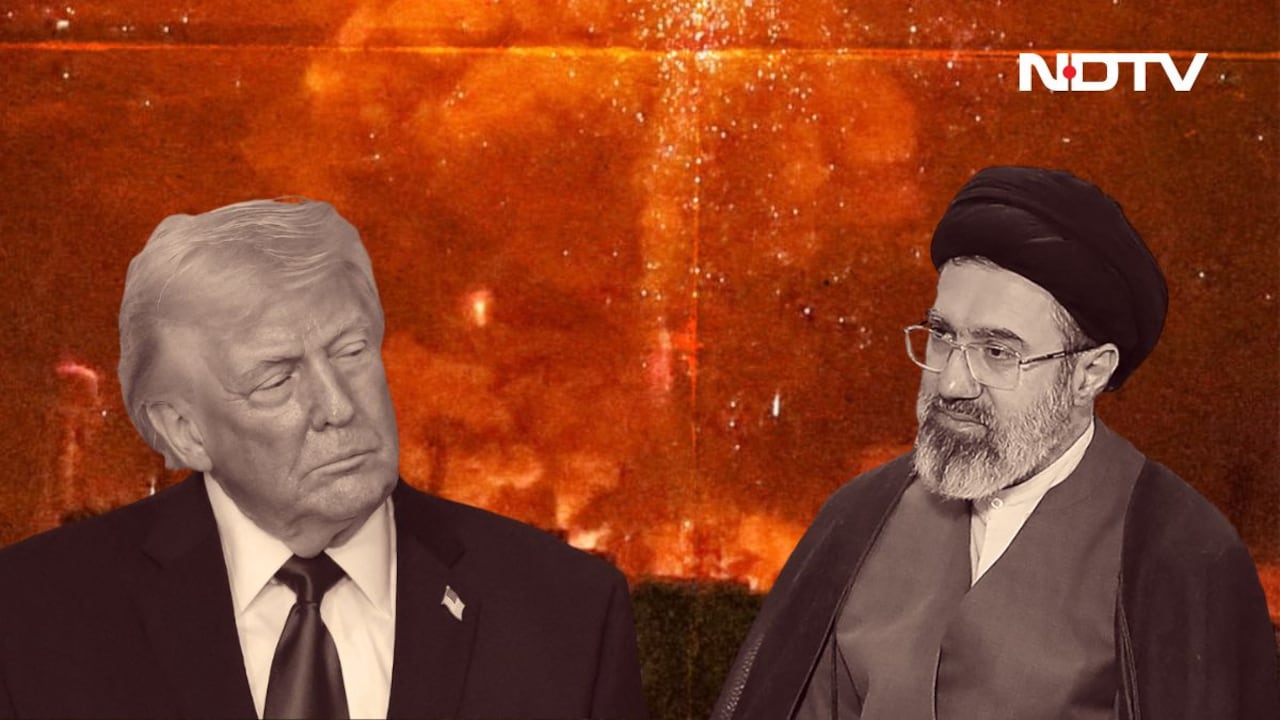
Military escalation between the United States and Iran hinges on a fundamental asymmetry in strategic clocks. When Iranian officials state that Washington will not dictate the timing or duration of a potential conflict, they are articulating a formal doctrine of protracted attrition designed to neutralize American conventional superiority. Standard commentary treats such declarations as routine political posturing, missing the underlying game-theoretic architecture. In reality, both actors are contesting control over the escalation ladder—specifically, the transition from short-duration punitive strikes to open-ended regional disruption.
To evaluate the validity of Iran's deterrence posture, one must strip away rhetoric and model the operational mechanics of modern asymmetric warfare. The core strategic problem for Washington is achieving decisive political outcomes through kinetic action without triggering an open-ended economic and military quagmire. Conversely, Tehran's objective is to convince American decision-makers that any kinetic initiation guarantees a prolonged, multi-theater conflict whose cumulative costs exceed the original strategic objective.
The Structural Asymmetry of Strategic Clocks
In conventional military planning, the initiating power seeks to compress the operational timeline. A short, high-intensity campaign maximizes technological advantages—stealth aviation, precision-guided munitions, cyber warfare, and intelligence, surveillance, and reconnaissance (ISR) networks—while minimizing domestic political exposure and logistical strain. For a U.S. administration operating within electoral cycles and managing global force commitments across the Indo-Pacific and Europe, time acts as a depreciating asset.
Iranian military doctrine, heavily influenced by the Islamic Revolutionary Guard Corps (IRGC) and lessons drawn from the 1980–1988 Iran-Iraq War, treats time as an appreciating asset. Under this framework, survival and political victory do not require defeating the opposing military in set-piece battles. Victory requires outlasting the adversary's political will and economic tolerance.
This divergence creates two incompatible models of conflict termination:
- The Decisive Strike Model (U.S. Preference): Relies on overwhelming initial force to degrade command-and-control nodes, air defenses, and nuclear or missile infrastructure, followed by immediate diplomatic off-ramps under restored deterrence.
- The Protracted Attrition Model (Iranian Preference): Absorbs the initial kinetic shock through hardened, dispersed infrastructure, then expands the conflict horizontally across geography and vertically across economic domains to prevent unilateral war termination by the initiator.
When Iranian officials assert that Donald Trump—or any U.S. president—cannot dictate the end date of a war, they are explicitly referencing the mechanics of unilateral conflict extension. While the initiating state controls the first move, the responding state retains a veto over the final move so long as it possesses survivable retaliatory capacity.
The Four Mechanisms of Conflict Extension
An assertion of prolonged war capability is only credible if backed by operational mechanisms that prevent a swift knockout blow. According to open-source defense analyses from institutions such as the Center for Strategic and International Studies (CSIS) and the International Institute for Strategic Studies (IISS), Iran's ability to extend a conflict relies on four distinct structural pillars.
1. Hardened and Dispersed Force Architecture
A rapid air campaign succeeds only when critical targets are concentrated and vulnerable. Over the past two decades, Tehran has systematically buried its ballistic missile production facilities, enrichment centrifuges, and command bunkers deep underground—often beneath mountainous terrain beyond the penetration limits of standard conventional ordnance.
Beyond physical hardening, Iran employs launch dispersion. Transporter erector launchers (TELs) and mobile drone units operate out of decentralized underground tunnel complexes, commonly referred to as "missile cities." Because these assets can emerge, fire, and relocate within minutes, eliminating Iran's retaliatory capacity requires persistent, real-time air dominance over a landmass roughly four times the size of Iraq. Achieving that level of suppression is a multi-month campaign, not a weekend operation.
2. Saturation Economics and Munition Depletion
Modern air defense relies on high-cost, low-density interceptors—such as the Patriot PAC-3, THAAD, and naval Standard Missiles (SM-3 and SM-6). Iran's arsenal prioritizes low-cost, high-volume delivery systems, including Shahed-series one-way attack drones and short-range ballistic missiles.
This creates a severe cost-exchange ratio imbalance. Defending against a massed salvo requires firing multiple multi-million-dollar interceptors at drones costing tens of thousands of dollars. In a prolonged exchange, the limiting factor for U.S. and allied forces is not technological capability, but magazine depth and industrial replenishment rates. Extending the timeline of a conflict forces the defender to ration interceptors, inevitably increasing the probability that incoming munitions penetrate defensive shields and strike high-value regional bases or energy infrastructure.
3. Horizontal Escalation via the Regional Network
The United States views the theater of operations primarily through the lens of Iranian territory and Persian Gulf waters. Tehran defines the battlespace across the entire Middle East through its network of allied non-state actors—often termed the Axis of Resistance—including Hezbollah in Lebanon, the Houthi movement in Yemen, and various Shia militias in Iraq and Syria.
Even when degraded by Israeli or coalition operations, these groups retain residual capabilities to harass commercial shipping in the Red Sea, launch standoff attacks against U.S. bases in Jordan, Syria, and Iraq, and threaten regional energy hubs. By activating multiple fronts sequentially rather than simultaneously, Iran can pace the operational tempo. If Washington attempts to declare victory and wind down operations after striking targets inside Iran, proxy attacks in the Levant or Bab el-Mandeb Strait force the United States either to remain militarily engaged or to accept ongoing attrition without retaliation.
4. Maritime Chokepoint Leverage
Roughly one-fifth of the world's petroleum liquids consumption passes through the Strait of Hormuz. Unlike a conventional naval blockade, which the U.S. Fifth Fleet could rapidly dismantle, disrupting maritime transit requires only intermittent, unpredictable threats.
Naval mines, fast-attack craft swarms, coastal anti-ship cruise missiles, and unmanned surface vessels create an environment of extreme actuarial risk. Commercial shipping halts not when every vessel is sunk, but when maritime insurance underwriters withdraw coverage or spike premiums to prohibitive levels. Re-establishing safe transit requires extensive minesweeping operations and continuous convoy escorts—tasks that are inherently slow, resource-intensive, and vulnerable to asymmetric ambush.
Game Theory and the Credibility of Commitment
To understand why Iranian leadership publicizes its intent to fight a long war, one must apply Thomas Schelling's framework of coercive diplomacy and deterrence theory. Deterrence fails when an adversary believes it can achieve its objectives at an acceptable cost before the defender can impose meaningful retaliation.
If Washington believes a conflict with Iran can be confined to a short, surgical exchange—similar to limited punitive strikes conducted in previous decades—the perceived risk of initiating military action drops significantly. By publicly committing to a doctrine of prolonged war, Tehran attempts to alter the U.S. expected-utility calculation before the first shot is fired.
This strategy hinges on what game theorists call the "threat that leaves something to chance." Once large-scale kinetic exchanges begin, neither side retains absolute control over the escalatory spiral. Tactical miscalculations, mass-casualty events at U.S. bases, or severe global oil price shocks create domestic political pressures that override initial strategic restraint.
| Strategic Variable | U.S. Operational Objective | Iranian Operational Objective |
|---|---|---|
| Conflict Duration | Compressed (days to weeks) | Protracted (months to years) |
| Geographic Scope | Vertical containment (Iranian military/nuclear sites) | Horizontal expansion (Gulf, Red Sea, Levant, Iraq) |
| Primary Metric of Success | Degradation of specific physical capabilities | Disruption of regional economic stability and U.S. political will |
| Economic Vulnerability | Global energy inflation and supply chain shocks | Domestic economic collapse and infrastructure loss |
| Termination Mechanism | Unilateral cessation after achieving kinetic goals | Negotiated settlement extracting strategic concessions |
Analytical Limitations of the Protracted War Doctrine
While Iran's strategy of conflict extension poses severe operational challenges for U.S. planners, treating Tehran's deterrence posture as invincible ignores critical vulnerabilities within the Iranian system. A rigorous assessment must account for the constraints that limit Iran's ability to sustain a prolonged conflict.
First, domestic economic fragility acts as a severe internal brake. Years of international sanctions, currency devaluation, and chronic inflation have eroded living standards inside Iran. Unlike the 1980s, when revolutionary fervor and national defense against an invading Iraqi army unified the population, the contemporary Iranian state faces significant legitimacy deficits and recurring domestic unrest. A prolonged conflict that triggers strikes on Iranian domestic energy grids, refineries, and port facilities—such as Bandar Abbas—would rapidly induce severe internal shortages of fuel, electricity, and basic goods, risking widespread civil instability that threatens regime survival from within.
Second, air superiority dictates logistics. Once the United States and its allies neutralize Iran's integrated air defense systems (IADS), coalition aircraft can operate with relative impunity over Iranian airspace. While underground facilities protect static assets, the logistical networks required to feed, fuel, and resupply dispersed military units remain exposed on the surface. Over a multi-month timeline, persistent ISR and strike capabilities systematically hunt down mobile launchers, sever transport arteries, and degrade command-and-control cohesion. Time favors the insurgent only when the insurgent can resupply; against uncontested aerial surveillance, prolonged exposure leads to cumulative attritional collapse.
Third, regional blowback constrains horizontal escalation. Gulf Cooperation Council (GCC) states—such as Saudi Arabia and the United Arab Emirates—have pursued diplomatic détente with Tehran precisely to insulate their economic diversification projects from regional conflict. If Iran expands a war with the United States by attacking Gulf energy infrastructure or closing the Strait of Hormuz, it risks driving neighboring states back into an active, unified military coalition with Washington and Israel, eliminating Iran's regional diplomatic buffer.
Strategic Implications for U.S. Force Posture and Policy
Evaluating the competing claims of Washington and Tehran requires recognizing that neither side holds a unilateral monopoly on conflict termination. The United States possesses the conventional power to inflict catastrophic, generational damage on Iran's military and economic infrastructure within a compressed timeframe. Iran possesses the geographic depth, asymmetric arsenal, and regional proxy network to ensure that such a campaign does not end cleanly when the final U.S. strike package returns to base.
Consequently, any U.S. strategic framework that relies on the assumption of a brief, surgical military intervention carries a high probability of strategic miscalculation. Effective deterrence and crisis management in the Persian Gulf require planning not for the initial kinetic exchange, but for the stabilization and attrition phases that follow.
To neutralize Iran's conflict-extension strategy, U.S. defense planning must prioritize three operational adaptations:
- Industrial Scaling of Low-Cost Counter-UAS Systems: Transitioning away from reliance on multi-million-dollar surface-to-air missiles toward directed-energy weapons, high-power microwaves, and low-cost kinetic interceptors to invert the unfavorable cost-exchange ratio during sustained drone and missile barrages.
- Distributed Maritime Logistics and Autonomous Minesweeping: Deploying unmanned surface and subsurface vehicles across the Persian Gulf and Arabian Sea to clear naval mines and monitor littoral waters continuously, reducing the vulnerability of manned naval vessels in narrow chokepoints.
- Integrated Regional Air and Missile Defense (IAMD): Accelerating sensor-to-shooter integration across Gulf partner nations so that radar tracking and interceptor allocation operate as a unified theater-wide network rather than isolated national batteries.
Ultimately, the contest over conflict timing is a contest of endurance thresholds. Until asymmetric defense capabilities close the cost-exchange gap, any military confrontation with Iran must be modeled and resourced as a sustained regional campaign rather than a discrete tactical operation.