The intersection of civilian protest and infrastructure vulnerability in Iran represents a shift from ideological dissent to a coordinated disruption of state-controlled critical systems. By forming human chains around power plants and bridges, protestors have moved beyond symbolic occupation toward a strategy of physical shielding and operational interference. This tactic creates a specific dilemma for the Iranian security apparatus: the cost of kinetic intervention against civilians in high-consequence infrastructure zones outweighs the immediate benefits of dispersal. The current volatility is further compounded by the ambiguity of U.S. executive intent, where the absence of a defined kinetic or diplomatic threshold leaves Iranian leadership operating in a high-risk information vacuum.
The Triad of Infrastructure Fragility
The Iranian state’s stability relies on three primary physical pillars. When protestors target these specific nodes, they are not merely "protesting"; they are conducting a stress test on the regime's logistical backbone.
1. Power Generation and Distribution Nodes
The focus on power plants indicates an understanding of the regime's dependence on energy stability to prevent broader industrial collapse. Iran’s electrical grid is already strained by aging hardware and chronic underinvestment. Human chains around these sites prevent technical maintenance and disrupt the security perimeters necessary for plant operations. If a plant goes offline due to a blockade, the resulting localized blackout serves as a force multiplier for civil unrest.
2. Strategic Transit Bottlenecks
Bridges serve as the primary conduits for the Internal Security Forces (ISF) to move personnel and hardware between urban centers. Occupying a bridge is a tactical denial of maneuverability. By utilizing human chains, protestors force the state to choose between a high-casualty event on a visible transit artery or the loss of rapid-response capabilities across the city's sectors.
3. The Symbolism of the Shield
Unlike traditional marches, the "human chain" is a defensive formation designed to maximize the political cost of state violence. It utilizes the physical presence of the populace as a barrier between the state’s kinetic tools and the infrastructure the state is sworn to protect.
The Trump Doctrine and the Calculus of Ambiguity
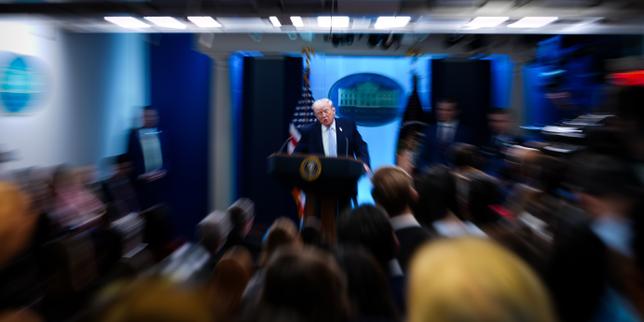
The White House’s assertion that Donald Trump is the sole arbiter of the U.S. response creates a "Strategic Black Box." In traditional diplomacy, red lines are codified through State Department communiqués or military posturing. In the current environment, the red lines are psychological and centered on a single individual's decision-making process.
Operational Uncertainty for the IRGC
The Islamic Revolutionary Guard Corps (IRGC) typically calculates its domestic suppression based on the likelihood of external intervention. When the U.S. position is categorized as "unknown" even to its own staff, the IRGC cannot accurately model the risk of a "Maximum Pressure" escalation. This uncertainty creates a temporary paralysis or, conversely, a high-risk gamble where the regime may over-calculate its immunity.
The Breakdown of Signal Intelligence
The lack of a unified administration stance means that Iranian intelligence cannot rely on traditional signaling—such as carrier group movements or diplomatic cables—to predict a strike. This forces the Iranian leadership to divert resources toward broad-spectrum readiness rather than targeted suppression of the internal chains.
Technical Decay as a Catalyst for Civil Unrest
To understand why protestors are targeting power plants, one must examine the underlying mechanics of Iran’s grid failure. The Iranian energy sector suffers from a $20 billion investment gap. This has led to:
- Thermal Inefficiency: Most plants operate at an efficiency rate 10-15% below international standards.
- Transmission Losses: High-voltage lines lose significant energy due to poor insulation and illegal tapping.
- Feedstock Volatility: Natural gas shortages during peak demand force plants to burn low-quality mazout, which increases local pollution and further incenses the nearby population.
Protestors are not just demanding political change; they are reacting to a systemic failure of utility provision. The human chain around a power plant is a physical manifestation of a demand for a functional social contract. If the state cannot provide electricity, its claim to authority over the infrastructure is negated in the eyes of the citizenry.
The Cost Function of State Suppression
The Iranian government utilizes a specific cost-benefit matrix when deciding to clear an infrastructure blockade. This can be expressed as a function of domestic stability versus international exposure.
$$C_{total} = (V \cdot P_{int}) + (L \cdot E_{ext})$$
Where:
- $V$ = Volume of civilian casualties.
- $P_{int}$ = Domestic political blowback.
- $L$ = Level of infrastructure damage.
- $E_{ext}$ = Likelihood of external (U.S.) kinetic response.
As $V$ increases, $P_{int}$ spikes, potentially leading to security force defections. Simultaneously, if $L$ (infrastructure damage) becomes too high during a clearing operation—for instance, if a power plant is damaged in a firefight—the state loses the very asset it was trying to reclaim. The protestors' strategy is to maximize $V$ and $P_{int}$ while keeping $L$ high enough to remain a threat, but low enough to avoid being labeled as "terrorist saboteurs" by the broader public.
The Information Bottleneck in Tehran
The Supreme Leader’s inner circle faces an increasingly narrow window for decision-making. Information regarding the extent of the chains is often filtered through layers of bureaucracy, each hesitant to report the true scale of the defiance. This creates an "Information Asymmetry" where the protestors on the ground have a more accurate real-time understanding of the security gap than the central command in Tehran.
The reliance on internet shutdowns to curb these chains has reached a point of diminishing returns. While shutdowns hinder coordination, they also freeze the digital economy, costing the Iranian state millions in daily GDP. This creates a feedback loop where the tools of suppression accelerate the economic collapse that fuels the protest.
Strategic Realignment of Resistance Tactics
The evolution from street skirmishes to infrastructure-centric human chains suggests a higher level of tactical sophistication. This shift indicates three key developments in the protest movement:
- Specialized Target Selection: Knowledge of which bridges and which power stations are "un-losable" for the IRGC.
- Dispersed Command: The ability to form these chains simultaneously across multiple provinces without a centralized, vulnerable leader.
- Non-Kinetic Endurance: A focus on "holding" space rather than "taking" space.
By holding these nodes, the protestors have shifted the burden of escalation entirely onto the state. The state must now "fire the first shot" in a highly sensitive environment where any stray kinetic energy could cause a catastrophic utility failure.
Limitations of the Human Chain Strategy
While effective in the short term, the human chain strategy faces significant sustainability hurdles. Unlike a strike where workers stay home, a chain requires physical presence in a high-risk zone.
- Logistical Fatigue: Maintaining a 24-hour perimeter around a power plant requires a massive influx of food, water, and medical supplies, which can be easily intercepted by the state.
- Weather and Environment: Iranian infrastructure is often located in exposed, harsh terrain. Seasonal shifts can degrade the density of the chains faster than security forces.
- The Threshold of Force: There is a point at which a regime, fearing its own total collapse, will ignore the cost function and utilize indiscriminate force regardless of infrastructure damage.
The Probability of Infrastructure Sabotage
A significant risk in the current standoff is the transition from "human chains" to active sabotage. If the state begins to successfully break the chains, segments of the protest movement may pivot toward disabling the equipment they were previously shielding. This would move the conflict from a "civilian vs. state" dynamic to a "scorched earth" scenario. The technical knowledge required to disable a transformer or a high-voltage switchgear is relatively low, making this a high-probability risk if the human perimeters are breached with excessive violence.
External Catalysts and the Kinetic Trigger
The "Trump Variable" remains the primary external pressure point. The Iranian regime is currently operating under the assumption that Trump’s "alone" status means a lack of institutional consensus in Washington, which might delay a U.S. strike. However, this ignores the historical precedent of rapid executive action in response to perceived threats to global energy security or regional stability.
If the human chains result in a total blackout of Tehran or other major hubs, the IRGC may launch a "diversionary" external action—such as harassing tankers in the Strait of Hormuz—to shift focus away from domestic failure. This would almost certainly trigger the very U.S. response they are trying to model, closing the loop on the strategic uncertainty.
The most effective maneuver for the Iranian state at this juncture is not a kinetic clearing of the bridges, but a tactical retreat to provide concessions on utility pricing and availability. However, the ideological rigidity of the current leadership makes this unlikely. The resulting friction between a population physically holding the levers of power and a state that cannot afford to lose them creates a high-probability event for a systemic break. Security forces must eventually choose between the integrity of the infrastructure and the lives of the citizens forming the barrier. Historically, when a regime is forced to choose between its physical assets and its people, the loss of either marks the beginning of the end for its operational legitimacy.
The immediate strategic play involves monitoring the "density-to-time" ratio of these chains; if they hold for more than 72 hours without a state response, the psychological advantage shifts decisively toward the protestors, rendering the state's traditional deterrence mechanisms obsolete.