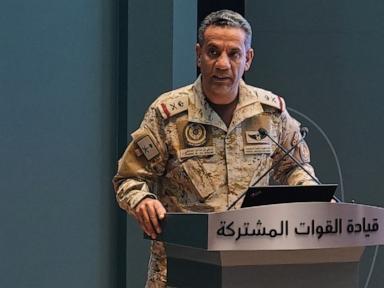
Reopening a commercial airport under active ballistic missile and drone threat is not an operational error; it is a deliberate signaling mechanism designed to neutralize the economic leverage of asymmetric warfare. When state actors like Saudi Arabia restore civilian aviation capacity while Houthi forces continue cross-border strikes, they are executing a specific doctrine of resilience. Standard news coverage treats these events as isolated incidents of violence juxtaposed against bureaucratic normalization. That framing misses the structural reality: the airport tarmac has become the primary theater for testing the cost-exchange ratio between low-cost insurgent munitions and high-value state infrastructure.
To understand why aviation corridors reopen amid persistent kinetic threats, one must dissect the underlying mechanics of deterrence, air defense saturation, and regional risk pricing. The broader Middle East security architecture operates on a continuous feedback loop where localized tactical strikes—whether against Saudi transit hubs, maritime chokepoints, or regional energy facilities—trigger immediate recalculations in global insurance markets, sovereign credit risk, and diplomatic alignment.
The Economics of Asymmetric Air Defense
The core friction in modern regional conflict lies in the extreme divergence between offensive procurement costs and defensive interception expenditures. A non-state actor operating with decentralized supply chains can assemble a long-range loitering munition or short-range ballistic missile for a fraction of the capital required to manufacture, deploy, and maintain a single surface-to-air interceptor battery.
When an insurgent group targets a civilian airport, the objective is rarely the physical destruction of the terminal. Concrete runways are easily repaired within hours using rapid-setting polymers and heavy engineering corps. The true target is the operational tempo of the host nation and the risk tolerance of international carriers.
- Direct Interception Costs: Every incoming projectile requires an immediate kinetic response. Defenders cannot afford to calculate the trajectory with 99 percent certainty and let a suspected dud fall near a fueled commercial airliner; they must engage with high-probability interceptors, often firing two defensive missiles per incoming threat to ensure destruction.
- Schedule Disruption Multipliers: A single air raid siren forces ground stops, diverts inbound international flights to secondary hubs in neighboring states, and strands transit passengers. The cascading financial loss to the national flag carrier and airport authority frequently exceeds the hardware cost of the defensive engagement itself.
- Insurance Premium Escalation: Aviation underwriters price risk dynamically. Persistent alerts force war-risk premiums upward, effectively imposing an external tax on every ton of air freight and every passenger ticket routed through the region.
By reopening an airport immediately following an attack—or maintaining flight schedules despite ongoing warnings—state planners intentionally absorb the tactical friction to deny the adversary a strategic blockade. Closing the airspace validates the threat; keeping it open demonstrates that the defensive umbrella is sufficient to sustain baseline economic activity.
The Architecture of Layered Air Defense
Sustaining commercial aviation in a contested airspace requires a multi-tiered defensive grid capable of distinguishing between radar clutter, commercial transponders, and low-observable threats. This operational environment presents severe technical constraints.
Radar Discrimination and Civilian Deconfliction
Civilian air traffic control relies on cooperative identification systems, primarily Secondary Surveillance Radar (SSR) and Automatic Dependent Surveillance–Broadcast (ADS-B). Military air defense networks rely on primary radar, infrared tracking, and electronic intelligence to detect non-cooperative targets. Operating both systems simultaneously over a dense urban airport creates a high-stakes deconfliction problem.
Low-flying unmanned aerial vehicles (UAVs) often mimic the radar cross-section and speed profiles of light general aviation aircraft or migratory birds. If air defense batteries set their engagement thresholds too low, they risk catastrophic fratricide against commercial airliners. If they set thresholds too high, small munitions penetrate the perimeter and strike fuel depots or tarmac aprons. Managing this threshold requires automated command-and-control networks that integrate civilian flight plans directly into military fire-control systems in real time.
Terminal Phase Interception Limits
Even the most advanced terminal high-altitude and point-defense systems face physical saturation limits. An air defense battery has a finite number of ready-to-fire canisters and a strict reload cycle. Adversaries exploit this geometry by launching synchronized swarms—combining slow-moving drones to draw radar attention and exhaust magazine depth, followed closely by higher-velocity ballistic trajectories aimed at fixed infrastructure.
The limitation of any static defense around an airport is that it remains reactive. Until the launch platforms, supply depots, and command nodes are degraded at their source, the defending state remains locked in an unfavorable expenditure curve.
Systemic Contagion Across Regional Flashpoints
Events at a single Saudi aviation hub do not occur in a vacuum; they function as barometers for wider regional stability. When cross-border strikes persist alongside diplomatic negotiations or ceasefires elsewhere in the Middle East, it exposes the fragmented nature of regional deterrence.
A localized strike in the Arabian Peninsula immediately alters the threat matrix in adjacent theaters, including the Levant and the Red Sea maritime corridor. Militant networks share tactical telemetry. If a specific flight profile or launch window successfully forces a temporary closure of a major Gulf airport, other non-state actors operating in distinct geographies will rapidly adopt identical targeting doctrines against their respective adversaries.
This creates a contagion of vulnerability across critical infrastructure sectors:
- Desalination Plants: Coastal facilities supply the vast majority of potable water to Gulf urban centers. Unlike runways, specialized thermal and reverse-osmosis membranes cannot be repaired overnight.
- Petrochemical Processing: Centralized gas-oil separation plants represent single points of failure where minor kinetic damage causes massive export bottlenecks.
- Subsea and Terrestrial Fiber: Regional data hubs rely on concentrated landing stations that are vulnerable to both physical strikes and sabotage.
Governments monitor airport operational status as a proxy for the survivability of these harder-to-replace assets. If the state cannot guarantee the security of an open runway, investor confidence in the broader industrial base deteriorates rapidly.
The Signaling Matrix of Normalization
Standard geopolitical analysis often views diplomacy and kinetic conflict as mutually exclusive phases—either parties are fighting, or they are negotiating. In practice, Middle Eastern statecraft frequently utilizes simultaneous escalation and normalization to establish negotiating leverage.
Reopening an airport while under fire is a calculated move within this signaling matrix. It communicates three distinct messages to separate audiences simultaneously:
First, to the domestic population and expatriate workforce, it projects state competence and continuity. Economic diversification plans—particularly those reliant on tourism, international logistics, and foreign direct investment—collapse if the expatriate talent pool perceives an existential threat to daily life. Maintaining normal flight schedules suppresses panic and prevents capital flight.
Second, to international partners and global markets, it signals that supply chains remain intact. Global logistics networks are hyper-sensitive to hub closures. A prolonged shutdown of a major Middle Eastern transit point forces cargo carriers to reroute through European or Asian hubs, altering global freight rates and delivery timelines. Keeping the gates open preserves the state's status as a reliable node in international commerce.
Third, to the adversary, it communicates futility. Insurgent strategies rely on psychological attrition—convincing the target state that the cost of continued resistance exceeds the value of the political objective. By refusing to alter civilian infrastructure schedules, the defending state signals that it has priced the attacks into its baseline operating budget and will not concede political ground to stop them.
Operational Vulnerabilities in Current Mitigation Strategies
While maintaining operational continuity neutralizes the immediate psychological impact of cross-border strikes, the strategy carries severe long-term liabilities. Relying on active interception and rapid repair to protect civilian transit hubs introduces systemic fatigue into both military hardware and human capital.
Air defense crews operating at peak alert status for months experience degraded reaction times and heightened cognitive load. Radar systems running continuously require accelerated maintenance cycles, creating temporary coverage gaps that sophisticated adversaries actively probe for using electronic surveillance. Furthermore, the global supply chain for high-end interceptor missiles is constrained by specialized propellant manufacturing and microchip availability; stockpiles depleted in defending civilian runways cannot be replenished quickly, leaving the state exposed in the event of a high-intensity state-on-state conflict.
The financial model also faces diminishing returns. While a sovereign wealth fund can subsidize airline losses and underwrite war-risk insurance in the short term, doing so permanently distorts market efficiency. Private capital eventually demands a structural risk premium that state subsidies cannot indefinitely mask.
Strategic Execution for Contested Infrastructure
Organizations and state planners operating critical transit infrastructure within active threat envelopes must abandon binary security models that toggle between total shutdown and unrestricted operation. Survival and profitability require institutionalizing dynamic risk management.
- Decentralize Hub Capacity: Eliminate single-point-of-failure vulnerabilities by distributing international flight operations across secondary regional airfields. If a primary terminal experiences a kinetic alert, automated routing protocols should seamlessly divert inbound traffic to pre-cleared auxiliary runways within a 200-kilometer radius without requiring manual diplomatic clearance.
- Harden Ground Support Systems: Shift capital expenditure from cosmetic terminal expansions to subterranean fuel storage, blast-shielded power substations, and redundant air traffic control towers. A runway is useless if the hydrant fueling system is exposed to shrapnel.
- Establish Automated Airspace Tiers: Implement dynamic altitude and corridor restrictions tied directly to military radar telemetry. Rather than closing an entire Flight Information Region during an alert, restrict civilian traffic to specific shielded approach vectors while keeping transit corridors open.
- Restructure Sovereign Risk Pooling: State entities must establish dedicated, pre-funded reinsurance mechanisms for commercial carriers operating in contested zones. Relying on private London or New York underwriters to price real-time geopolitical volatility guarantees prohibitive cost spikes during every minor skirmish.
The persistence of cross-border strikes alongside normal commercial operations is no longer an anomaly; it is the permanent operating baseline for regional infrastructure. Entities that treat security disruptions as temporary crises will suffer compounding operational losses, while those that engineer their logistics networks to absorb continuous kinetic friction will capture the regional transit monopoly.