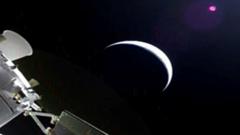
The Artemis II mission represents a transition from automated hardware validation to the integration of human physiological and cognitive variables into the Orion spacecraft’s life support and flight control systems. While Artemis I confirmed the structural integrity of the Space Launch System (SLS) and the heat shield's thermal resistance during a high-velocity atmospheric reentry, Artemis II serves as the definitive stress test for the Environmental Control and Life Support System (ECLSS). The success of this 10-day mission hinges on three critical operational phases: the high Earth orbit (HEO) checkout, the free-return trajectory lunar flyby, and the manual proximity operations demonstration.
The High Earth Orbit Bottleneck and Life Support Validation
Before committing to a lunar trajectory, the crew remains in a high Earth orbit for approximately 24 hours. This phase is not a mere waiting period; it is a mandatory safety gate designed to verify that the ECLSS can maintain a survivable atmosphere under the metabolic load of four humans.
The chemical scrubbing of carbon dioxide ($CO_{2}$) and the regulation of nitrogen-oxygen partial pressures are far more volatile with a live crew than with the sensors used in Artemis I. If the partial pressure of oxygen ($ppO_{2}$) fluctuates beyond established margins or if the amine-based $CO_{2}$ removal system fails to meet the required scrub rate, the mission can be aborted using a standard de-orbit burn. Once the crew ignites the Interim Cryogenic Propulsion Stage (ICPS) for the Trans-Lunar Injection (TLI), they are physically committed to a multi-day journey. The HEO phase is the final point where the "cost of failure" is manageable through an immediate return to Earth.
Mechanics of the Free Return Trajectory
The orbital mechanics of Artemis II differ fundamentally from the Apollo-era Lunar Orbit Insertion (LOI). Artemis II utilizes a "free-return" trajectory, a ballistic path that uses the Moon’s gravity to whip the spacecraft back toward Earth without requiring a major engine burn to turn around.
- The Gravity Well Interaction: As Orion approaches the Moon, it enters the lunar sphere of influence. The spacecraft passes approximately 4,600 miles behind the lunar far side.
- Velocity Vector Reorientation: The Moon’s mass exerts a gravitational pull that bends Orion’s path. This interaction effectively "re-aims" the spacecraft toward a specific atmospheric entry corridor on Earth.
- Propulsive Efficiency: By choosing a flyby rather than an orbital insertion, NASA minimizes the risk associated with the Service Module’s main engine. Even if the primary propulsion system fails after TLI, physics ensures the crew returns to the terrestrial atmosphere.
This trajectory is a conservative engineering choice. It prioritizes crew safety over lunar surface proximity, reflecting a risk-mitigation strategy focused on validating the spacecraft's deep-space endurance rather than its landing capabilities.
Proximity Operations and Manual Control Interfacing
A significant portion of the mission involves the Optical Navigation (OpNav) and manual piloting tests. Early in the mission, the crew performs a proximity operations demonstration using the spent ICPS stage as a target.
This test addresses a specific technical vulnerability: the reliance on automated docking systems. By manually maneuvering Orion relative to the ICPS, the crew validates the handling qualities of the spacecraft in a vacuum, ensuring that future missions to the Gateway station or the Starship HLS (Human Landing System) can be completed if automated sensors fail. The pilots must account for the "Relative Orbital Mechanics" problem, where traditional intuitive physics (e.g., thrusting directly toward a target) often results in an orbital shift that moves the spacecraft further away. Instead, they must master the use of the Reaction Control System (RCS) to execute precise, multi-axis translations.
Radiation Exposure and the Van Allen Belt Factor
The Artemis II crew faces a distinct radiological environment compared to Low Earth Orbit (LEO) missions on the International Space Station. While the ISS stays within the Earth’s protective magnetosphere, Artemis II must pass through the Van Allen radiation belts twice.
- Trapped Radiation: The inner and outer belts contain high-energy protons and electrons trapped by Earth's magnetic field.
- Galactic Cosmic Rays (GCRs): Beyond the magnetosphere, the crew is exposed to high-atomic-number ($HZE$) ions, which possess high ionizing power and are difficult to shield against without prohibitive mass.
- Solar Particle Events (SPEs): The mission's timing relative to the solar cycle dictates the probability of a solar flare. Orion includes a "storm shelter" configuration where the crew uses onboard mass (water containers and equipment) to create a denser shielding layer during a spike in solar activity.
The data gathered from the crew's personal dosimeters will provide the first high-fidelity map of how the human body reacts to these specific deep-space conditions since 1972. This quantification is vital for calculating the "permissible exposure limits" for the multi-month durations required for Mars transit.
The Reentry Physics of High-Velocity Return
The final critical phase is the skip-entry maneuver. Upon returning from the Moon, Orion will strike the atmosphere at approximately 25,000 mph ($11 \text{ km/s}$). This is significantly faster than a return from LEO, which occurs at roughly 17,500 mph.
The skip-entry involves the spacecraft "dipping" into the upper atmosphere to bleed off initial velocity, then popping back out briefly before the final descent. This technique reduces the peak G-loads on the crew and allows for a more precise landing near the recovery ships. The heat shield, composed of an updated Avcoat material, must withstand temperatures reaching 5,000°F. The chemical ablation process—where the shield material chars and flakes away to carry heat from the capsule—is a non-linear thermodynamic event. Any inconsistency in the Avcoat's density or bonding can lead to localized "hot spots" that threaten the structural integrity of the pressure vessel.
Operational Constraints and Hardware Limitations
The Artemis II mission is constrained by several "hard" limits that dictate the mission's scope:
- Thermal Management: The Service Module must constantly manage the temperature of the propellant and electronics. This requires specific "barbecue rolls"—a slow rotation of the spacecraft to prevent one side from overheating in the sun while the other freezes in the shade.
- Communication Latency: While not as severe as the delay to Mars, the distance creates a 1.3-second lag each way. This necessitates a shift from the "ground-controlled" model used in LEO to a "crew-autonomous" model, where the four astronauts must make real-time decisions without waiting for Mission Control's confirmation during time-sensitive maneuvers.
- Consumable Mass: Every kilogram of water, oxygen, and food was calculated against the thrust-to-weight ratio of the SLS Block 1. There is zero margin for mission extension; if the return is delayed, the life support system will hit a hard "redline" where $CO_{2}$ concentrations become toxic.
The strategic objective of Artemis II is the conversion of theoretical engineering models into empirical human data. The mission succeeds not merely by reaching the Moon, but by proving that the Orion-SLS architecture can maintain human homeostasis in an environment that is fundamentally hostile to biological life.
The immediate tactical requirement following splashdown will be the forensic analysis of the heat shield's char layer and the metabolic data logs of the crew. These data points will dictate the final software and hardware configurations for Artemis III. If the ECLSS data shows higher-than-expected moisture buildup or if the skip-entry G-loads exceed safety margins for deconditioned humans, the landing mission will require a significant redesign of the internal cabin architecture. The path to the lunar surface is gated by the physiological and mechanical telemetry generated during these 10 days in the deep-space vacuum.