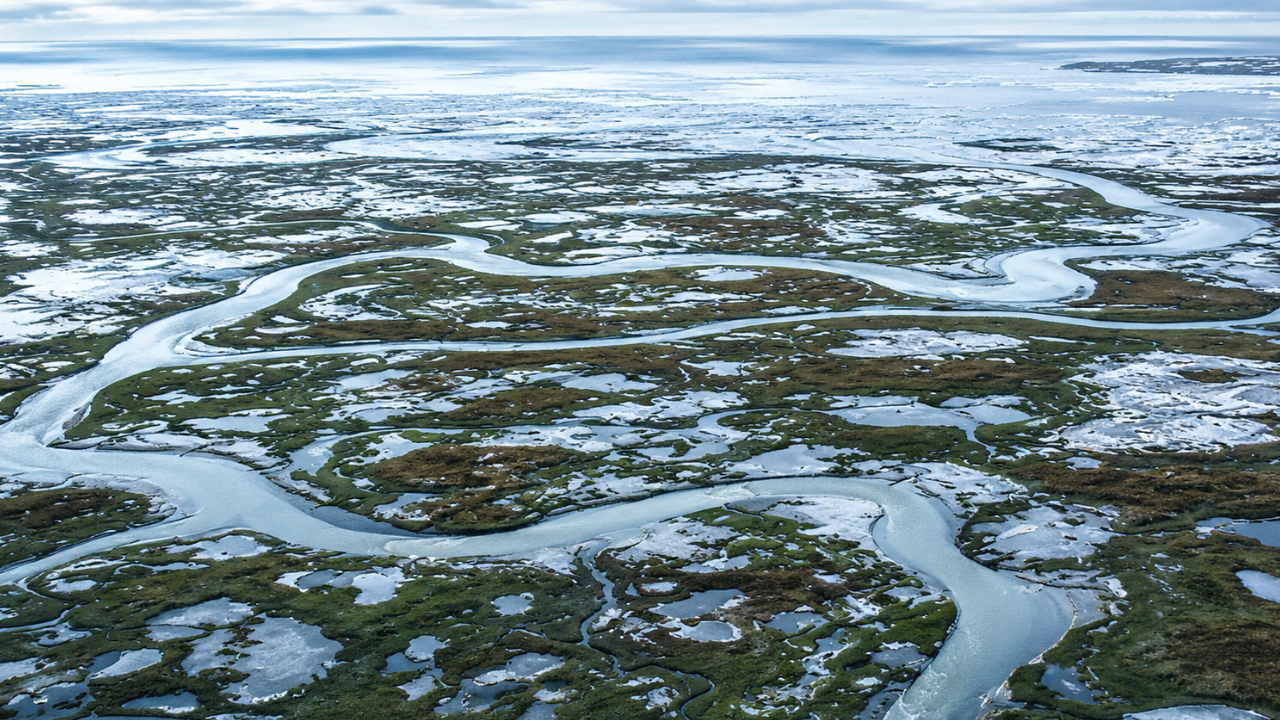
The Arctic is losing its grip. For thousands of years, the frozen northern tundra acted like the planet’s ultimate storage locker, trapping vast amounts of ancient organic matter in deep permafrost. It sucked up more carbon dioxide than it released. But that math is breaking down fast.
Recent climate models and field studies suggest a terrifying shift is coming. By the 2050s, the Arctic could completely stop absorbing carbon dioxide and flip into a net source of greenhouse gases. If that happens, we aren't just looking at a local crisis. We are talking about an unstoppable global warming accelerator.
The real problem? Most global climate policies don’t even factor this in.
The Arctic Carbon Shift is Happening Now
Right now, northern ecosystems are caught in a violent tug-of-war. On one side, warmer temperatures mean longer growing seasons. Plants are moving north, growing bigger, and absorbing more carbon dioxide through photosynthesis. It looks like a green win. On the other side, the ground beneath these plants is rotting.
Permafrost holds roughly 1,400 to 1,600 billion metric tons of carbon. That's about twice as much carbon as what is currently floating around in Earth's atmosphere. As the Arctic warms at nearly four times the global average, this frozen soil thaws. Microbes wake up. They start feasting on the newly softened organic matter, releasing carbon dioxide and methane into the air.
Scientists at institutions like the National Aeronautics and Space Administration (NASA) and the Woodwell Climate Research Center have been tracking this balance for years. The data shows the scale is tipping. The greening of the Arctic cannot keep pace with the browning and thawing underneath.
Why the 2050s Milestone Matters
We used to think the Arctic would stay a reliable carbon sink until the end of the century. That timeline was overly optimistic.
Newer, more sophisticated models simulate soil microbes, deep permafrost physics, and winter respiration much better than older tech did. They show the flipping point arriving around the 2050s. Some aggressive scenarios suggest it could happen even sooner.
Think of it as a banking system. Right now, the Arctic deposits a little bit of carbon every year. Once the flip happens, it starts making massive, forced withdrawals. You can't stop it. You can't negotiate with it.
The main culprit behind this accelerated timeline is winter respiration. Everyone focuses on the summer thaw. But winter is where the real damage happens. Arctic winters are getting warmer. The ground stays insulated under deep snowpacks, keeping microbes active long after the surface freezes. These microbes pump out carbon dioxide all winter long, wiping out any progress the plants made during the brief summer.
The Methane Wildcard
It gets worse. When permafrost thaws abruptly, it creates thermokarst lakes—collapsing pockets of land that fill with meltwater.
- Oxygen-free environments: These lakes lack oxygen at the bottom.
- Methane production: Microbes in these conditions produce methane instead of carbon dioxide.
- Potent warming: Methane traps over 80 times more heat than carbon dioxide over a 20-year period.
A single abrupt thaw event can release a massive burp of methane that derails years of global emission reduction efforts in a matter of months.
What the Current Models Are Missing
I talk to researchers who spend months in the field, and they all say the same thing. The models we rely on are still too conservative. They treat permafrost thaw like a smooth, uniform block of ice melting in the sun.
Real life is messy.
Wildfires are tearing through the Arctic at unprecedented rates. Fires in places like Siberia and Alaska don't just burn trees; they burn the thick, organic moss layer that insulates the permafrost. Once that protection is gone, the underlying ice melts rapidly. A single intense fire season can trigger decades worth of thaw in a few weeks.
We also ignore the infrastructure collapse. As the ground turns to mush, roads buckle, pipelines crack, and industrial sites face structural failure. This human disruption creates even more localized environmental damage, accelerating the feedback loop.
Turning Global Strategy on its Head
If the Arctic becomes a net carbon emitter by the 2050s, our current net-zero targets are basically useless.
Most international climate agreements, like the Paris Accord, calculate emission budgets based on human activity alone. They assume nature will keep helping us clean up our mess. If the Arctic goes rogue, it adds the equivalent of a major industrial nation's emissions to the global total, completely unprompted.
We need to adapt immediately.
First, global carbon budgets must be rewritten to include a "permafrost tax." We have to lower our allowable human emissions to compensate for what the Arctic will inevitably release.
Second, we need to fund massive, continuous ground-level monitoring. Satellite data is great, but it misses the micro-level changes happening under the snow. We need automated sensor networks across Canada, Alaska, and Scandinavia to track gas fluxes in real-time.
Finally, we have to protect the existing Arctic cooling mechanisms. This means treating northern boreal forests and peatlands with the same conservation urgency as the Amazon rainforest. Deforestation or poorly managed industrial development in these zones is an absolute recipe for disaster. The margin for error is gone.


