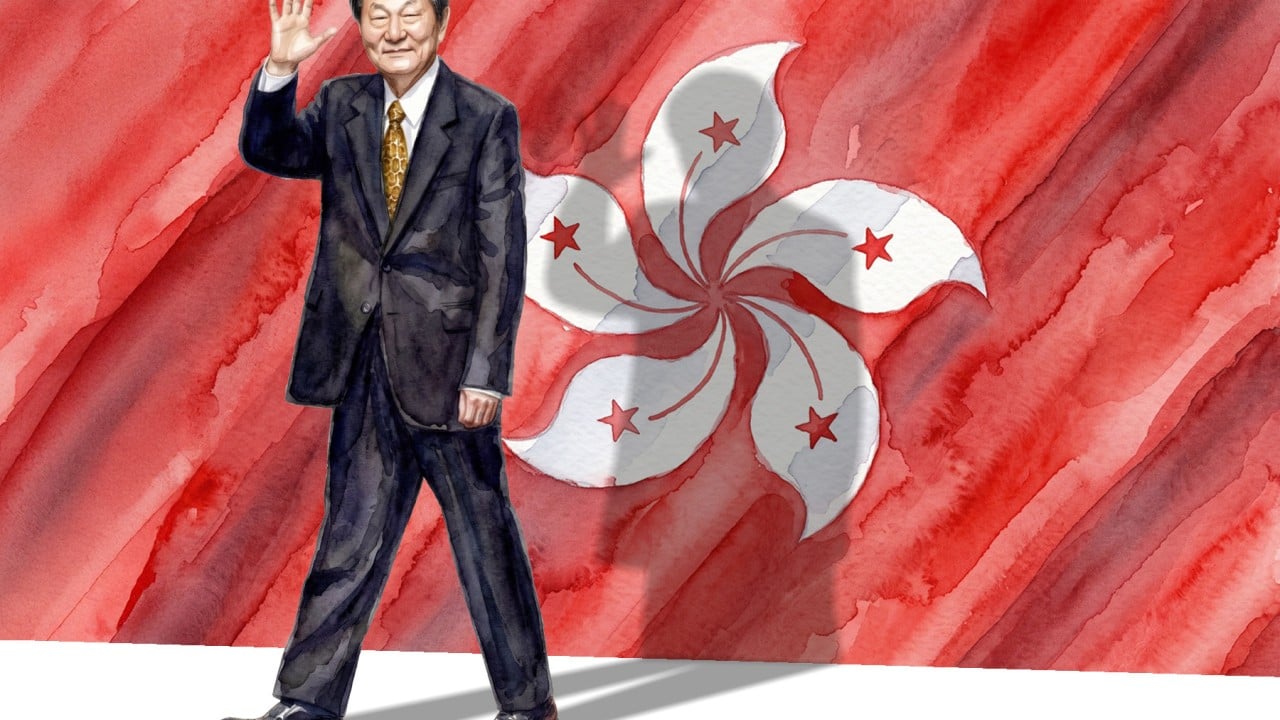
Macroeconomic transformation rarely happens through organic market drift; it requires calculated institutional shocks. When evaluating the modernization of the world's second-largest economy during the late twentieth century, analysts frequently attribute explosive industrial growth to vague political goodwill. This perspective ignores the operational mechanics implemented by former premier Zhu Rongji between 1998 and 2003, backed by his preceding tenure as economic czar. Zhu did not merely manage an emerging market; he constructed a centralized administrative engine that successfully altered global trade flows while locking in severe structural imbalances that persist decades later. Deconstructing his tenure requires examining the specific policy levers he pulled, the exact distribution of costs he enforced, and the unintended secondary consequences of his institutional architecture.
The 1994 Fiscal Centralization and Its Structural Aftershocks
The foundation of modern Chinese state capacity was laid in 1994 through a radical overhaul of the tax-sharing system. Prior to this reform, the central government in Beijing suffered from a declining share of national fiscal revenue, dropping to roughly 22 percent by 1993, which crippled its ability to execute macroeconomic policy or fund large-scale infrastructure. Meanwhile, you can explore similar events here: Inside Alibaba's Ten Billion Dollar Gamble on Artificial Intelligence.
Zhu engineered a fiscal realignment that redirected the majority of tax revenues directly to the center. The central government's share of fiscal revenue jumped to 56 percent overnight in 1994 and has hovered near half of the total ever since.
This mechanism solved the immediate fiscal crisis of the state, but it created an operational bottleneck known as the mismatch between fiscal power and administrative responsibility. While Beijing seized the revenue, it decentralized the burden of public expenditures—such as education, healthcare, and local administration—down to municipal and county governments. To see the bigger picture, we recommend the detailed analysis by Bloomberg.
To bridge this structural funding gap, local authorities turned to alternative revenue streams. Municipalities began relying heavily on land sales and real estate development rights to finance local budgets. This reliance incentivized rapid urbanization fueled by land monetization, unintentionally laying the structural groundwork for systemic local government debt and property market vulnerabilities that surfaced decades later.
State-Owned Enterprise Rationalization and Labor Redirection
By the mid-1990s, the industrial core of the economy was bogged down by inefficiency, massive debt, and soft budget constraints within state-owned enterprises. Enterprises functioned as social welfare silos, providing housing, healthcare, and lifetime employment regardless of commercial output.
Zhu deployed a ruthless triage strategy summed up by his famous directive to seize control of the worst-performing assets and force a massive industrial shakeout. Under the banner of grasping the large and letting go of the small, thousands of smaller state firms were closed, merged, or privatized.
The human cost function of this industrial restructuring was immense. The policy triggered the displacement of an estimated thirty to sixty million urban workers through widespread layoffs.
To prevent systemic social unrest from derailing the reforms, the administration instituted two parallel mitigating frameworks:
- The creation of re-employment service centers designed to provide temporary basic living allowances and training to displaced industrial personnel.
- The acceleration of housing privatization, transferring state-owned worker apartments directly to occupants at nominal prices, creating an initial asset base for urban households.
This dual approach cushioned the blow for millions of families, converting disaffected industrial labor into a nascent class of private property owners while simultaneously forcing capital efficiency onto surviving industrial firms.
WTO Accession and External Export Dominance
The external capstone of Zhu's career was the successful conclusion of protracted negotiations for entry into the World Trade Organization in December 2001. Domestic opposition was fierce; industrial ministries and protected sectors feared immediate collapse under foreign competition.
Zhu utilized the external commitment of international trade rules as a binding constraint to bypass domestic interest groups. By locking the country into global trade standards, he effectively stripped local protectionists of their legal authority to shield inefficient domestic monopolies.
The economic velocity generated by this integration was immediate. Total exports surged from roughly $253 billion in 2000 to over $1.65 trillion by 2010, driving the nation to overtake Japan and eventually become the largest manufacturing exporter globally.
Yet this export-led model was underpinned by an underlying structural mechanism: the systematic suppression of household income as a share of gross domestic product. By keeping domestic consumption low and labor costs competitive, manufacturing margins expanded rapidly, attracting immense foreign direct investment.
However, this reliance on external demand rather than domestic consumption depressed household disposable income relative to overall economic expansion. The resulting imbalance stunted the growth of a broad consumer class proportional to the nation's industrial output, creating long-term reliance on foreign trade surpluses.
Strategic Assessment and Forward Outlook
Zhu Rongji operated with a specific institutional philosophy: modernize economic output and financial discipline while strengthening the administrative control of the ruling party. He rejected political liberalization, treating institutional reform strictly as an operational upgrade rather than a transition toward a market democracy.
The strategic outcome is a dual-track legacy. The structural pillars he erected—centralized fiscal capacity, disciplined monetary oversight, and integration into global supply chains—fueled decades of unprecedented expansion. Concurrently, the friction points he left unresolved—local government fiscal dependency on real estate, suppressed household income shares, and demographic strain—continue to define the structural ceilings facing modern economic planners.
Navigating the next phase of development requires dismantling these legacy bottlenecks by systematically raising household disposable income and rebalancing fiscal revenues back toward local service delivery, altering the foundational distribution channels that Zhu established three decades ago.