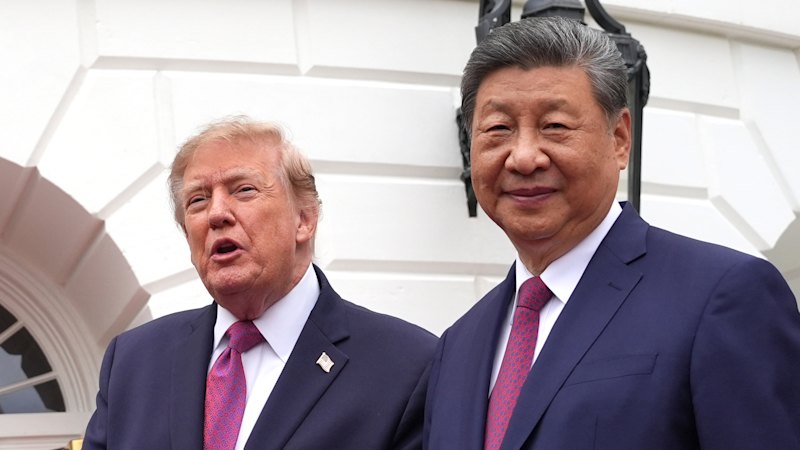
International diplomacy operates on two distinct planes. The public surface consists of communiques, press conferences, and meticulously negotiated treaties designed for domestic consumption and multilateral legitimacy. Beneath this layer lies a subterranean architecture of physical space, material selection, and calculated informality. When leaders of opposing economic superpowers meet outside the formal apparatus of state summits, every structural modification to the environment ceases to be neutral infrastructure and transforms into a signaling device. The deliberate display of architectural alterations and subversive iconography serves a distinct structural function in high-stakes bilateral negotiations, bypassing traditional diplomatic channels to communicate hierarchy, transactional intent, and domestic political priorities.
The Mechanics of Spatial Dominance
Physical environments condition behavioral outcomes in bilateral summits. Traditional state visits occur within predetermined, neutral zones such as Geneva, Vienna, or heavily guarded government compounds designed to project institutional permanence. When negotiations are relocated to privately controlled terrain, the host gains asymmetric control over the semiotic environment.
The introduction of newly constructed heavy infrastructure, specifically functional aviation landing sites, functions as a physical manifestation of unilateral capacity and operational readiness. Granite selection, structural scale, and spatial orientation are not aesthetic afterthoughts; they are material choices communicating durability, permanence, and capital expenditure. In high-level negotiations, displaying capital improvements operates as an implicit signal of economic resilience and infrastructural control.
This spatial strategy relies on three distinct variables:
- Asymmetry of Context: Shifting the meeting location from a neutral multilateral venue to a proprietary domain strips visiting delegations of their standard protocol protections, forcing them to engage with the host's physical framing.
- Tactile Permanence: Utilizing geological materials like granite communicates an intentional rejection of temporary diplomatic architecture, signaling long-term strategic entrenchment.
- Operational Display: Integrating active transport infrastructure into the diplomatic tour blurs the line between commercial dominance and state capability, compelling the visitor to acknowledge physical assets built under the host's direct jurisdiction.
By framing the tour around concrete infrastructural additions, the host establishes a baseline of physical dominance before any verbal negotiation begins. The visitor is forced to evaluate the host not merely as a political adversary, but as a sovereign capable of reshaping physical geography at will.
The Subtext of Bureaucratic Irony
While heavy architecture establishes macro-level dominance, micro-level artifacts introduce calculated ambiguity and psychological subversion. Diplomatic protocol typically relies on pristine, highly formalized iconography—official portraits, commemorative plaques, and standardized gifts that convey mutual respect and diplomatic parity. Subverting this standard through self-referential or satirical artifacts introduces a variable of calculated unpredictability.
The presentation of a portrait commemorating a mechanical bureaucracy—specifically an autopen, the mechanical proxy used for executing state signatures without human intervention—operates as a multi-layered semiotic challenge.
[Traditional Diplomacy]
   └── Standard Iconography (Official Portraits, Mutual Praise)
         └── Predictable Equilibrium

[Transactional Diplomacy]
   └── Material Alteration (Granite, Helipads) + Subversive Artifacts (Autopen Imagery)
         └── Calculated Disequilibrium & Psychological Leverage
This artifact operates on several analytical levels:
- Demythologization of Authority: By highlighting the automated nature of governance, the artifact mocks the solemnity of official sanction, suggesting that power is mechanical, replicable, and detached from traditional elite legitimacy.
- Transactional Cynicism: The choice of an autopen as a subject reduces executive action to a repetitive, industrial process, aligning with a worldview that views statecraft not as an ideological crusade, but as a series of administrative transactions.
- Audience Splitting: The artifact communicates differently to domestic supporters, foreign observers, and the visiting delegation. To the domestic base, it signals anti-establishment irreverence; to the foreign visitor, it serves as an unpredictable assertion of executive autonomy.
This deliberate deployment of irony destabilizes standard diplomatic posture. When an autocrat or nationalist leader confronts an artifact that satirizes the mechanisms of executive power, traditional cost-benefit models of deterrence and persuasion break down. The visitor cannot easily categorize the gesture as either a friendly overture or a hostile maneuver, creating a tactical vacuum that the host can exploit.
The Cost Function of Unpredictability
Mainstream analysis often misinterprets these theatrical gestures as eccentric anomalies or undisciplined behavior. This interpretation fundamentally misunderstands the utility of erratic signaling in modern statecraft. In game-theoretic terms, predictability is a vulnerability. If a state actor operates within a strictly rational, institutional framework, adversaries can model their responses, anticipate concessions, and structure long-term containment strategies.
Introducing unpredictable elements—such as impromptu tours of helipads or ironic homages to bureaucratic machinery—increases the perceived variance of the actor's behavior. This strategy, often analyzed through the lens of the madman theory or erratic signaling models, forces opposing actors to assign higher probabilities to extreme outcomes. Consequently, the visiting power must exercise greater caution, inflating the perceived cost of aggressive posturing or uncompromising negotiation stances.
The financial and political costs of maintaining this posture are asymmetric:
- Low Marginal Cost: Constructing a helipad or commissioning a satirical portrait requires minimal capital relative to the strategic optionality it generates.
- High Analytical Burden: The visiting delegation must dedicate significant intelligence and diplomatic resources to decoding whether the gesture represents a casual whim or a hidden strategic warning.
- Narrative Control: By dominating the visual and conversational agenda with physical curiosities, the host prevents the visitor from setting the diplomatic parameters or steering discussions toward sensitive human rights or geopolitical flashpoints.
Through this lens, the interaction shifts from a standard bilateral exchange to an exercise in agenda capture. The visitor is drawn into the host's curated reality, where physical assets and internal jokes supersede traditional diplomatic communiques.
Strategic Trajectory and Equilibrium Shifts
The long-term consequence of this transactional, material-heavy diplomacy is the steady erosion of multilateral norms in favor of personalized, transactional bilateralism. When international relations are mediated through private estates, custom infrastructure, and personalized artifacts, the institutional memory of the state is subordinated to individual executive relationships.
This evolution presents a structural challenge for bureaucratic states like China, whose diplomatic apparatus is designed for long-term strategic planning, institutional continuity, and protocol-driven engagement. When confronted with an adversary who deploys architectural ostentation and subversive satire as core diplomatic tools, traditional bureaucratic response mechanisms frequently fail. Standard diplomatic protests or retaliatory communiques lack the requisite semiotic weight to counter a tangible helipad or an ironic portrait.
To maintain equilibrium in environments defined by personalized theater, rival powers are forced to adapt their own signaling mechanisms. They must balance formal institutional resistance with counter-theater, investing in their own domestic spectacles to project equivalent resolve. Ultimately, the integration of heavy infrastructure and ironic artifacts into high-level summits signals a permanent shift in great power competition. Substance and theater are no longer separable components of statecraft; the theater itself has become the primary theater of negotiation.