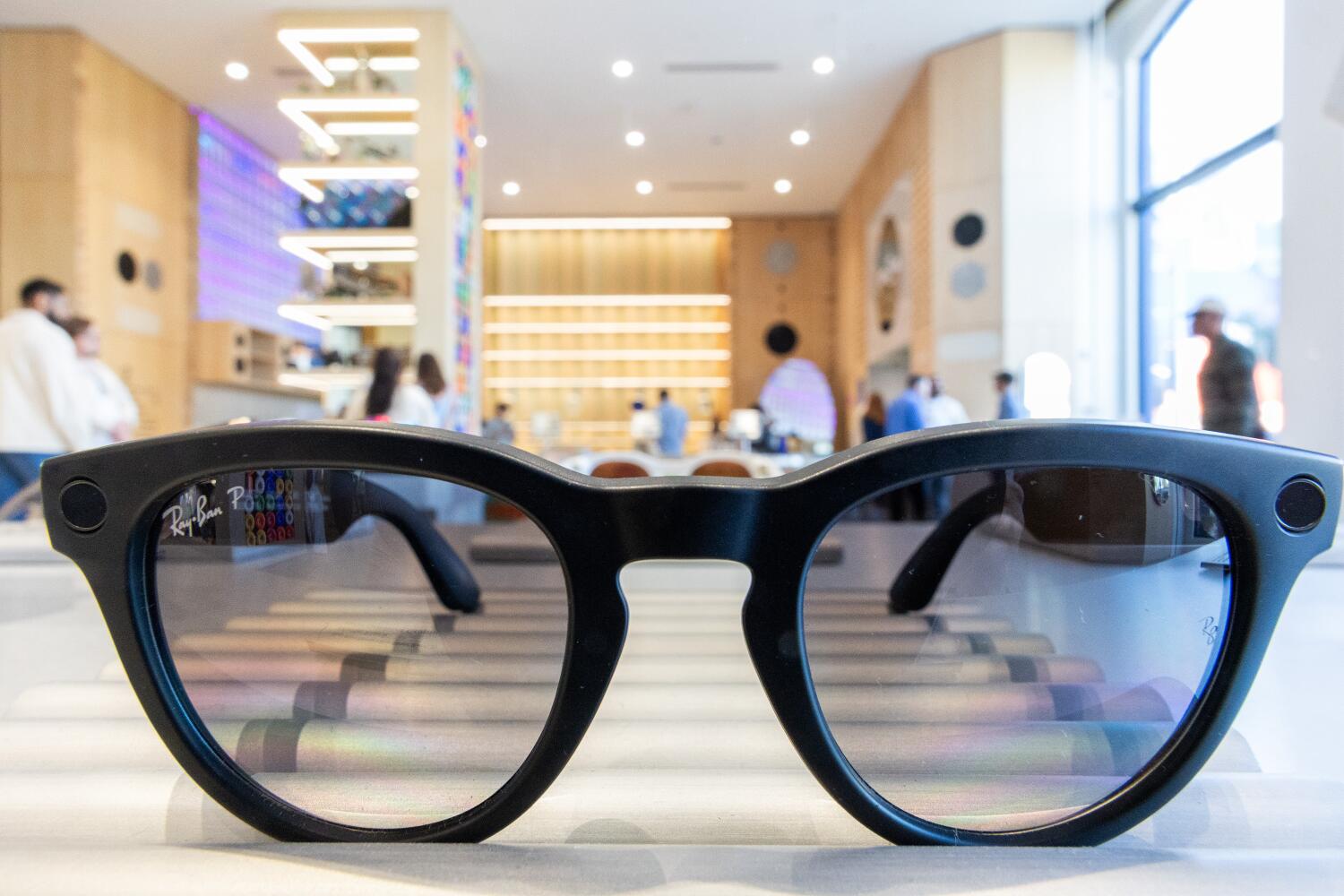
Visual impairment imposes a severe navigation penalty, forcing individuals to rely on auditory cues, tactile mapping via white canes, or biological guides. Smart glasses introduce a structural shift in this equation by converting optical data into real-time auditory or haptic feedback loops. This analysis deconstructs the functional mechanics of assistive optical hardware, mapping the precise performance gains, system bottlenecks, and adoption friction points that dictate real-world utility.
The Three Operational Pillars of Assistive Smart Glasses
To understand how wearable optical tech alters the sensory landscape for visually impaired users, we must isolate the hardware and software systems into three distinct functional tiers: environmental capture, computational processing, and sensory translation.
1. Environmental Capture and Spatial Mapping
Traditional navigation tools operate on local feedback. A cane detects surface texture and immediate obstacles within a one-meter radius. Smart glasses expand this radius exponentially through high-definition camera arrays and LiDAR sensors. These optical units capture continuous frames of the user's trajectory, establishing a dynamic spatial grid.
The primary engineering challenge in this tier is latency. If the time delta between frame capture and spatial mapping exceeds one hundred milliseconds, the user experiences motion-to-photon lag, rendering fast-moving obstacles hazardous. High-performance units mitigate this by shifting processing loads to dedicated on-board neural processing units rather than relying entirely on cloud streaming, which introduces network jitter.
2. Computational Inference and Object Classification
Raw video feeds are useless without contextual interpretation. The core software layer must execute object detection, depth estimation, and semantic segmentation in real time. This means the system does not merely register a generic barrier; it classifies the barrier as a stationary object (a fire hydrant), a moving obstacle (a pedestrian), or a surface anomaly (an open construction trench).
Edge computing constraints dictate system architecture here. Battery capacity limits the physical weight of the wearable frame. Heavy batteries cause user fatigue during extended wear, yet lightweight frames lack the thermal dissipation required to run complex computer vision models continuously. Manufacturers balance this by deploying quantized neural networks—smaller, highly optimized models that sacrifice negligible accuracy for substantial efficiency gains.
3. Sensory Translation and Cognitive Load
The final tier involves delivering processed data to the user without overwhelming their cognitive capacity. Since the visual cortex is bypassed or underutilized, the system must translate visual data into auditory prompts or haptic patterns.
Bone-conduction transducers are the preferred hardware choice for auditory output. They transmit sound vibrations through the cheekbones to the inner ear, leaving the ear canals open for ambient environmental sounds like oncoming traffic. However, audio clutter remains a critical failure point. If an algorithm narrates every sign, leaf, and pedestrian simultaneously, the user suffers from cognitive overload. Effective systems utilize priority queuing, communicating only immediate collision vectors and explicitly requested structural details, such as reading a storefront sign or identifying a bus number.
The Cost Function of Adoption
Deploying assistive smart glasses involves a complex cost-benefit calculus that extends far beyond retail acquisition pricing. Users and healthcare providers must evaluate trade-offs across four distinct vectors: financial outlay, cognitive training overhead, social friction, and hardware reliability.
Total Adoption Cost = Financial Price + Training Overhead + Social Friction + Hardware Maintenance
The financial barrier is acute. Advanced assistive wearables rarely qualify for standard baseline health insurance coverage, categorizing them as elective enhancements rather than mandatory medical equipment. This shifts the economic burden onto the individual, creating a severe accessibility gap.
Training overhead is equally significant. Unlike a white cane, which relies on intuitive mechanical feedback refined over weeks of orientation and mobility training, smart glasses require users to learn a new digital language. Interpreting spatial audio cues, managing battery charging cycles, and troubleshooting software updates demand technical literacy and persistent calibration.
Social friction presents a psychological hurdle. Wearable cameras inevitably evoke privacy concerns from the general public. Users frequently report feeling self-conscious or facing unwarranted scrutiny regarding surveillance, even when the device is operating strictly in local navigation mode without cloud recording enabled.
Systemic Bottlenecks and Failure Modes
Despite technological maturation, current assistive smart glasses exhibit clear operational limitations that define their current boundaries of utility.
Environmental variability destroys algorithmic accuracy. Heavy rain, dense fog, and direct glare severely degrade camera sensor inputs. While LiDAR mitigates some optical blindness, sudden weather shifts can still force a system fallback to basic warning states.
Power density constraints restrict active operational windows. Continuous computer vision processing drains a lightweight frame battery within two to four hours of active navigation. For a commuter navigating a complex urban transit system, this requires carrying external battery packs and managing tethered power cables, which reintroduces physical hazards.
Semantic translation gaps persist in unstructured environments. While structured indoor spaces or mapped transit hubs allow for precise navigation prompts, chaotic outdoor environments featuring dense crowds, pop-up vendors, and unpredictable human movement frequently produce false positives or missed collision alerts.
Strategic Deployment Roadmap
Maximizing the utility of assistive smart glasses requires treating them as complementary instruments rather than standalone replacements for traditional mobility aids.
First, integrate device onboarding with professional orientation and mobility specialists. Hardware deployment without structured spatial training increases accident rates and user abandonment.
Second, establish rigorous usage protocols based on environmental predictability. Deploy the technology primarily in high-complexity, low-familiarity environments—such as navigating an unfamiliar airport terminal—while relying on traditional modalities for routine, highly predictable home-to-work corridors where cognitive load should be minimized.
Third, demand modular hardware designs. Systems that allow hot-swappable batteries and independent upgrades of the optical sensor pod versus the processing arm protect the user's capital investment against rapid technological obsolescence.