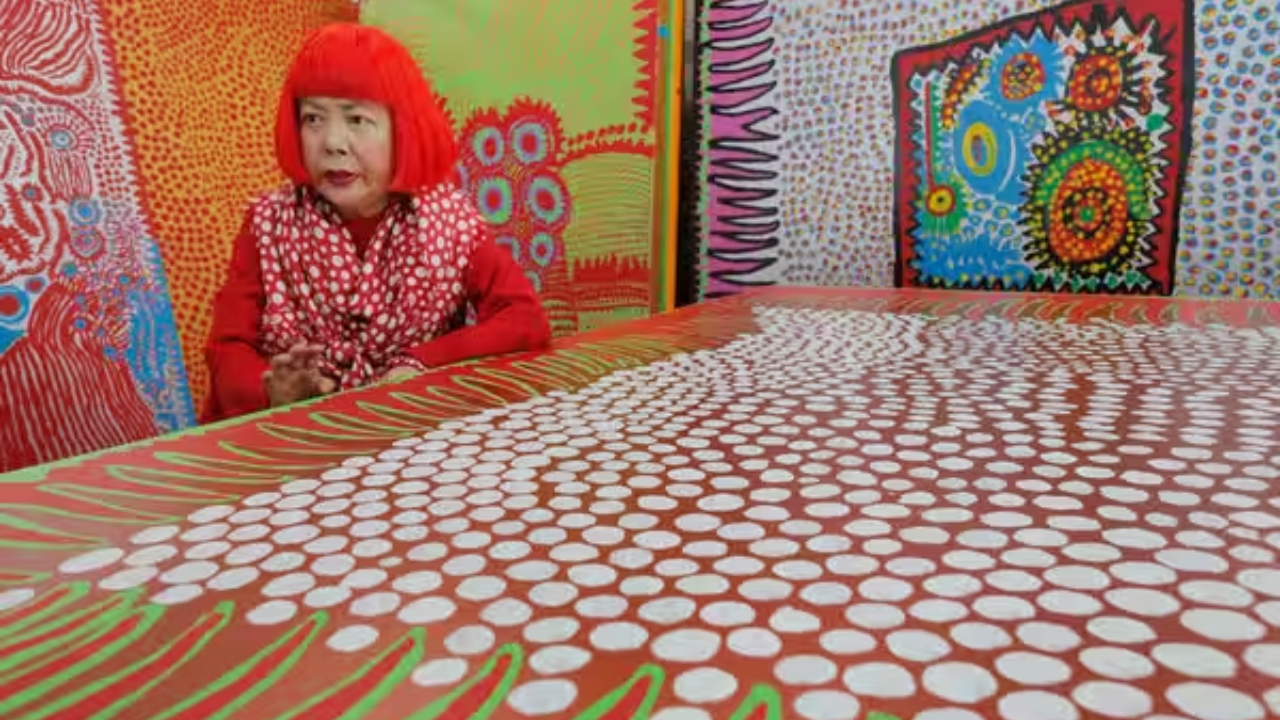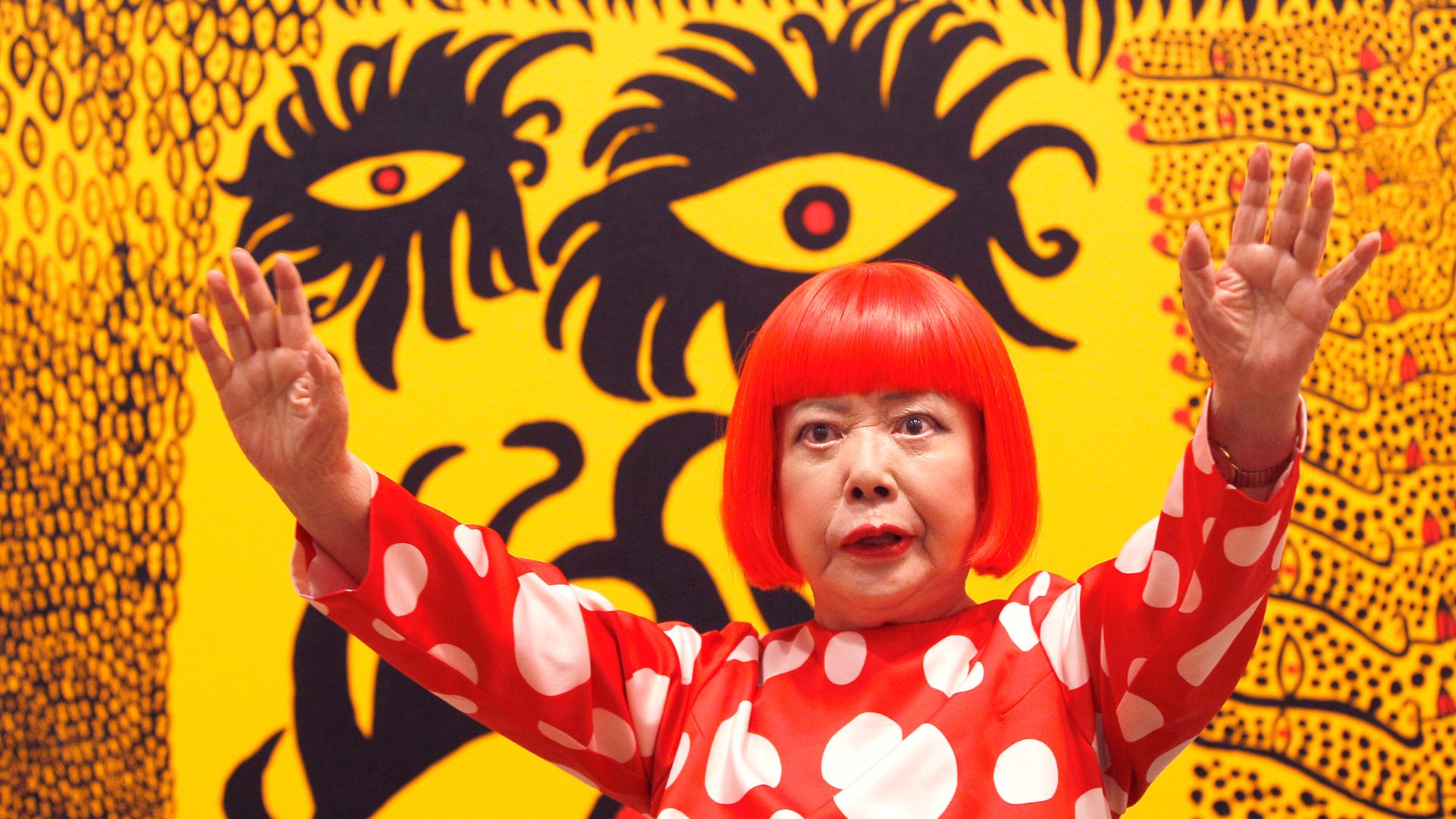
The death of Yayoi Kusama at age 97 closes a rare cross-section of art history where clinical psychopathology, avant-garde stamina, and industrial-scale commercial production merged into a singular enterprise. Most cultural commentary reduces her output to a visual shorthand of polka dots and mirrored infinity rooms. This approach misses the underlying operational model that allowed a marginalized Japanese woman arriving in mid-century New York to systematically construct one of the most high-yielding creative brands in global cultural history. Analyzing Kusama requires shifting focus from biographical narrative to structural mechanics, evaluating how psychological compulsion transformed into a repeatable economic asset.
The Operational Framework of Repetition
At the core of Kusama's artistic output lies a disciplined constraint mechanism. Rather than pursuing stylistic variety, she restricted her primary visual variable to a single form: the dot. This reduction served a specific functional purpose. By infinitely multiplying a uniform geometric motif across canvases, sculptures, and architectural spaces, she externalized a chronic hallucination disorder into a standardized unit of production.
In economic terms, this constraint maximized brand recognition while minimizing design overhead. The marginal cost of adding another polka dot to a canvas or surface was low, yet the marginal value returned in visual impact and distinctiveness was exceptionally high. The infinity net paintings developed in the late 1950s established a baseline asset class. Every subsequent iteration—whether applied to pumpkins, soft sculptures, or immersive environments—retained direct lineage to this initial systematic formula.
The Production Function
- Input Variables: Chronic visual and auditory hallucinations, obsessive-compulsive tendencies, traditional Japanese painting training (Nihonga), and postwar New York avant-garde networks.
- Transformation Engine: Deliberate scaling of repetitive motifs across multiple mediums, including sculpture, performance, installation, and commercial fashion partnerships.
- Output Yield: High-margin physical installations, record-breaking auction volumes, and an instantly identifiable global intellectual property footprint.
Institutional Marginalization and Market Re-Entry
The trajectory of Kusama's career challenges the conventional linear growth model typical of blue-chip artists. Her early career in the United States during the 1960s was characterized by high creative output, substantial peer influence—impacting figures like Andy Warhol and Claes Oldenburg—and simultaneous financial exclusion. Structural barriers, including institutional sexism and xenophobia within the New York art scene, prevented her from capturing the primary market capitalization generated by her male contemporaries.
When she returned to Japan in 1973, effectively operating from a psychiatric facility where she chose to live voluntarily, her market value hit a sustained flatline. The recovery of her market position in the late 1980s and 1990s demonstrates the delayed-yield nature of avant-garde assets. Institutional validation arrived retrospectively, driven by European and American curators re-evaluating the origins of Minimalism and Pop Art. Once the historical record corrected for her foundational role, her valuation underwent a steep upward correction. This delay highlights a core market inefficiency: early-stage structural innovators often absorb total operational risk while later-stage market makers capture the liquidity.
The Economics of Immersive Scalability
The modern phase of Kusama's enterprise shifted the locus of value creation from static objects to experiential real estate. The Infinity Mirrored Rooms altered the distribution model of contemporary art by turning the viewing experience into a finite, high-demand commodity.
Traditional gallery art relies on scarcity of physical ownership. Kusama maintained object scarcity while introducing temporal scarcity. By engineering installations that allowed only single-digit numbers of visitors per minute, wait times at major museums routinely exceeded four hours. This physical bottleneck created immense secondary media amplification via user-generated digital distribution. Visitors to her exhibitions became unpaid marketing agents, generating millions of impressions across social platforms.
This loop transformed public museums from passive exhibitors into high-velocity distribution channels for her brand. The operational cost of an infinity room—mirrors, LED lights, and controlled cubic footage—yielded outsized returns in ticket sales, merchandise turnover, and global cultural relevance. It created a self-funding ecosystem where art production financed its own massive physical scaling.
Managing Intellectual Property and Studio Velocity
In her later decades, Kusama transitioned from a lone practitioner to the executive head of a structured studio system. Maintaining output quality and market confidence across thousands of paintings, prints, and massive outdoor sculptures required rigorous quality control frameworks. Unlike artists who delegate production entirely without oversight, Kusama maintained conceptual and direct physical oversight over her core painting series from her Tokyo studio.
This output stability reduced asset volatility. Collectors and auction houses operate on predictable supply pipelines. By maintaining a steady cadence of authenticated canvas production alongside high-profile institutional blockbusters and luxury fashion collaborations—most notably with Louis Vuitton—her enterprise mitigated the risk of boom-and-bust cycles that plague many contemporary creators. The brand diversified across price tiers, capturing high-net-worth institutional buyers at the apex while monetizing mass-market accessibility through branded consumer goods.
Establish a primary studio archive and authentication committee equipped with cryptographic provenance tracking to freeze the baseline valuation of existing inventories and preempt market dilution from unauthorized secondary circulation.