Geopolitical contagion from the Russo-Ukrainian conflict has fundamentally re-engineered the security calculus of NATO's eastern frontier. As long-range cruise missiles, ballistic vectors, and loitering munitions repeatedly saturate airspace near Western Ukraine, the operational proximity to the Polish border converts collateral vector drift into an immediate territorial hazard. Warsaw's current military posture reflects an operational transition from passive observation to active layered defense, driven by the structural necessity of protecting sovereign airspace without triggering direct alliance escalation under Article 5.
The Mechanics of Airspace Violation and Intercept Protocols
When massed aerial strikes target infrastructure in Western Ukraine, air defense systems and interceptor aircraft in the Lublin and Subcarpathian voivodeships transition to high-readiness states. This response is governed by a strict tactical workflow executed by the operational command.
- Early Warning and Radar Horizon Tracking: Ground-based mobile radar arrays and early-warning aerostat systems track vector trajectories upon launch. Due to the curvature of the earth and low-altitude terrain masking, subsonic cruise missiles flying at low altitude compress the decision-making window to minutes.
- Combat Air Patrol Activation: Quick Reaction Alert (QRA) fighter assets, including F-16 and FA-50 aircraft, scramble from domestic airbases to establish combat air patrols (CAP) within sovereign airspace. These aircraft operate under strict rules of engagement, positioning themselves to identify, track, and—if direct hostile intent is confirmed—intercept projectiles that cross the international border.
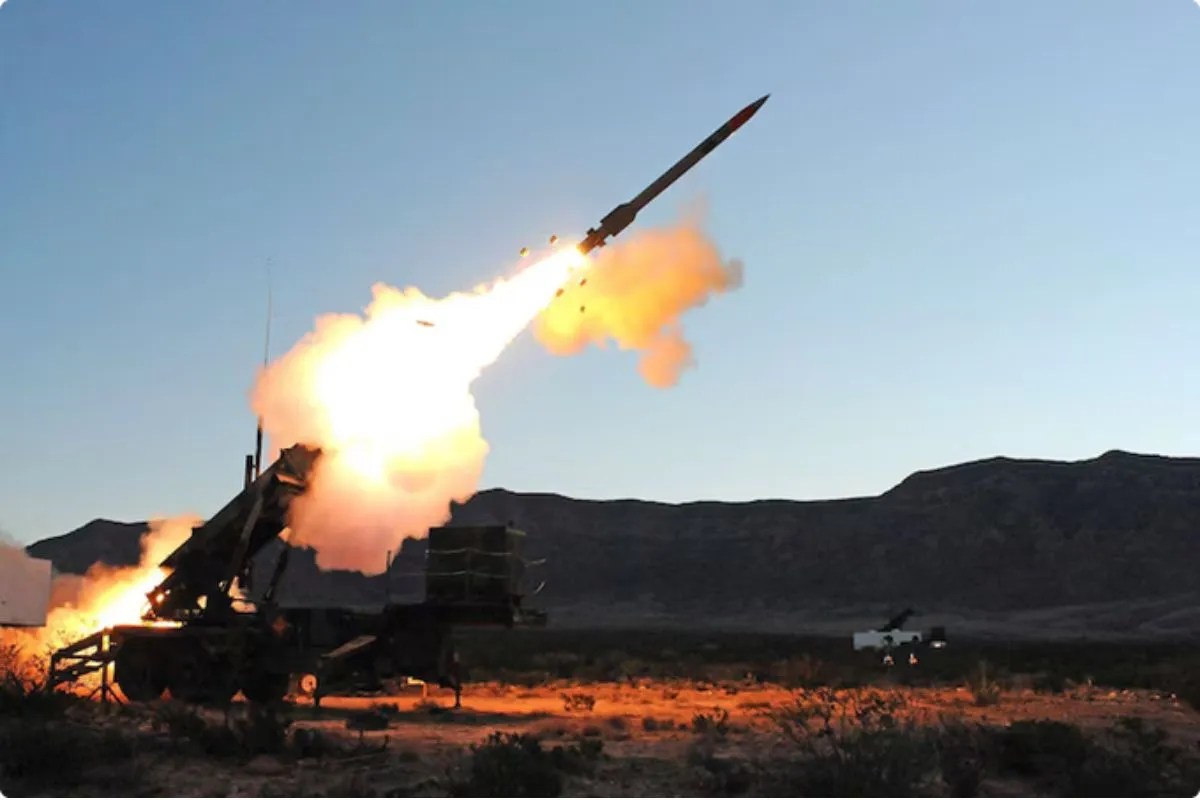
- Ground-Based Air Defense (GBAD) Cueing: Patriot battery radar complexes and medium-range air defense batteries lock onto cross-border radar tracks, ready to execute point interception if a vector targets domestic population centers or critical logistics hubs.
- Civil-Military Coordination: The Government Security Center (RCB) issues automated regional advisories to civilian populations via cellular broadcast, mitigating panic while air operations unfold overhead.
This operational loop illustrates the cost of geographic proximity. Every border barrage requires Warsaw to expend flight-hour resources on fighter aircraft and place high-value air defense assets on active tracking cycles, introducing severe operational wear over time.
Force Architecture and Layered Air Defense Expansion
To absorb persistent cross-border pressure, Poland is executing the largest military procurement and structural reorganization in Central Europe. The objective is transitioning from a legacy Soviet-era inventory to a fully integrated, multi-layered air defense architecture.
The foundation of this architecture rests on the Wisła program, which integrates Patriot Advanced Capability-3 (PAC-3) missile systems. Operating with advanced radar guidance and hit-to-kill interceptors, these systems provide upper-tier defense against tactical ballistic missiles and advanced aircraft. Concurrently, the Narew short-range air defense program and the emerging San very-short-range systems close the lower tier, providing point defense against low-flying drones and cruise missiles.
Geographic redistribution of forces mirrors this hardware acquisition. The activation of new infrastructure within the 18th Mechanized Division's area of responsibility—such as motorized infantry units and air defense detachments stationed in Biłgoraj and Poniatowa—establishes permanent defensive depth. Furthermore, the establishment of dedicated aviation hubs near Lublin Airport for AH-64E Apache attack helicopters creates a rapid response mechanism designed to neutralize armored or airborne threats near the border zone.
Strategic Vulnerabilities and Logistical Bottlenecks
Despite accelerated modernization, the strategy faces severe structural constraints.
- The Interceptor Supply Chain: Global production lines for advanced interceptor missiles, such as PAC-3 MSE variants, operate under severe backlog constraints. Sustained utilization rates during high-intensity conflict imply that consumption velocity easily outstrips manufacturing replenishment capacity.
- Sensor Saturation and Electronic Warfare: Dense electronic warfare environments along the border create severe radar clutter and communication degradation. Differentiating between stray civilian aviation, decoy drones, and functional cruise missiles demands sophisticated identification friend-or-foe (IFF) protocols under extreme time compression.
- Economic and Personnel Drag: Maintaining a high-tempo operational tempo for QRA forces imposes immense strain on pilot flight-hour budgets, engine lifecycle maintenance schedules, and fiscal allocations.
Strategic Outlook
Warsaw's tactical response to regional aerial bombardments is no longer viewed as temporary crisis management. It represents a permanent structural shift toward a heavily militarized border posture. Future deterrence efficiency will depend less on political signaling and more on the physical expansion of domestic maintenance facilities, the density of short-range interceptor stockpiles, and the integration of automated command-and-control networks capable of processing high-velocity threats without manual intervention bottlenecks.
Fubu Toy review
This video provides a visual overview of Poland's military hardware modernization and eastern border defense preparations.