The conversion of a singular private collection into a public digital utility represents a complex transition from high-entropy physical data to a low-entropy structured database. When 10,000 concert recordings move from a fan’s basement to an online repository, the primary challenge is not the storage of the audio itself, but the creation of a rigorous metadata schema that allows for discovery, verification, and long-term viability. This process operates under a specific economic and technical framework: the cost of digitization is fixed, while the value of the archive scales exponentially with the quality of its indexing.
The Tri-Node Framework of Archival Integrity
To transform a massive volume of raw audio into a "treasure trove," three distinct systems must align. Failure in any single node results in a "dark archive"—data that exists but cannot be effectively retrieved or utilized.
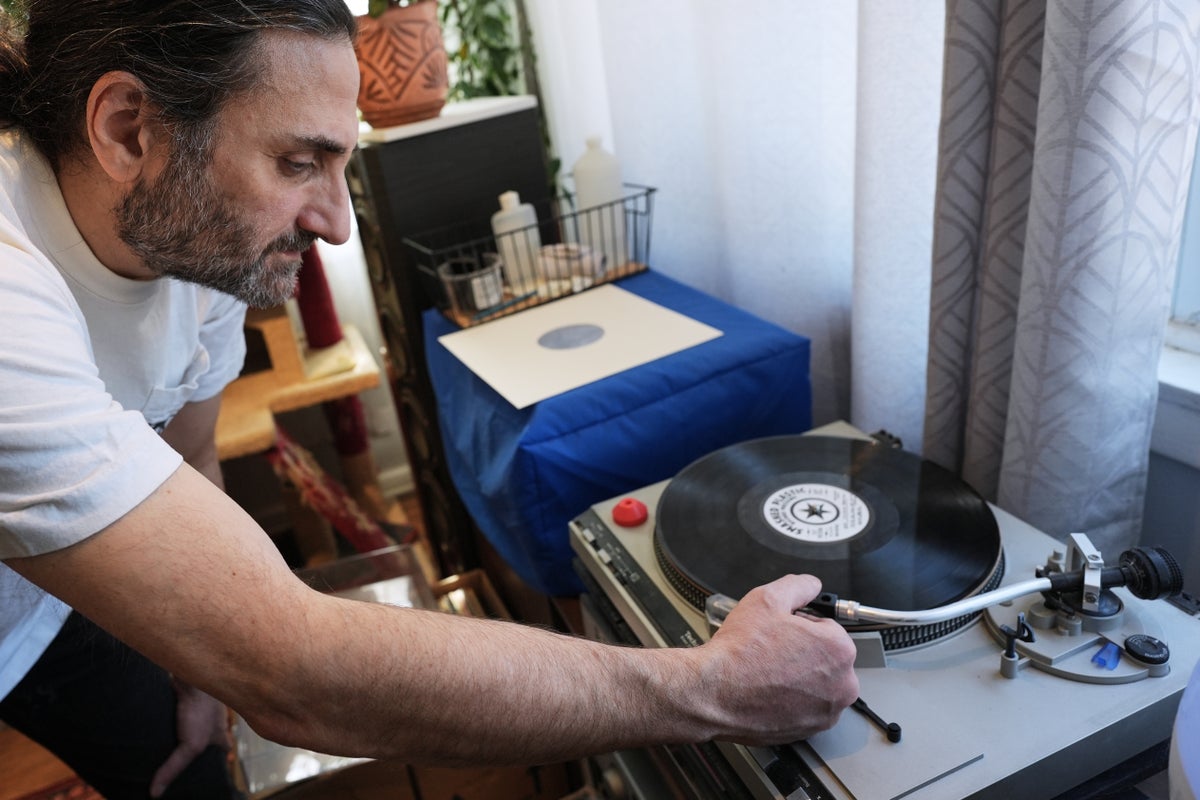
- The Acquisition Layer: This involves the physical-to-digital bridge. In the context of 10,000 recordings, the hardware bottleneck is significant. Every hour of tape requires an hour of playback for real-time capture, unless high-speed duplication hardware is employed, which introduces risks of mechanical degradation.
- The Semantic Layer: This is where volunteers perform the heavy lifting. Raw audio files are meaningless to a search engine without associated tags: venue, date, setlist, line-up, and audio quality (SBD for soundboard, AUD for audience).
- The Persistence Layer: Digital files are fragile. Bit rot—the slow decay of data on storage media—and format obsolescence pose constant threats. A successful archive must utilize a redundant array of independent disks (RAID) and checksum verification to ensure the file downloaded in ten years is identical to the one uploaded today.
The Crowdsourcing Labor Function
The mobilization of volunteers to process 10,000 recordings is an exercise in decentralized labor management. Standard archival work is prohibitively expensive for non-profits; however, the "fan-as-archivist" model utilizes a specific form of sweat equity where the reward is access and community prestige rather than capital.
This labor model follows a power-law distribution. A small cohort of "super-users" typically performs 80% of the high-complexity tasks—such as spectral analysis to remove tape hiss or track-splitting—while the larger base of casual volunteers handles low-complexity tasks like verifying dates against historical tour posters.
The primary friction in this model is Verification Latency. Because volunteers are not professionals, the archive must implement a peer-review system. A single recording's metadata must be validated by at least two independent sources before it is marked as "Gold Standard." Without this, the archive’s utility is compromised by "hallucinated" data, such as mislabeled venues or incorrect years.
Technical Debt and the Metadata Bottleneck
The competitor's view often overlooks the reality of technical debt in large-scale audio projects. When 10,000 recordings are dumped into a system, the initial "win" is the volume. The long-term "loss" is the inconsistency of the data formats.
- Sample Rate Disparity: Recordings from the 1970s digitized in the early 2000s might be at 16-bit/44.1kHz, while modern captures are at 24-bit/192kHz. Normalizing these across a single interface requires significant computational overhead.
- The Lossy vs. Lossless Conflict: To maximize accessibility, archives often provide MP3 versions, but the master must be FLAC or WAV. Managing these parallel derivatives doubles the storage requirement and increases the complexity of the file-linking logic.
The bottleneck is rarely the disk space—storage is cheap. The bottleneck is the Time-to-Context. A user does not want "10,000 recordings"; they want the specific performance of a specific song where a specific improvisational peak occurred. Building the markers for these peaks requires a level of granular metadata (time-stamping) that few volunteer groups can sustain at scale.
Intellectual Property and the Gray Market Equilibrium
A significant portion of these concert recordings exists in a legal gray area known as "bootleg culture." The longevity of such an archive depends on a delicate equilibrium between the taper, the artist, and the platform.
Most archives survive through a policy of "Non-Commercial Tolerance." As long as the archive does not monetize the recordings and honors "takedown notices" from artists who wish to maintain control over their live catalog, the archive is allowed to persist. However, this creates a Survivorship Bias in the data. Only artists who are "taper-friendly" (e.g., The Grateful Dead, Phish, Metallica) end up with robust digital histories. The history of music, as represented by these archives, is skewed toward genres and performers who opted into this open-access philosophy.
The Signal-to-Noise Ratio in Discovery Engines
As the archive grows, the "Discovery Problem" intensifies. In a pool of 10,000 recordings, the bottom 90% may never be listened to. To mitigate this, the architecture must move from a simple list-based interface to a recommendation engine based on Acoustic Fingerprinting.
By analyzing the frequency response and dynamic range of the recordings, the system can automatically categorize shows by "Aura"—for example, separating "intimate club sets" from "stadium echoes." This moves the project from a mere storage locker to an active curatorial tool.
Quantifying the Value of the "Fan Archive"
We can quantify the value of this project using a simple utility formula:
$$V = \frac{N \times Q}{D}$$
Where:
- $V$ is the Archive Value.
- $N$ is the number of unique recordings.
- $Q$ is the Metadata Quality Index (accuracy and granularity).
- $D$ is the Decay Rate (likelihood of link rot or server failure).
If $Q$ is low, $V$ approaches zero regardless of how large $N$ becomes. This explains why many large-scale digitization projects fail; they focus on $N$ (the volume) while ignoring the rigor required to maintain $Q$.
Structural Recommendations for Large-Scale Cultural Digitization
For any entity attempting to replicate or scale this model, the following tactical maneuvers are mandatory to avoid the "Data Dump" trap:
- Implement a Mandatory Schema: Before a single byte is uploaded, define a strict Minimum Viable Metadata (MVM) requirement. No file enters the system without a verified Date, Venue, and Source ID.
- Tiered Storage Strategy: Use hot storage (SSD) for the most popular 5% of recordings to ensure fast access, while moving the remaining 95% to cold storage (LTO tape or Amazon Glacier) to minimize monthly operational costs.
- Algorithmic Auditing: Use AI tools not to generate content, but to audit it. Run automated scripts to identify "silent" tracks or files with corrupted headers that humans might miss during the upload process.
- Decentralized Redundancy: Do not rely on a single hosting provider. Distribute the hash-indexed files across the InterPlanetary File System (IPFS) to ensure that even if the central organization dissolves, the data remains accessible via its cryptographic fingerprint.
The success of the 10,000-concert archive is not a victory of "fandom"; it is a victory of information architecture. The transition from a fan’s personal passion to a permanent cultural record requires the cold application of database logic to the warm, chaotic reality of live performance. The strategic priority now moves from acquisition to refinement. The goal is no longer to collect more tape, but to ensure that the tape already collected can be queried with the precision of a professional library.
The ultimate metric of success is not the count of files on a server, but the "Mean Time to Discovery"—the speed at which a researcher or fan can locate a specific moment of musical history within a sea of ten thousand hours. To optimize this, the organization must pivot from a "collector" mindset to a "curator" mindset, prioritizing the data about the music over the music itself.