The electronic execution of the United States-Iran Memorandum of Understanding (MoU) establishes a structural shift from active kinetic confrontation to calibrated containment, yet the operationalization of this framework at the Bürgenstock resort highlights an immediate execution bottleneck. Public analysis routinely attributes diplomatic friction to superficial political variance or unpredictable escalations. A strategic audit reveals that the delay in formal technical talks is a predictable outcome of a multi-variable optimization problem. The primary friction points are not diplomatic reluctance, but rather the structural mechanics of third-party intermediation, the sequencing of asymmetric economic payoffs, and the complex coupling of localized conflicts with global energy choke points.
Understanding the survival probability of the Bürgenstock framework requires breaking down the hidden mechanisms, tactical trade-offs, and operational variables that define this trilateral diplomatic architecture.
The Structural Mechanics of Third-Party Intermediation
The choice of the Bürgenstock resort near Lucerne by the Swiss Federal Department of Foreign Affairs (FDFA) reflects an established operational strategy designed to maximize administrative isolation. In high-stakes asymmetric diplomacy, information security acts as a structural stabilizer. By invoking strict confidentiality protocols, Switzerland creates a politically insulated environment that reduces the immediate costs of public posturing for both Washington and Tehran.
This specific operational model relies on three structural variables:
- Protecting Power Mandates: Switzerland's historical role as the U.S. protecting power in Tehran since 1980 provides an institutionalized, permanent communications infrastructure. This removes the logistical lag associated with establishing ad-hoc communication links during a crisis.
- Decoupled Intermediation Layers: The presence of secondary mediators, specifically Qatari Prime Minister Sheikh Mohammed bin Abdulrahman Al Thani and Pakistani technical teams, splits the diplomatic labor. Switzerland provides the physical and legal security architecture, while Qatar and Pakistan operate as active transactional conduits capable of verifying compliance on parallel tracks.
- Information Asymmetry Control: By suppressing public updates regarding participant identities and technical sub-agreements, the framework prevents domestic veto players in both Washington and Tehran from leveraging incremental concessions to disrupt the broader negotiation.
The primary limitation of this model is its vulnerability to external kinetic shocks. Administrative isolation protects the process of negotiation, but it cannot insulate the substance of the negotiation from real-time theater developments.
The Decoupling Matrix: Lebanon Hormuz and the Sequencing Problem
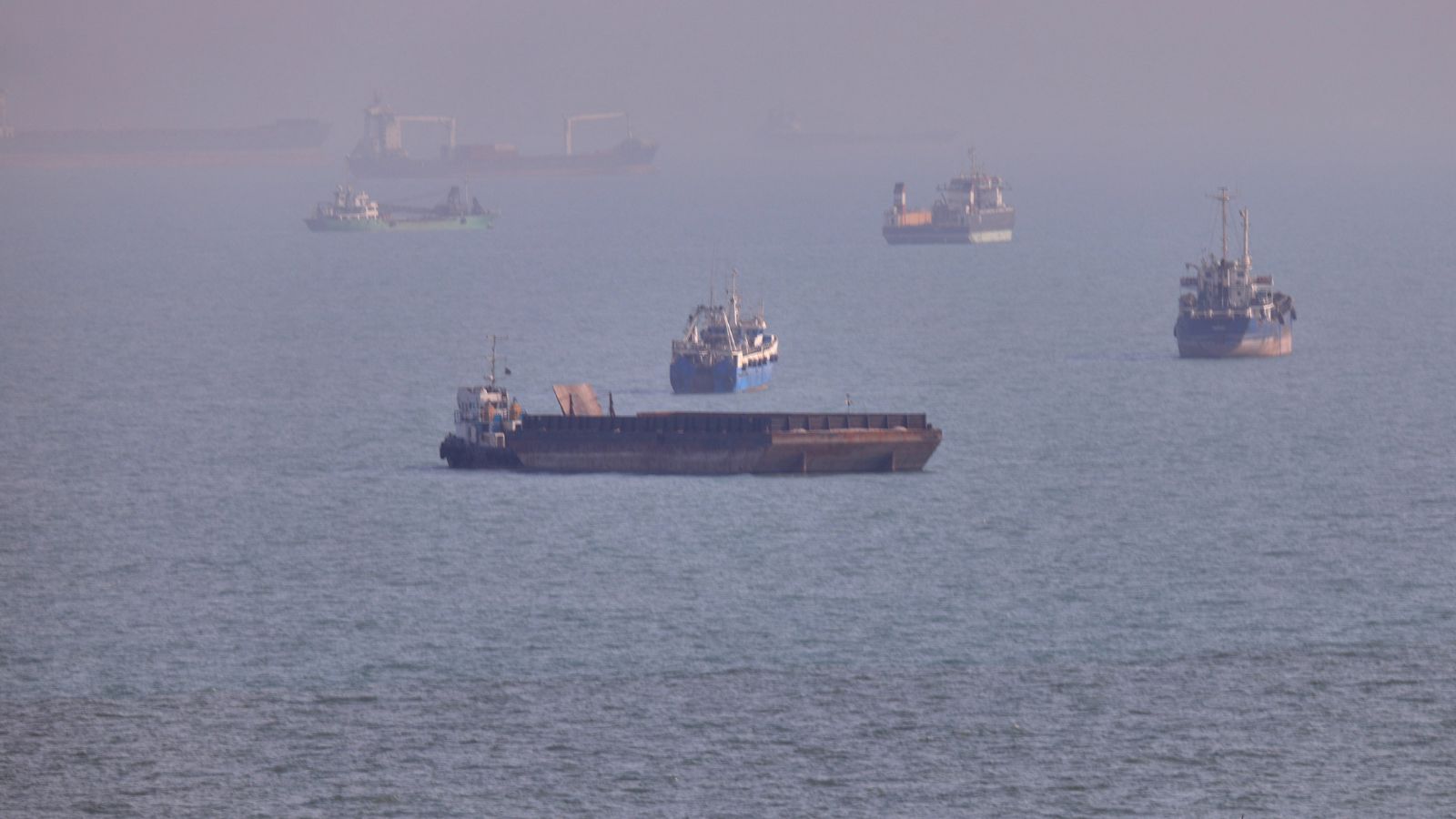
The core failure of the initial scheduling framework was the assumption that U.S.-Iran technical talks could be cleanly uncoupled from the Levant. Iranian Foreign Minister Abbas Araghchi explicitly conditioned technical participation on the stability of the Lebanon ceasefire, framing it as a critical variable for future negotiations. Simultaneously, the Islamic Revolutionary Guard Corps (IRGC) Navy enacted a tactical closure of the Strait of Hormuz, citing external non-compliance and regional actions as a breach of promise.
This interaction is best understood through a structural dependency loop:
[Lebanon Ceasefire Instability] -> [IRGC Hormuz Closure] -> [U.S. Technical Delegation Delay]
               ^                                                           |
               |____________________[Bürgenstock Process Stall]____________|
This dependency loop exposes a fundamental mismatch in how both sides sequence the agreement. The United States treats the MoU as a functional instrument to secure immediate maritime stabilization—specifically reopening the Strait of Hormuz—and lock in Iranian nuclear stock destruction before establishing a flexible enforcement mechanism over a 60-day window. Iran treats the MoU as a reactive lever, using its proxy architecture and control over maritime choke points to enforce compliance before committing to permanent technical rollbacks.
The second limitation is the internal divergence within Iran's political structure. The Supreme National Security Council directive instructing state media to avoid portraying a rift between the armed forces and the diplomatic team confirms an internal optimization struggle. The negotiating team, led by Parliament Speaker Mohammad Bagher Ghalibaf, requires technical progress to realize economic relief, while the IRGC relies on active deterrence metrics to maintain leverage. This domestic fragmentation creates an unstable bargaining posture where diplomatic commitments can be instantly neutralized by asymmetric military actions on the water.
Economic Payoffs and Asymmetric Defiance Functions
The financial architecture underlying the Bürgenstock framework introduces massive structural asymmetries. Reports indicate that a functional agreement could restore over $60 billion annually in oil and fuel revenue to Tehran based on historical production baselines. Furthermore, the framework introduces a proposed $300 billion reconstruction fund intended to draw private investment from Arab states and global enterprises.
Evaluating the strategic behavior of both states requires analyzing their respective payoff structures.
The Iranian Payoff Calculus
For Tehran, the utility function of the agreement is heavily front-loaded. The immediate objective is the removal of the U.S. naval blockade and the restoration of energy export mechanisms. However, hardline factions within the Iranian parliament frame the MoU as a tactical pause rather than a strategic realignment. Security is explicitly decoupled from political accords, meaning Iran's long-term defense posture remains on war footing even during active implementation. The economic influx of $60 billion acts as a capital lifeline, but it does not alter the fundamental defensive doctrine of the state.
The United States Enforcement Dilemma
The U.S. strategy relies on a variable execution mechanism described by officials as a dial. The initial phase demands tangible, irreversible actions from Iran, specifically the destruction of specific uranium stockpiles and hard caps on missile advancement. The operational bottleneck stems from enforcement latency. If Iran receives immediate sanctions relief or maritime access, re-imposing a total naval blockade requires significant political and military mobilization costs.
This creates a structural commitment problem. The United States fears front-loading economic rewards only to face a verification stalemate in 60 days. Iran fears front-loading nuclear asset destruction only to face a re-imposition of secondary sanctions driven by shifting domestic political configurations in Washington, particularly with high-level figures like Vice President JD Vance and Special Envoy Steve Witkoff directing the U.S. posture.
Technical Sequencing Matrix
To convert the fragile memorandum into a durable technical sequencing plan, the mediators present at Bürgenstock must resolve the structural friction points outlined below.
| Variable Phase | U.S. Required Objective | Iranian Required Objective | Systemic Failure Risk |
|---|---|---|---|
| Phase 1: Maritime Access | Verifiable opening of the Strait of Hormuz to commercial traffic. | Cessation of U.S. naval blockade operations. | IRGC asymmetric interception of commercial assets under localized pretext. |
| Phase 2: Nuclear Volatility Reduction | Verification of stockpile destruction by independent technical teams. | Formal authorization for international energy transaction clearing. | Delay in technical inspection access due to internal security alerts. |
| Phase 3: Capital Mobilization | Long-term caps on ballistic trajectory systems. | Activation of the $300 billion private reconstruction fund. | Sovereign risk aversion preventing private capital deployment into the fund. |
The Definitive Operational Forecast
The technical talks scheduled to begin under Pakistani and Qatari facilitation will not yield an immediate, comprehensive treaty. Instead, the Bürgenstock process will devolve into a series of highly fractionalized, micro-sequenced transactions designed to test compliance in real-time.
The immediate tactical play requires the implementation of a strict conditional linkage mechanism: the United States must tie the incremental relaxation of maritime surveillance directly to hourly transits through the Strait of Hormuz, while concurrently placing the initial capital tranches of the proposed reconstruction fund into escrow accounts managed by the Swiss National Bank. These funds must only release upon verified material destruction of enriched uranium targets. If regional mediators fail to decouple the technical verification metrics from the volatile geopolitical conditions in Lebanon, the Bürgenstock framework will degrade into a permanent freeze, leaving both Washington and Tehran trapped in an unhedged escalatory cycle.