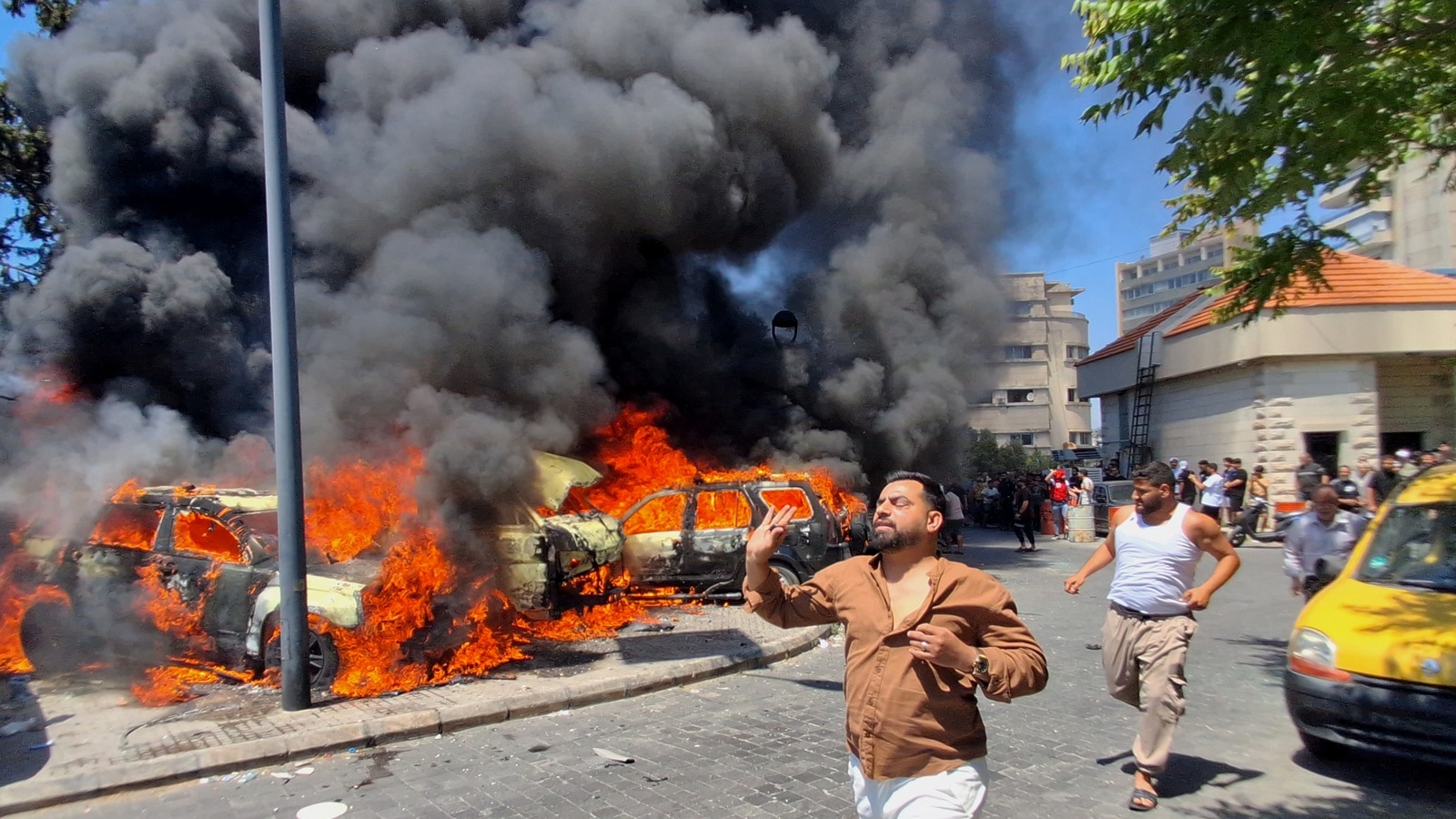
The United Nations High Commissioner for Human Rights, Volker Türk, confirmed the deployment of a specialized investigative assessment mission to Lebanon. This deployment, structured to commence documentation operations, represents the first systematic institutional attempt to audit compliance with International Humanitarian Law (IHL) and International Human Rights Law (IHRL) since the current conflict phase escalated on March 2. By isolating the operational inputs of the belligerents—the Israel Defense Forces (IDF) and Hezbollah—against established legal benchmarks, this analysis maps the friction points between military necessity and statutory legal compliance.
Evaluating theater operations through a purely emotive or political lens obscures the hard legal architecture governing armed conflict. The upcoming United Nations investigation operates not on moral consensus, but on the explicit codification of Jus in Bello (law in war). The mandate addresses a theater where an April 16 United States-declared ceasefire has failed to hold, yielding over 3,500 subsequent strikes reported by Lebanese state authorities, more than 3,600 fatalities, and the systemic displacement of over one million civilians. To understand what the UN probe will evaluate, the conflict must be broken down into its distinct operational and legal components. For a deeper dive into this area, we suggest: this related article.
The Dual-Pillar Framework of Jus in Bello
The assessment mission will benchmark all kinetic actions against two structural pillars of the Geneva Conventions and their Additional Protocols. These pillars dictate the legality of any specific engagement, irrespective of the underlying political justification for the war.
                    +---------------------------------------+
                    |       Jus in Bello Compliance         |
                    +-------------------+-------------------+
                                        |
                   +--------------------+--------------------+
                   |                                         |
[ Pillar 1: Principle of Distinction ]     [ Pillar 2: Principle of Proportionality ]
                   |                                         |
    - Target Isolation: Military vs.          - Collateral Calculation: Incidental
      Civilian Infrastructure                   Loss vs. Concrete Military Advantage
    - Mandate: Clear separation of             - Mandate: Audit of intelligence assets
      combatants from non-combatants            and decision-making variables
1. The Principle of Distinction
Distinction requires combatants to perpetually differentiate between military objectives and civilian objects or personnel. The UN probe faces a symmetrical evaluation challenge here: For additional details on this development, in-depth analysis can be read at NPR.
- Hezbollah Assessment Variables: The investigation must document the vector and targeting matrices of rocket and missile salvos launched from southern Lebanon. Under IHL, the deployment of unguided weaponry or kinetic assets directed at population centers without explicit military infrastructure constitutes a prima facie violation of the principle of distinction. Investigators will map launch telemetry against civilian landing coordinates in northern and central Israel to determine the statistical probability of indiscriminate targeting.
- IDF Assessment Variables: The inquiry will audit target verification protocols. When the IDF strikes targets within dense urban zones—such as the coastal city of Tyre or Sidon—the UN mission is tasked with verifying whether the target possessed effective contribution to military action, and whether its destruction offered a definite military advantage. Structural damage to non-military institutions, including the Islamic University of Lebanon in Tyre, will be evaluated to see if these facilities had lost their protected civilian status through tactical exploitation by adversaries.
2. The Principle of Proportionality
Proportionality does not demand an equality of casualties between opposing sides; instead, it dictates a strict mathematical and operational equation. It prohibits attacks where the anticipated incidental loss of civilian life, injury to civilians, or damage to civilian objects would be excessive in relation to the concrete and direct military advantage anticipated.
The UN team will evaluate the IDF’s calculation metrics regarding collateral damage estimation (CDE). For instance, in strikes targeting specific operatives within multi-story residential blocks or vehicles in transit through transit hubs like Sidon, investigators will attempt to reconstruct the information available to commanders at the time of the strike. The core metric is whether the anticipated military value of neutralizing a specific combatant structurally justified the predictable civilian externalities.
Material and Environmental Externalities: The Cost Functions of Contemporary Warfare
Beyond immediate kinetic impact zones, the UN probe will examine systemic, long-tail structural damage that alters the demographic and economic viability of the territory. This shifts the investigation from isolated incident analysis to the evaluation of cumulative theater effects.
Urban Destruction Matrices and Cultural Heritage Property
Satellite data tracking the structural degradation of historical urban areas, particularly the ancient Phoenician components of Tyre, introduces the Hague Convention for the Protection of Cultural Property in the Event of Armed Conflict into the legal equation.
Under this framework, cultural property enjoys a high threshold of immunity unless explicitly converted into a military objective. The investigation will require the IDF to demonstrate specific military exploitation of these immediate vicinities to legally justify the physical degradation of globally mandated landmarks.
Chemical and Incendiary Asset Deployment
A key focal point of the investigation involves the documented deployment of 155mm M825A1 artillery rounds containing white phosphorus over southern Lebanon.
                          [ 155mm M825A1 Shell Burst ]
                                       |
                   +-------------------+-------------------+
                   |                                       |
       [ Permissible Allocation ]               [ Illicit Exploitation ]
                   |                                       |
      - Midair burst deployment               - Low-altitude or ground-level
      - Optimization of smoke screens           detonation in civilian zones
      - Direct line-of-sight masking          - Tactical use as an incendiary weapon
The legality of white phosphorus is entirely determined by its deployment mechanism:
- The Screening Function: White phosphorus is not classified as a chemical weapon under the Chemical Weapons Convention when utilized as a masking agent to generate smoke screens, obscuring troop movements from thermal and optical tracking.
- The Incendiary Function: If deployed at low altitudes or ground level within densely populated areas, its high-temperature combustion and systemic toxicity present a high risk of severe civilian pathology and indiscriminate burning.
The UN assessment team will audit the deployment altitude, delivery systems, and population density metrics of white phosphorus strikes to determine if its operational use cross-functioned as an illegal incendiary weapon in civilian enclaves.
Systemic Economic and Logistical Suffocation
The conflict has driven a sharp regression in basic human security metrics. UN data indicates that approximately 24 percent of the Lebanese population (1.24 million individuals) faces acute food insecurity. This macro-economic collapse is directly linked to two structural factors that the UN mission must analyze:
- Agricultural Land Degradation: Ground-level contamination from incendiary munitions and unexploded ordnance has neutralized arable land in southern Lebanon, structurally severing local supply chains.
- The Isolation of Non-Combatant Enclaves: Formal statements from local organizations, such as the association of Christian border villages, detail a dangerous decline in health services. This is driven by the physical severing of logistics corridors. Under IHL, parties to a conflict must allow and facilitate rapid and unimpeded passage of humanitarian relief. The UN team will cross-reference IDF kinetic control zones and checkpoint operations against the location of isolated civilian populations to evaluate whether tactical blockades have shifted into an illegal denial of humanitarian access.
Operational Realities and Institutional Constraints of the UN Probe
A rigorous strategy analysis requires recognizing the systemic limitations built into the UN High Commissioner for Human Rights’ mandate. This mission is not a judicial proceeding; it is a fact-finding and evidence-gathering mechanism.
Data Asymmetry and Access Control
The primary bottleneck for the UN team will be data asymmetry. To prove systemic violations of distinction and proportionality, investigators require access to:
- Real-time electronic intelligence (ELINT) and signals intelligence (SIGINT).
- Targeting logs, internal CDE balance sheets, and real-time drone feeds from the IDF.
- The deployment mapping, command structures, and weapons storage matrices of Hezbollah.
Because neither sovereign state actors nor non-state armed groups willingly surrender proprietary military intelligence, the UN mission must rely heavily on secondary forensic vectors: satellite imagery, medical pathology reports, crater analysis, and witness testimonies. While these assets are effective for documenting outcomes, they are structurally limited when attempting to definitively prove the subjective intent or the baseline intelligence possessed by a commander at the exact moment a strike was authorized.
Sovereign Cooperation Dynamics
The Lebanese government has formally agreed to the deployment of the assessment mission, optimizing the team’s access to physical sites and medical documentation within sovereign Lebanese territory.
However, the team’s ability to assess violations committed against Israeli civilians by Hezbollah rocket fire will depend entirely on Jerusalem’s willingness to grant reciprocal access to its sovereign territory and radar data. Historically, Israel has limited cooperation with UN Human Rights Council-derived mechanisms, citing institutional bias. This dynamic creates an immediate risk of a structural reporting imbalance, where the physical effects of IDF actions within Lebanon are comprehensively cataloged, while the operational choices and underlying violations of Hezbollah remain under-documented due to their subterranean and asymmetric nature.
Strategic Playbook for Sovereign and Non-State Actors
Based on the operational parameters of the upcoming UN investigation, actors within this theater must alter their tactical and communication strategies to manage legal and diplomatic exposure.
For Sovereign Defense Entities (IDF)
- Implement Auditable CDE Archiving: Defense forces must systematically archive all pre-strike target folders, including visual confirmation of military exploitation of civilian infrastructure, to defend against retroactive charges of indiscriminate targeting.
- Recalibrate Incendiary Deployment Protocol: To mitigate the significant diplomatic and legal exposure associated with white phosphorus, operational commands must shift screening requirements entirely to alternative smoke-generation technologies when operating within a 5-kilometer radius of documented civilian concentrations.
For Regional Non-State Actors (Hezbollah)
- Cease Unfocused Area-Denial Weaponry: The continued deployment of unguided rocket systems into non-military geographical zones creates an irreversible record of intent to commit indiscriminate attacks. Tactical choices must shift toward precision-guided defensive systems if alignment with international legal baselines is desired.
- De-escalate Humanitarian Logistics Interdiction: Military assets must be physically decoupled from critical civilian supply lines, medical facilities, and humanitarian transit corridors to avoid creating zones where the denial of humanitarian access is structurally inevitable.
For International Monitoring Bodies
- Standardize Forensic Metrics: The UN team must employ standardized, verifiable digital forensic methodologies—such as cryptographic verification of open-source video and metadata analysis—to shield its final report from allegations of political manipulation and maintain baseline institutional trust.