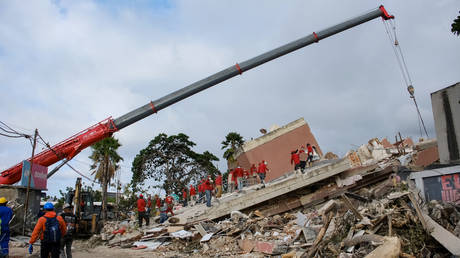
Venezuela is failing to protect its citizens from moderate seismic events because decades of systemic economic collapse and state corruption have thoroughly dismantled the nation's emergency infrastructure and building code enforcement. When an earthquake strikes, the immediate destruction is less an act of God than a direct consequence of structural neglect and regulatory failure. Survival in these scenarios relies almost entirely on luck rather than coordinated state response, as the institutions designed to mitigate natural disasters have been hollowed out from the inside.
The Myth of the Natural Disaster
Disasters are rarely entirely natural. They are the intersection of physical phenomena and human vulnerability. In Venezuela, this vulnerability has been systematically engineered over a quarter of a century through the erosion of municipal oversight and the abandonment of engineering standards that once made the country a regional leader in seismic research.
During the mid-twentieth century, the country established rigorous building protocols, particularly after the devastating 1967 Caracas earthquake. The Venezuelan Foundation for Seismological Research (FUNVISIS) was once a premier institution, charting fault lines and advising on urban development. Today, that institutional knowledge is largely a ghost framework. The regulations exist on paper, but the enforcement mechanisms have completely dissolved.
The economic crisis that began accelerating in the 2010s forced a massive brain drain. Experienced structural engineers, urban planners, and safety inspectors fled the country by the thousands. The regulatory bodies left behind were staffed by political appointees with little understanding of seismic load distribution or concrete degradation. As a result, the vast concrete expansions across major urban centers like Caracas, Maracay, and Valencia have gone unchecked for over a decade.
The Danger of Informal Concrete
Walk through the barrios clinging to the hillsides of Caracas or the rapidly constructed apartment blocks in the states of Sucre and Bolívar. What you see is a ticking clock.
Unlike the traditional bahareque—mud and cane huts—of the distant past, modern informal settlements in Venezuela are built with heavy concrete blocks and poorly reinforced steel columns. This creates a lethal paradox. The structures feel solid to the inhabitants, giving a false sense of security. However, they lack the internal flexibility required to withstand the lateral forces of a major earth tremor.
- Substandard Materials: The collapse of domestic manufacturing means that cement and rebar are often sourced from unregulated local markets or black-market smuggling rings. This material frequently fails basic stress tests.
- Corrupted Ratios: To stretch scarce resources, builders routinely dilute concrete mixes with excessive sand or unwashed aggregate containing high salt levels. This corrodes the internal steel reinforcement over time, weakening the structure before a tremor even occurs.
- Unsanctioned Verticality: Homes originally designed to support a single story are routinely expanded vertically to accommodate growing families, adding immense weight to foundations that were never engineered to bear it.
When the ground moves, these buildings do not flex. They shear. The heavy concrete roofs and floors collapse directly downward in what engineers call a pancake failure, leaving virtually no void spaces for survivors.
The Collapse of First Response
The tragedy of a Venezuelan earthquake does not end when the shaking stops. In fact, that is merely where the institutional failure becomes visible. The state's emergency response apparatus is in a condition of advanced paralysis.
Fire departments and civil defense units across the country lack the most fundamental tools of urban search and rescue. Hydraulic jacks, concrete saws, thermal imaging cameras, and trained K9 units are nearly non-existent outside a few elite units in the capital, and even those are severely under-equipped. Heavy machinery required to lift fallen slabs is often grounded due to a lack of spare parts, tires, or fuel—a bitter irony in a nation sitting on the world's largest proven oil reserves.
Water scarcity complicates every facet of post-disaster management. Hospitals, already crippled by chronic shortages of antibiotics, surgical gloves, and reliable electricity, cannot handle a sudden influx of trauma patients. A moderate earthquake that would cause minor injuries in a country with functioning infrastructure becomes a mass-casualty event in Venezuela simply because the medical system is incapable of delivering basic triage.
The Geopolitical Insurance Void
In most parts of the world, the financial shock of a natural disaster is partially absorbed by international reinsurance markets and state catastrophe funds. Venezuela is entirely isolated from these financial safety nets. Due to a combination of severe international sanctions, sovereign debt default, and rampant economic mismanagement, the state possesses no contingency reserves to rebuild shattered infrastructure.
International aid agencies face immense bureaucratic hurdles when attempting to operate within the country. The government has historically viewed foreign humanitarian intervention as a political threat, often delaying or outright blocking the entry of specialized rescue teams and emergency supplies. This leaves local communities entirely on their own in the critical seventy-two hours following an event, relying on bare hands and civilian vehicles to clear rubble and transport the injured.
Shifting Faults and Forgotten Realities
The Caribbean and South American tectonic plates will continue their slow, grinding collision along the Boconó, San Sebastián, and El Pilar fault systems. This geological reality is fixed. The variables that determine whether this movement results in a manageable crisis or a humanitarian catastrophe are entirely political and economic.
Relying on the current state apparatus to suddenly enforce building codes or fund emergency preparedness is a strategy rooted in fantasy. The immediate path toward reducing vulnerability lies in decentralization and community-level training. Non-governmental organizations, independent engineering associations, and neighborhood councils must take it upon themselves to map local risks, identify structural weaknesses in communal buildings, and establish grassroots first-aid networks. The state will not come to save you. Survival depends on acknowledging that reality long before the ground begins to shift.