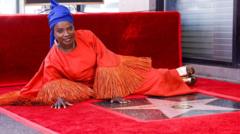
On August 18, 2026, the pavement on Hollywood Boulevard officially changed. With the unveiling of the 2,854th star, Angélique Kidjo became the first African musician and the first Black African performer to be immortalized on the Hollywood Walk of Fame.
For many, this feels like an overdue correction. For others, it’s a masterclass in how a career spanning four decades—defined by activism, genre-bending, and five Grammy wins—eventually forces even the most tradition-bound institutions to pay attention.
The Reality Behind the Hollywood Star
Don't be fooled by the ceremony’s prestige; the Hollywood Walk of Fame isn’t a government-issued award. It’s a commercial property managed by the Hollywood Chamber of Commerce. Getting a star requires a formal nomination, a rigorous vetting process, and—crucially—a $75,000 sponsorship fee to cover the creation, installation, and ongoing maintenance of the monument.
Kidjo didn't just "get" a star because of her fame. Her team, likely supported by label partners or private donors, had to navigate the bureaucratic gauntlet that has kept many international icons off the boulevard for decades. Her inclusion signifies a shift in how the Chamber views "global" influence. It marks a move away from purely American-centric pop culture toward recognizing artists whose reach is truly planetary.
Why Kidjo Is the Perfect Choice for a First
If you’re wondering why it took until 2026 for an African musician to claim a spot, look at the criteria: longevity, awards, and community service. Kidjo ticks every box, and then some.
The Musical Blueprint
Born in Ouidah, Benin, in 1960, Kidjo didn’t just play music; she reconstructed it. She spent the 1980s in Paris, blending West African rhythms with funk, jazz, R&B, and gospel. This wasn’t "world music"—a lazy marketing term often used to dismiss non-Western sounds—it was a sophisticated fusion that demanded global respect.
Beyond the Stage
The Hollywood Chamber of Commerce rarely awards stars for music alone. They want impact. Kidjo has been an:
- UNICEF Goodwill Ambassador since 2002.
- Amnesty International Ambassador of Conscience, receiving the award in 2016.
- Polar Music Prize winner (2023), often described as the "Nobel Prize of Music".
When Recording Academy CEO Harvey Mason Jr. spoke at her ceremony, he noted, "Every once in a while, you experience someone whose impact extends beyond the stage… someone who isn’t just an artist, but there’s purpose behind the art".
A Moment for the Continent
Kidjo’s speech in Los Angeles wasn’t a standard "thank you to my manager" address. She used the platform to call out the global music industry’s historical blind spot regarding African innovation.
"We Africans don’t know what we’ve given to the world, what we continue giving to the world; without us there’s no music possible on this planet," she declared.
She’s right. From the blues to jazz, rock, and modern pop, the structural DNA of global music is rooted in African rhythms. By accepting this star, she wasn't just claiming a sidewalk tile for herself; she was forcing a conversation about who gets to write music history. She called it "our star," emphasizing that she is the first, but she won't be the last.
What This Means for Future African Artists
The barrier has been broken. The Hollywood Walk of Fame relies on precedents. Now that an African artist has navigated the process, it becomes easier for the Chamber to justify—and for sponsors to fund—stars for other legends of the continent.
If you want to see who’s next, watch for artists who share Kidjo’s "triple threat" profile:
- Critical Acclaim: Multiple Grammy wins or industry equivalents.
- Longevity: A career spanning 20+ years, not just a viral moment.
- Philanthropy: Documented, high-level advocacy work that aligns with the Hollywood Chamber’s public-facing values.
Angélique Kidjo has been the "hardest working woman in show business" for a long time. She didn't need a star to validate her genius, but the Walk of Fame needed her to remain relevant in a globalized world. When you walk down the 7000 block of Hollywood Boulevard, look for the 2,854th star. It’s a permanent reminder that the center of the music world has finally shifted.


