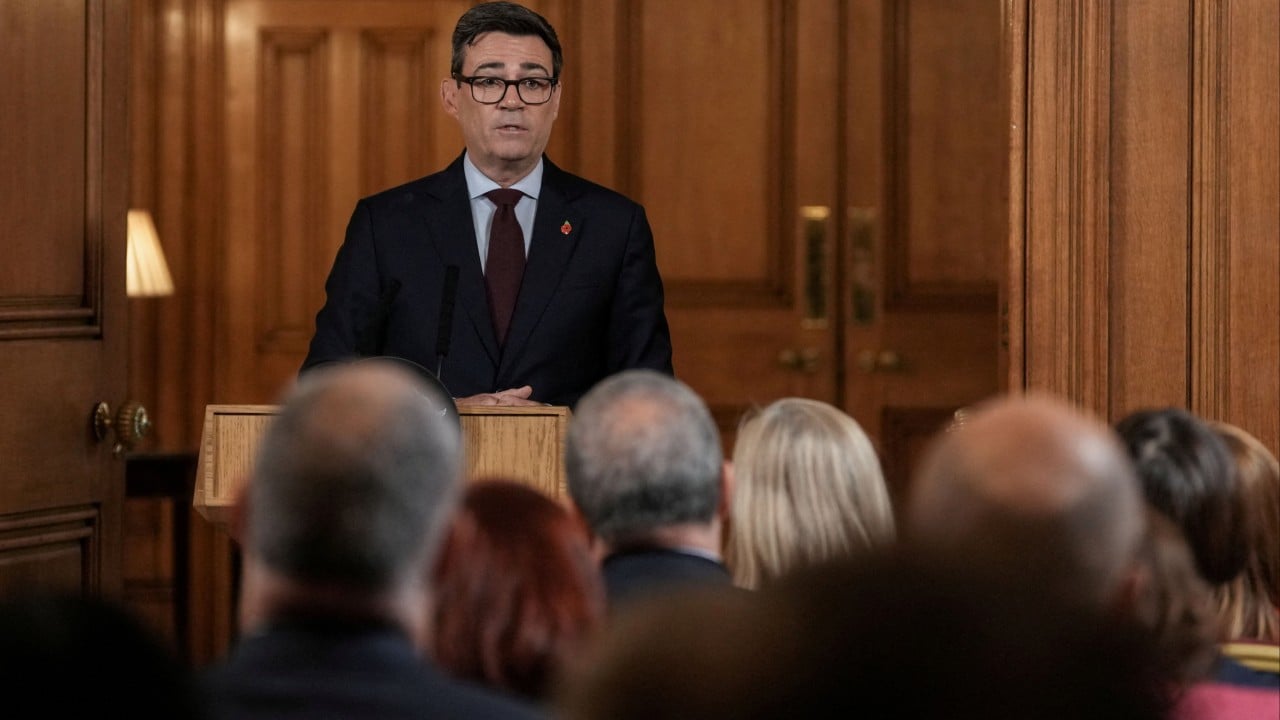
Andy Burnham has drawn an unmistakable constitutional boundary around Britain’s post-Brexit future. By ruling out a return to European Union free movement without a fresh public vote, the Mayor of Greater Manchester is attempting to neutralize one of the most volatile electoral landmines in British politics while signaling how the Labour Party’s senior figures intend to manage relations with Brussels.
The immediate political calculation is straightforward. In constituencies across the North of England and the Midlands—regions that flipped away from Labour in 2019 before returning to the party in 2024—the phrase "free movement" remains radioactive. Voters in post-industrial towns did not back Labour on the understanding that the party would quietly unwind the 2016 referendum result through incremental diplomatic concessions. By insisting that any restoration of free movement requires a direct democratic mandate, Burnham is erecting a firewall against accusations from the Conservative Party and Reform UK that Labour intends to reverse Brexit by stealth.
Yet looking beyond the immediate Westminster press cycle reveals a far more complex strategic reality. Burnham’s intervention is not merely a defensive crouch aimed at appeasing Leave-voting heartlands. It is a calculated positioning play within the Labour movement itself, balancing the economic pressures of a sluggish British labor market against the unforgiving arithmetic of parliamentary majorities.
The Westminster High-Wire Act
To understand why a regional mayor felt compelled to lay down a national red line on immigration and European integration, one must look at the persistent tension inside the Labour coalition. Since returning to power, the party leadership has repeatedly stated that Britain will not rejoin the Single Market, the Customs Union, or restore free movement. However, the steady drumbeat of negotiations with Brussels over youth mobility schemes, veterinary agreements, and defense pacts has created a perception gap.
Critics on the political right seize on every technical alignment talk as evidence of impending betrayal. Meanwhile, pro-European campaigners and younger urban voters push for ever-closer ties to ease trade friction and restore lost opportunities for study and work abroad. Burnham sits directly on this fault line. As the most prominent Labour figure outside Cabinet, often dubbed the "King of the North," his words carry weight precisely because he is not bound by collective ministerial responsibility in the same way a serving Secretary of State is.
When Burnham declares that free movement cannot return without a referendum, he is speaking to two distinct audiences. First, he is reassuring voters in Greater Manchester boroughs like Oldham, Bolton, and Wigan that their democratic choice in 2016 is respected. Second, he is establishing his credentials as a pragmatic realist for any future Labour leadership contest. No candidate can win the keys to Downing Street if they allow opponents to frame them as eager to reopen the constitutional wounds of the late 2010s.
The Youth Mobility Trap
The sharpest pressure point in UK-EU relations centers on the European Commission's push for a reciprocal youth mobility scheme. On paper, allowing citizens aged 18 to 30 to live, work, and study in each other's territories for up to four years looks like a modest cultural exchange. Britain already operates similar schemes with countries like Australia, Canada, and South Korea.
In practice, Brussels' proposal looks very different from existing bilateral arrangements. The EU's initial negotiating mandate sought uncapped numbers, equalized domestic tuition fees for European students at British universities, and the removal of healthcare surcharges. To veteran observers of British politics, those terms carry the unmistakable architecture of partial free movement.
Burnham’s referendum condition directly impacts this debate. If the public perceives a youth mobility deal as free movement under a different label, the political fallout would be severe. By setting the bar at a national referendum for full free movement, Burnham indirectly forces negotiators to keep any youth mobility compromise strictly capped, time-limited, and clearly distinct from the pre-Brexit status quo.
Economic Reality Meets Political Memory
Beneath the constitutional rhetoric lies an acute economic dilemma. Britain’s departure from the EU fundamentally altered the supply of labor across key sectors, from hospitality and logistics to social care and construction. Businesses across Greater Manchester and the wider UK have spent years warning that domestic training pipelines cannot immediately fill the gaps left by departing European workers.
During the final years of the previous Conservative administration, net migration actually surged to record highs, driven not by European free movement, which had ended, but by non-EU work and study visas. That spike proved politically catastrophic for the Tories. It demonstrated that British voters were not merely opposed to the specific legal mechanism of EU free movement; they were deeply skeptical of high overall immigration numbers that placed visible strain on housing, local infrastructure, and public services.
For Burnham, advocating a return to uncapped European migration would be economic and electoral folly. Even if certain business lobbies quietly yearn for the frictionless recruitment of the early 2010s, the public mood has hardened. Wages in lower-paid sectors saw brief upward pressure following the end of free movement, and trade unions—traditional pillars of Labour support—remain wary of policies that employers might use to undercut domestic pay and conditions.
Why Brussels Would Demand the Full Package
Another critical factor often glossed over in domestic commentary is that the European Union has zero interest in offering Britain a cherry-picked version of free movement. From the perspective of the European Commission, the Single Market is an indivisible legal order built on four freedoms: goods, capital, services, and people.
Throughout the Brexit negotiations between 2016 and 2020, Brussels maintained an ironclad refusal to allow the UK access to frictionless trade without accepting the free movement of workers and the jurisdiction of the European Court of Justice. That institutional orthodoxy has not softened. In fact, with the EU facing its own internal pressures over border security and the rise of populist parties across France, Germany, and the Netherlands, European leaders are more protective of the Single Market's integrity than ever.
Therefore, a return to free movement is not a standalone policy lever that a British politician could simply pull to ease labor shortages. In the real world of European diplomacy, restoring free movement only comes onto the table as part of a comprehensive bid to rejoin the Single Market or the EU itself. Burnham’s insistence on a referendum acknowledges this structural reality. You cannot sleepwalk back into the Single Market; entering it requires a fundamental transfer of regulatory sovereignty that, in the post-2016 era, lacks legitimacy without a direct mandate from the electorate.
The Ghost of 2019
To grasp the emotional force behind Burnham's stance, one has to remember the political trauma of December 2019. In that general election, Labour suffered its worst defeat since 1935, losing dozens of seats that had voted Labour for generations. The primary catalyst was the party's convoluted position on Brexit—promising to renegotiate a deal and then put it to a second referendum in which the party leadership would remain neutral.
Voters saw that position as evasive and disrespectful. It alienated Leave voters who felt their 2016 ballot was being nullified, while failing to satisfy passionate Remain voters who wanted an unambiguous pledge to revoke Article 50.
Burnham watched that collapse from Manchester, dealing directly with local councillors and MPs who were wiped out because the national party appeared out of touch with working-class communities. That experience left a permanent mark on his political instincts. Calling for a referendum before any return to free movement is the exact inverse of the 2019 mistake. Instead of threatening to overturn a referendum result without clear public appetite, it locks the status quo in place unless and until the public demands a change.
The Problem With Referendum Promises
While Burnham's pledge solves an immediate tactical problem, it carries long-term strategic risks. Referendums are blunt, unpredictable instruments in a parliamentary democracy. History shows that British prime ministers who promise plebiscites to manage internal party divisions—David Cameron in 2016 being the ultimate cautionary tale—frequently lose control of the process once the campaign begins.
Furthermore, a referendum requires a clear, binary question. If Britain were ever to reconsider its relationship with the EU in the late 2020s or 2030s, the debate would likely center on complex regulatory alignment, defense integration, and economic growth rather than a single isolated pillar like free movement. Tying a specific policy area to a mandatory referendum creates a constitutional straitjacket that could complicate future diplomacy.
Imagine a hypothetical scenario five years from now where Britain and the EU negotiate a deep bilateral trade and security treaty that includes expanded mobility rights for specific professions, such as engineers, medical staff, and researchers. Opponents would immediately seize on Burnham’s words to demand a national referendum, framing a targeted visa arrangement as a breach of the "no free movement without a vote" pledge. The line between enhanced mobility and free movement is politically subjective, making any rigid rule vulnerable to weaponization by rival parties.
Shifting Generational Demographics
Time, however, is quietly altering the underlying electoral math. Every year that passes since June 2016 brings hundreds of thousands of new young voters onto the electoral roll—voters who were children during the Brexit referendum and who overwhelmingly favor closer ties with Europe. At the same time, the older demographic cohort that formed the backbone of the Leave vote is gradually shrinking.
Polling consistently shows that a majority of Britons now view the decision to leave the EU as a mistake. Yet public regret over how Brexit was handled does not automatically translate into enthusiasm for reopening the constitutional battle. Focus groups across England routinely reveal a profound fatigue with the entire subject. Voters want lower energy bills, shorter NHS waiting lists, and safer streets; they have little appetite for another two years of parliamentary paralysis and bitter street protests over European treaties.
Burnham understands this distinction better than most. Recognizing that Brexit has damaged trade is vastly different from believing the country is ready for another divisive referendum campaign. By saying no free movement without a vote, he effectively takes the issue off the table for the foreseeable future, knowing full well that no major party has the bandwidth or desire to call such a referendum anytime soon.
What This Means for UK-EU Relations
The practical consequence of Burnham’s intervention is a tightening of the diplomatic guardrails around Britain’s reset with Europe. Prime Minister Keir Starmer and his ministerial team are already walking a narrow path, trying to secure veterinary deals to ease agrifood trade, mutual recognition of professional qualifications, and closer foreign policy coordination without crossing their own manifesto red lines.
Having a heavyweight figure like Burnham publicly reinforce the boundary on free movement strengthens the government's hand in one respect: it signals to Brussels that the domestic political ceiling in Britain is fixed. European negotiators cannot expect the UK to buckle under pressure and accept freedom of movement in exchange for minor trade concessions. Even Labour’s most popular regional leader views it as a non-starter without a plebiscite.
At the same time, it limits the room for creative ambiguity. Diplomatic breakthroughs often rely on blurred lines—arrangements that look like pragmatic cooperation to one side and incremental integration to the other. Burnham has poured cold water on any hope among pro-EU campaigners that the current political cycle might quietly usher in a return to pre-2016 mobility rights.
Britain’s relationship with the European Union will continue to evolve through technical agreements, security pacts, and pragmatic adjustments to the Trade and Cooperation Agreement. Trade barriers will be trimmed where mutual economic interest dictates. Defense cooperation will deepen in response to shared geopolitical threats on the continent's eastern flank. But on the fundamental question of borders and the automatic right to live and work across the Channel, the door remains bolted—and Andy Burnham has just handed the key exclusively to the British electorate.