Global commerce and digital communications rely on a physical architecture that spans ocean floors. This network of submarine fiber-optic lines carries upwards of 99 percent of intercontinental internet traffic and underpins daily cross-border financial transactions valued at roughly 10 trillion dollars. Recent assessments by military researchers from the People's Liberation Army highlight that this dense web of infrastructure operates as an exposed asset class within contested maritime zones. Understanding the mechanics of this exposure requires moving past high-level threat warnings and examining the economic, technological, and tactical vectors that govern modern seabed vulnerability.
The physical reality of undersea transmission lines creates a structural security paradox. While the capital expenditure required to lay and maintain fiber-optic networks involves specialized cable-laying vessels and heavy engineering, the energy required to sever or tap these lines is exceptionally low. The primary vulnerability stems from three systemic variables: spatial concentration at terrestrial landing stations, deep-sea accessibility enabled by modern uncrewed systems, and the economics of asymmetric gray-zone disruption.
The Economic and Physical Cost Function
To comprehend why undersea infrastructure remains susceptible to interference, one must evaluate the cost function governing both offense and defense. Historically, deep-sea operations demanded crewed submarines, saturation diving systems, and surface support fleets that priced small and medium states out of underwater military actions. This high capital barrier served as a natural deterrent, leaving the seabed as a strategic blind spot.
The proliferation of uncrewed underwater vehicles alters this equation entirely. Small and medium-sized autonomous drones reduce the financial and personnel risks of seabed operations to near zero. The cost asymmetry is stark: protecting thousands of kilometers of buried or surface-resting fiber-optic cable requires continuous, capital-intensive sonar monitoring and surface patrols, whereas neutralizing a single segment requires only a basic mechanical shear or an explosive charge delivered by a low-signature drone.
The physical environment further compounds this defensive deficit. Deep ocean trenches and abyssal plains prevent real-time visual monitoring. When a fault occurs, identifying whether the disruption stems from an accidental anchor drag, commercial fishing gear, or intentional kinetic sabotage requires specialized repair vessels that can take weeks or months to mobilize. This repair latency creates an exploitable window during which regional communications remain dark or heavily degraded.
The Mechanics of Asymmetric Disruption
State actors engaging in maritime competition increasingly utilize gray-zone tactics—actions designed to achieve strategic objectives just below the threshold of conventional military conflict. Submarine cables fit this doctrine precisely because attribution is notoriously difficult. When a commercial vessel drags its anchor across a seabed pipeline or communication line, separating intentional sabotage from maritime negligence requires exhaustive forensic investigation.
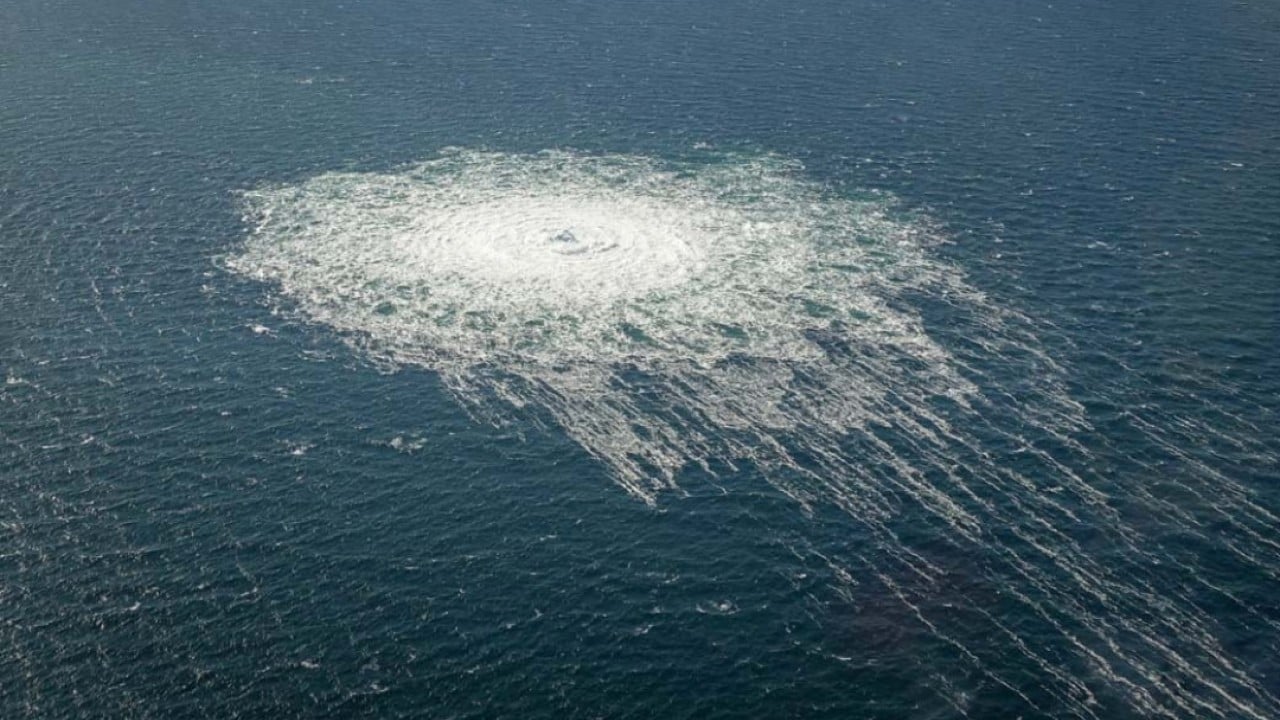
Recent disruptions in European waters and the Red Sea demonstrate that critical nodes can be disabled with minimal hardware. These incidents expose the fragility of terrestrial landing stations and shallow-water cable clusters. While deep-sea sections benefit from burial in sediment or extreme pressure environments that deter casual tampering, shallow approaches near coastlines concentrate dozens of individual lines into narrow corridors. These choke points represent high-value targets where a single intervention can isolate entire national economies from global data exchange.
Furthermore, technological convergence in artificial intelligence and autonomous navigation enables uncrewed systems to operate without continuous surface communication links. By executing pre-programmed paths or maintaining radio silence for weeks, these units evade surface radar and acoustic detection. The transition of uncrewed underwater vehicles from auxiliary reconnaissance tools to autonomous combat-ready platforms changes the operational calculus of naval strategy.
Strategic Mitigations and Hard Limits
Protecting a global network spanning over one million kilometers of ocean floor presents an intractable engineering challenge. Absolute security does not exist within maritime infrastructure. Defense planners must instead focus on redundancy, diversification, and rapid reconstitution.
First, network topology must evolve to eliminate single points of failure. Routing data through geographically diverse landing points ensures that the compromise of a single corridor does not halt international finance or cloud services. Second, state and private consortia are investing in continuous acoustic monitoring and fiber-optic distributed acoustic sensing, which uses the cable itself as an acoustic sensor to detect nearby vessel movements or physical tampering in real time.
However, these technological interventions carry built-in limitations. Acoustic sensors generate massive volumes of false positives from marine life, seismic activity, and commercial shipping traffic, creating a persistent signal-to-noise problem for defense analysts. Moreover, hardening deep-sea cables against advanced kinetic cutting tools remains economically prohibitive given the sheer scale of the global network.
The security of global data flow depends on shifting the economic balance of seabed operations. To deter sub-threshold attacks, maritime authorities must increase the probability of detection and attribution through synchronized surface and subsurface sensor grids. Without a fundamental redesign of how underwater corridors are monitored and defended, the physical layer of the internet will remain exposed to opportunistic disruption by state and non-state actors alike.