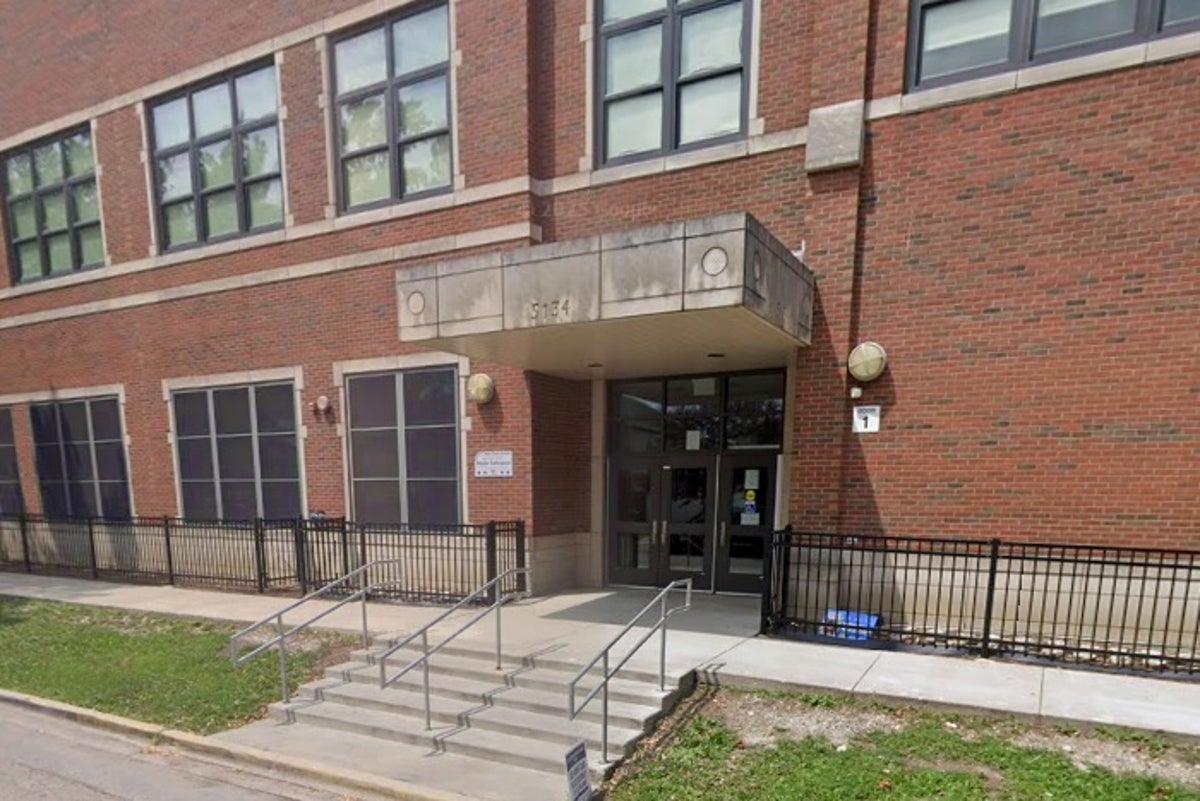
Institutional vulnerability in public educational facilities is rarely a sudden collapse; rather, it represents the cumulative failure of operational safeguards, access control protocols, and behavioral intervention mechanisms. The fatal shooting of two custodians at a Chicago elementary school exposes the structural weaknesses inherent in managing restricted-access public infrastructure during off-peak operational hours. Analyzing this tragedy requires shifting focus from sensationalized narratives to a rigorous examination of the operational security vectors that failed to prevent targeted lethal violence within a controlled institutional environment.
The Operational Threat Landscape of Educational Facilities
Public elementary schools operate under a dual mandate that creates an inherent systemic vulnerability. They must maintain open, community-accessible environments for educational delivery while simultaneously functioning as secure facilities protecting minors and staff. When operations transition from high-density daytime schedules to low-density maintenance windows, the risk profile shifts dramatically.
During standard operational hours, security relies heavily on visible deterrence, active administrative oversight, and multi-layered access control points. During custodial and maintenance shifts, these layers frequently degrade due to reduced staffing ratios, propped doors required for equipment transport, and the concentration of personnel in isolated zones of the facility.
The incident in Chicago underscores a critical failure point in institutional safety design: the assumption that internal personnel pose zero risk to one another. Standard threat modeling for schools historically prioritizes external actors, such as unauthorized intruders or active shooters breaching perimeter defenses. Consequently, internal administrative controls, peer-to-peer conflict resolution channels, and interpersonal risk assessments among non-instructional staff receive minimal institutional focus.
The Mechanics of Access Control Breakdown
Physical security architecture in public schools typically relies on a perimeter defense model. Exterior doors remain locked, visitors must pass through single-point entry systems, and internal zones are partitioned by fire doors or security gates. However, operational realities frequently compromise these architectural barriers.
Custodial staff operate with elevated clearance levels, possessing master keys or electronic credentials that grant unhindered access to the entire physical plant. This broad access is a functional necessity for facility maintenance, but it creates a single point of failure when an insider threat emerges. If a staff member becomes a vector of violence, the structural fortifications designed to keep outsiders out become mechanisms that trap victims within a closed ecosystem.
To deconstruct the failure points in this specific event, three primary variables must be evaluated:
- Temporal Vulnerability: Off-peak hours reduce the probability of immediate witness intervention, delaying both the detection of an active conflict and the subsequent emergency response dispatch.
- Spatial Isolation: Custodial operations are dispersed throughout large footprints, often requiring individuals to work alone in windowless mechanical rooms, basements, or remote wings.
- Credential Over-Privilege: The lack of granular, time-restricted access controls means internal personnel maintain continuous, unrestricted mobility across all zones.
When these three variables intersect, the safety margins engineered into the physical building evaporate. The school ceases to be a controlled environment and effectively transforms into an isolated workspace devoid of immediate oversight.
Behavioral Risk Indicators and Institutional Blind Spots
Preventing internal acts of violence requires early identification of behavioral decompensation. In corporate environments, human resources and security teams frequently monitor for indicators of acute workplace distress, domestic instability, or escalating interpersonal grievances. In public school systems, these monitoring protocols are unevenly applied, particularly for support staff who operate on the periphery of the core educational mission.
Custodians, maintenance workers, and cafeteria personnel often experience occupational alienation. They work outside standard instructional hours, report to decentralized facilities management structures, and may have limited interaction with principal-level administrators who handle building-wide safety planning. This operational detachment creates a blind spot for district leadership.
When interpersonal friction occurs between colleagues in isolated settings, the institutional mechanisms to de-escalate tension are largely absent. Unlike instructional staff who participate in continuous professional development and peer collaboration, custodial teams rely on informal communication hierarchies. If those informal channels break down, grievances can fester without administrative interception.
The Cost Function of Deferred Security Infrastructure
School districts face continuous budgetary pressures, forcing administrators to allocate scarce capital between instructional resources and physical security upgrades. In many districts, security spending is heavily front-loaded toward high-visibility measures that satisfy public perception rather than structural risk reduction.
Visible measures—such as hardened main entrances, security cameras in public corridors, and metal detectors—do little to mitigate internal risks or off-peak vulnerabilities. Cameras positioned in hallways rarely cover remote utility areas, mechanical spaces, or custodial break rooms. Furthermore, surveillance systems are frequently passive, recording events for forensic analysis rather than providing active, real-time threat detection.
The true cost function of facility safety includes the implementation of active monitoring technologies and procedural redundancies that account for internal threats. Districts must calculate the economic and human cost of failing to secure internal zones against the relatively low cost of deploying duress alarms, panic buttons, and automated real-time check-in protocols for off-hour personnel. Relying on the assumption that a school building is inherently safe because it is a school is an analytical error that invites catastrophic failure.
Systemic Remediation Framework
Mitigating the risk of internal lethal violence in educational facilities requires abandoning monolithic security strategies in favor of a segmented, zero-trust operational model. Districts must decouple physical access from total spatial autonomy, ensuring that even trusted personnel operate within monitored parameters.
The deployment of duress communication devices should be mandatory for all staff working alone or during off-peak hours. Wearable panic buttons that integrate directly with local emergency dispatch systems reduce response time latency from minutes to seconds, altering the survival probability matrix during an active assault.
Administrative oversight must be restructured to integrate non-instructional staff into the broader safety culture of the building. Regular, mandatory check-ins for custodial shifts, paired with anonymous reporting mechanisms for interpersonal harassment or escalating disputes, provide the early-warning indicators necessary to intercept violence before it reaches a critical threshold.
Establish mandatory dual-person operational rules for high-risk maintenance tasks or restricted zones during off-hours, eliminating the hazardous condition of complete spatial isolation.


