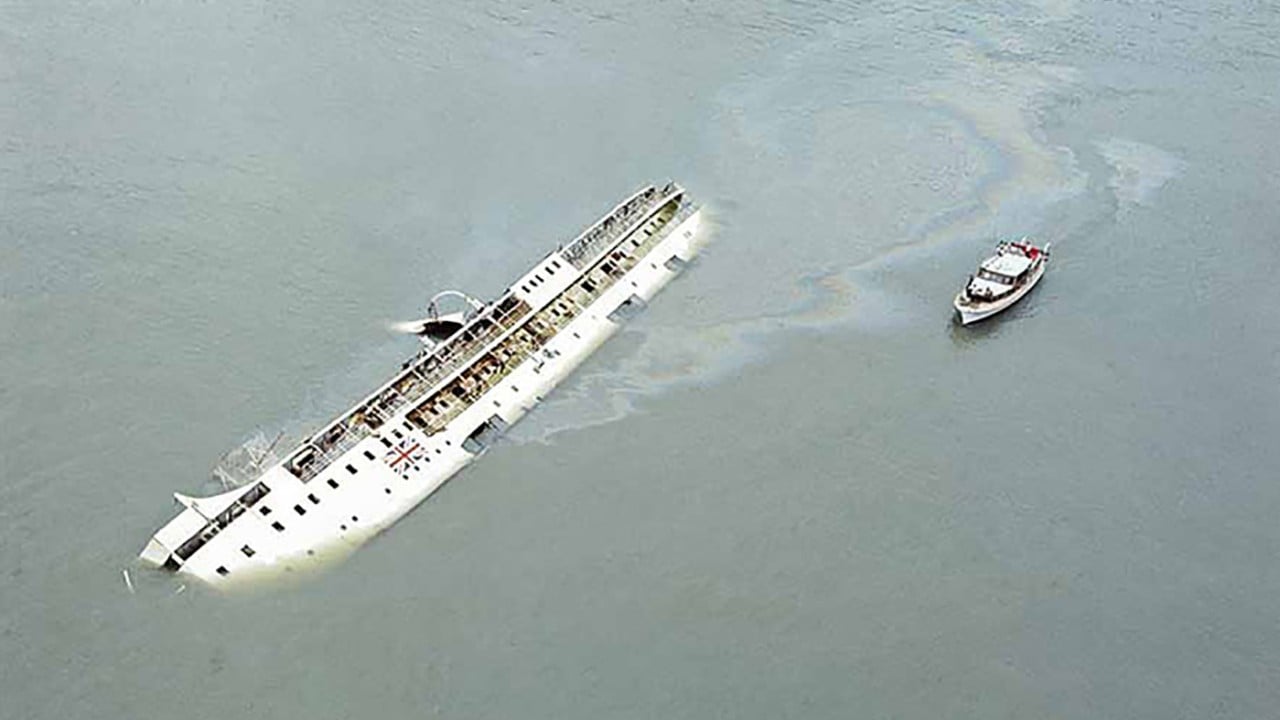
Catastrophic failures in complex socio-technical systems rarely stem from a single point of failure. Instead, they represent the convergence of environmental volatility, systemic procedural drift, and regulatory latency. When Typhoon Rose struck Hong Kong, the capsizing of the ferry resulting in 88 fatalities provided a stark case study in maritime vulnerability. Deconstructing this event requires moving past standard chronological reporting to examine the operational variables, decision-making frameworks, and structural bottlenecks that transformed a severe weather event into a mass casualty incident.
The Environmental Stress Function
A marine transport network operating under severe meteorological pressure functions under extreme stress. Typhoon Rose generated wind speeds and wave dynamics that overwhelmed standard hydrodynamic safety margins for regional vessels. To understand the mechanics of the disaster, we must evaluate the environmental force vector against the structural integrity and stability criteria of the vessel class involved.
Environmental Stress Matrix:
[Wind Velocity Spike] + [Tidal Surge Amplification] = Dynamic Instability Threshold
Vessels operating in high-density harbor environments rely on predictive meteorological warnings to alter operational posture. When the latency between environmental shifts and institutional response widens, vulnerability spikes. The typhoon introduced two distinct stressors:
- Sudden Kinetic Energy Transfer: Rapidly escalating wind vectors created beam seas that compromised initial vessel stability parameters.
- Visibility Degradation: Heavy precipitation restricted navigational oversight, reducing the efficacy of collision-avoidance and hazard-mitigation protocols.
The intersection of these factors created a high-entropy operating environment where standard navigational heuristics failed. Captains and harbor authorities operated with lagging indicators of weather severity, preventing preemptive fleet grounding or harbor closure.
Operational Decision-Making Under Uncertainty
Maritime risk management relies on probabilistic assessment. In the case of Typhoon Rose, the decision calculus governing ferry operations exposed critical flaws in threshold-based safety triggers. Operators typically balance economic continuity against passenger safety, creating an inherent conflict of interest in decentralized transport networks.
The failure mode here was not a lack of safety rules, but an absence of dynamic, real-time risk thresholds. When environmental data updates sluggishly, operators default to status-quo bias. They assume historical operational parameters remain valid under non-linear weather conditions.
- The Threshold Problem: Rules tied to fixed warning signals often fail when rapid intensification occurs.
- Information Asymmetry: Vessel operators lacked high-resolution micro-meteorological data specific to the harbor corridors they traversed.
- Commercial Pressure: Financial incentives favored continuous route execution until absolute mandatory bans took effect, removing individual discretion.
Regulatory Latency and Institutional Blind Spots
Safety management systems depend on institutional feedback loops. Following the Typhoon Rose disaster, structural changes in Hong Kong's marine administration revealed how regulatory frameworks evolve reactively rather than proactively.
Systemic safety in mass transit depends on redundancy. When a primary defense—such as meteorological forecasting—fails, secondary defenses must mitigate the risk. In 1971, the secondary defenses in the Hong Kong harbor ecosystem lacked the enforcement mechanisms and communication infrastructure necessary to halt localized operations instantly.
Regulatory latency manifests when statutory authorities rely on bureaucratic protocols that move slower than atmospheric changes. A modernized safety apparatus requires automated tripwires that strip operators of discretion once specific environmental metrics are breached.
Systemic Vulnerability Mitigation
Preventing recurrence requires shifting from retrospective blame allocation to structural fault-tolerance. Modern maritime logistics now implement strict operational stop-conditions, automated data feeds between weather bureaus and vessel captains, and centralized harbor traffic management systems that override commercial incentives during severe weather events.
The transition from manual risk assessment to algorithmic hazard restriction remains the primary defense against systemic maritime disasters. Operators must treat severe weather not as an operational challenge to be navigated, but as an absolute boundary condition that terminates transit viability.
Establish strict operational halts tied to real-time meteorological data feeds rather than delayed public signal warnings. Realign the economic incentives of commercial transit operators to remove the penalty for proactive voyage cancellations during high-risk weather windows.