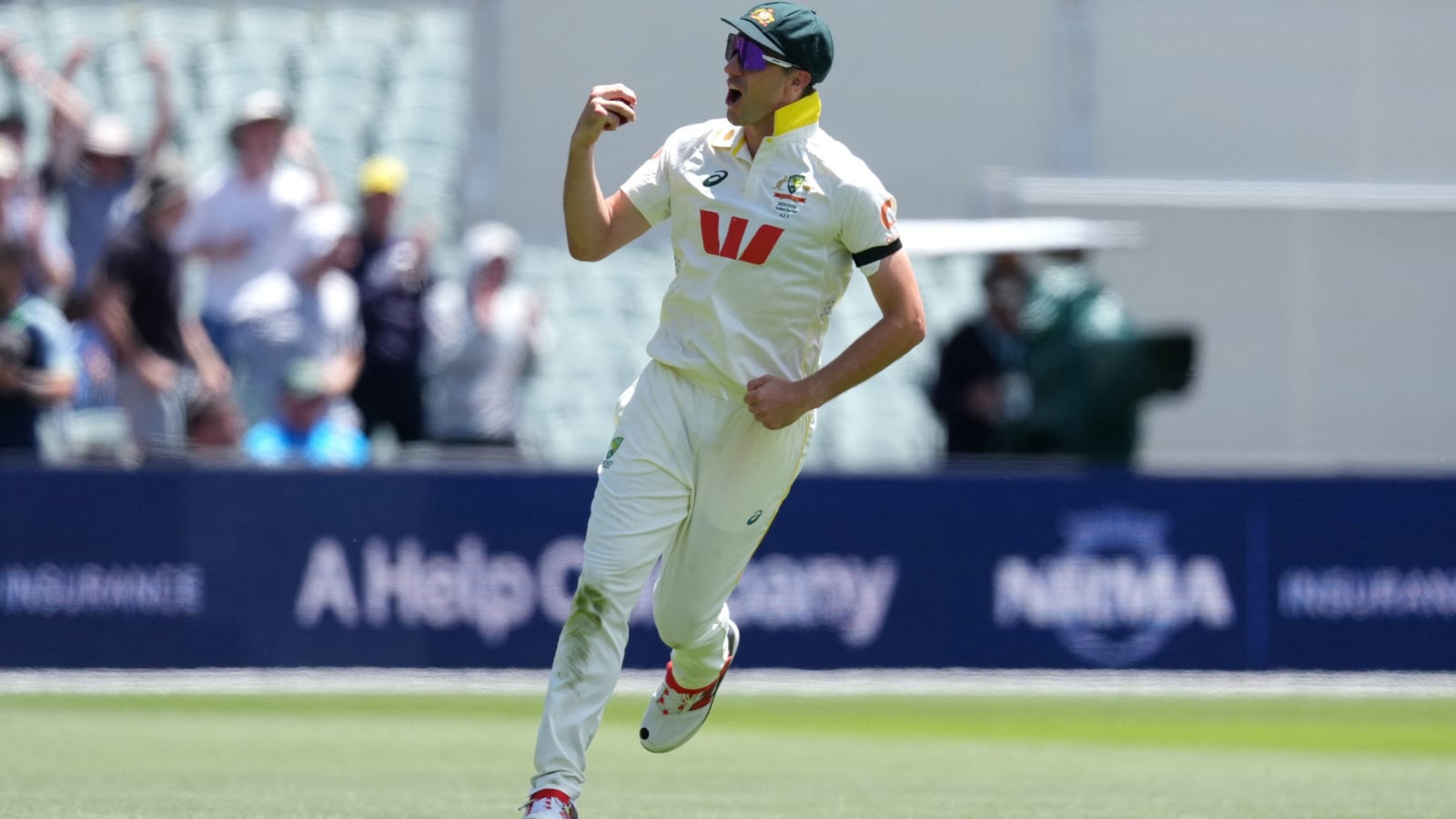
When an organizational crisis resurfaces eight years after its initial containment, the dispute is rarely about historical accuracy. The collision between Australian Test captain Pat Cummins and retired batter Usman Khawaja over the 2018 Cape Town ball-tampering scandal—triggered by allegations in Khawaja’s November 2026 autobiography, Sabr—exposes a fundamental failure in corporate crisis containment. By isolating liability onto three individuals in 2018 rather than auditing systemic incentives, Cricket Australia (CA) created an unstable equilibrium that inevitably fractured under competing personal incentives.
Standard sports journalism treats this conflict as an interpersonal feud between former teammates. That framing misses the structural mechanics at play. A rigorous breakdown of the competing testimonies, institutional incentives, and crisis management architecture reveals why the original settlement collapsed and what governance failures sustain the conflict.
The Structural Fault Lines of the 2018 Containment Strategy
In March 2018, following the Third Test against South Africa at Newlands, Cricket Australia executed a rapid-containment protocol. Within days, the governing body restricted formal culpability to three actors: captain Steve Smith, vice-captain David Warner, and junior batter Cameron Bancroft. Smith and Warner received 12-month bans; Bancroft received nine months. The remaining eight players in the Cape Town XI, along with the coaching staff, exited the inquiry without sanction.
From a short-term risk management perspective, this ring-fencing achieved immediate operational continuity. Broadcast partners were placated, commercial sponsors remained intact, and the broader playing group avoided suspension. Yet the strategy violated a core principle of organizational remediation: containment without root-cause attribution generates long-term moral hazard.
Three structural flaws were embedded in the 2018 settlement:
- Asymmetric Liability Distribution: The punishment bore zero correlation to operational execution. In Test cricket, altering the condition of the ball serves a singular mechanical purpose—generating reverse swing for the bowling unit. By penalizing two top-order batters (Smith and Warner) and one specialist opener/fielder (Bancroft) while exonerating the four-man bowling attack and coaching staff, CA created an operational absurdity. The beneficiaries of the altered ball escaped liability, while the executors absorbed 100% of the reputational and financial cost.
- The Speed-Accuracy Trade-Off: CA completed its initial investigation in less than a week. In compliance and forensic auditing, rapid closure prioritizes brand stabilization over evidentiary completeness. By failing to subpoena communications, audit prior series (such as the 2017–18 Ashes or the preceding Test at Gqeberha), or conduct independent forensic interviews, the board left an evidentiary vacuum.
- Uncompensated Scapegoat Economics: Smith and Warner possessed sufficient brand equity and elite performance metrics to reintegrate into the national side in 2019, preserving their lifetime earning power. Bancroft, lacking equivalent career capital, never re-established his Test place. When an organization imposes permanent career destruction on a junior actor to shield senior stakeholders, the suppressed grievance becomes a ticking liability.
Deconstructing the Competing Narratives
The November 2026 escalation is not a simple contradiction of facts; it is a collision between two incompatible definitions of institutional knowledge. To evaluate the claims of Khawaja and Cummins objectively, one must separate explicit tactical awareness from implicit cultural complicity.
The Collective Knowledge Hypothesis (Khawaja, Warner, Bancroft)
In Sabr and subsequent media appearances, Khawaja argued that knowledge of ball tampering extended across the playing group and coaching staff. His position rests on three pillars:
- Environmental Normalization: Khawaja alleged that ball alteration was not an isolated Cape Town aberration, pointing to methods used during the 2017–18 Ashes and the Second Test in Gqeberha. He recounted a specific incident in which a member of the coaching staff encouraged Bancroft to continue his ball-maintenance routine during a break in play, immediately before Bancroft pocketed sandpaper.
- The Collective Accountability Proposal: Khawaja’s objective was not to trigger new bans, but to force a retrospective institutional admission. He drafted a proposed joint statement for CA CEO Todd Greenberg acknowledging that the 2018 squad knew the ball was being artificially altered, framing the failure as a collective cultural breakdown rather than a rogue plot by three men.
- Corroboration from Sanctioned Actors: Both Warner and Bancroft publicly validated Khawaja’s thesis. Warner characterized the 2018 inquiry as rushed and flawed, while Bancroft published a detailed account reiterating that awareness extended well beyond the punished trio.
The Compartmentalized Ignorance Defense (Cummins, Hazlewood, Lehmann)
Pat Cummins, addressing the media in a 68-minute press conference in Sydney, rejected Khawaja’s framing as "complete and utter nonsense" and accused his former teammate of being "casual" with people’s lives and reputations. Cummins’s rebuttal relies on strict legalistic precision:
- The Semantic Distinction: Cummins drew a hard boundary between general awareness of ball maintenance and specific prior knowledge that sandpaper was being carried onto the field in Cape Town. He noted that sandpaper is routinely carried in cricket kit bags for bat maintenance and training drills, arguing that its presence in a dressing room does not prove a team-wide conspiracy to cheat in a Test match.
- Absence of a Formal Conspiracy: Cummins refuted the notion that the bowling cartel—himself, Mitchell Starc, Josh Hazlewood, and Nathan Lyon—acted as architects of an illegal scheme. He emphasized that there was no team meeting, no formal directive, and no explicit agreement to use foreign objects.
- Evidentiary Consistency: Cummins anchored his credibility in consistency, noting that his testimony to the 2018 CA integrity unit matched his 2026 public statements without deviation.
The Epistemological Deadlock
Both positions can be simultaneously true within their respective definitions, which explains why the dispute is intractable. In high-performance sporting environments, plausible deniability is an operational norm. Bowlers demand a scuffed, reverse-swinging ball; leadership groups demand results; junior players execute the grey-area tasks required to achieve them.
When Khawaja declined to answer ABC journalist Sarah Ferguson’s direct question regarding whether Cummins specifically knew sandpaper was used on the field in Cape Town—distinguishing between "ball tampering" and "sandpaper"—he inadvertently exposed the gap in his own argument. Implicit cultural tolerance of ball tampering is distinct from explicit foreknowledge of a specific illicit tool. By conflating the two in public discourse, Khawaja left himself vulnerable to Cummins’s literalist counter-attack.
Incentive Structures and Asymmetric Risk
To understand why Cummins responded with uncharacteristic aggression—even referencing legal advice regarding defamation while declining to sue—one must map the incentive matrix governing each stakeholder in 2026.
Pat Cummins: Reputational Capital Preservation
Cummins is the incumbent Test captain and the primary commercial asset of Australian cricket. Over eight years, his personal brand and leadership equity were constructed directly on the post-2018 cultural reset.
- The existential threat: If the market accepts Khawaja’s premise that the 2018 bowling unit was complicit in Sandpapergate, the foundational myth of Cummins’s captaincy collapses. He shifts from being the reformer who rescued Australian cricket to a beneficiary of the original cover-up.
- The optimal response: Total, unambiguous repudiation. Cummins cannot afford nuance or a "shared responsibility" compromise. Any concession validates the accusation that he lied to the 2018 integrity unit and misled the public for eight years. His aggressive posture was a calculated defense of institutional and personal equity.
Usman Khawaja: Legacy Correction and Moral Restitution
As a retired player promoting an autobiography, Khawaja operates outside CA’s direct disciplinary leverage. His incentives are decoupled from current dressing-room cohesion.
- The objective: Khawaja’s intervention attempts to correct the moral ledger—specifically on behalf of Bancroft, whose career never recovered. Having witnessed the psychological toll on Bancroft over eight years, Khawaja sought to force a truth-and-reconciliation mechanism.
- The execution error: Khawaja miscalculated Cummins’s reaction. By texting Cummins prior to the book’s release to seek a unified front, Khawaja assumed the captain would prioritize collective healing over self-preservation. In organizational politics, an incumbent leader will never voluntarily absorb historical liability to absolve a retired peer.
Cricket Australia: Institutional Paralysis
CA CEO Todd Greenberg faces a classic lose-lose governance trap. Reopening the 2018 investigation—which CA has already ruled out—would invalidate its own prior governance, expose the organization to potential legal action from the three sanctioned players for wrongful or disproportionate punishment, and destabilize the current Test team. Conversely, maintaining silence allows the narrative to bleed out through podcasts, interviews, and rival memoirs.
Limitations of the Collective Mea Culpa Model
Khawaja’s proposed solution—a joint statement from the 2018 squad admitting collective knowledge of ball tampering—fails under basic game-theory analysis. For a collective confession to function, every signatory must face equal downside risk. In this scenario, the payoffs are radically skewed:
- Zero Upside for Exonerated Players: Players like Cummins, Hazlewood, and Starc have already cleared the regulatory hurdle. Signing a collective admission in 2026 offers them zero career or reputational benefit while inflicting immediate damage to their integrity.
- Defection Dominance: In a multi-player prisoner’s dilemma where no central authority can compel cooperation, individual actors will defect to protect their own standing. With Lehmann, Hazlewood, and Cummins publicly denying the premise, unanimous consensus is mathematically impossible.
- Legal and Contractual Exposure: A formal admission by current or former CA employees that they engaged in systemic cheating violates historical player contracts and ICC Code of Conduct statutes. Even if the statute of limitations on match bans has expired, the commercial liability regarding sponsor warranties remains a non-zero risk.
Strategic Resolution for Cricket Australia
Cricket Australia cannot resolve this crisis through public relations spin, nor can it expect retired and active players to negotiate a private peace treaty. The governing body must execute a decisive governance pivot to permanently close the evidentiary loop without destabilizing the current playing group.
First, Cricket Australia must formally reject Khawaja’s joint-statement proposal. Endorsing a negotiated rewrite of history undermines the legal finality of the 2018 disciplinary process and signals that governance outcomes are subject to media pressure.
Second, the board should commission an independent, sealed historical audit conducted by an external judicial figure, focused strictly on systemic governance and cultural incentives between 2015 and 2018—not individual player culpability. By shifting the unit of analysis from who held the sandpaper to how organizational KPIs incentivized rule-bending, CA can validate the systemic critique raised by Khawaja, Warner, and Bancroft without forcing Cummins or the bowling unit to retract their factual testimonies.
Finally, CA must establish a formal reconciliation and duty-of-care pathway for sanctioned players, specifically addressing the post-ban career abandonment experienced by Bancroft. Institutional scandals only remain active when the primary casualties remain alienated from the organization. Reintegrating Bancroft into coaching or pathway structures neutralizes the moral grievance driving the current media cycle, removing the fuel that keeps Sandpapergate alive.