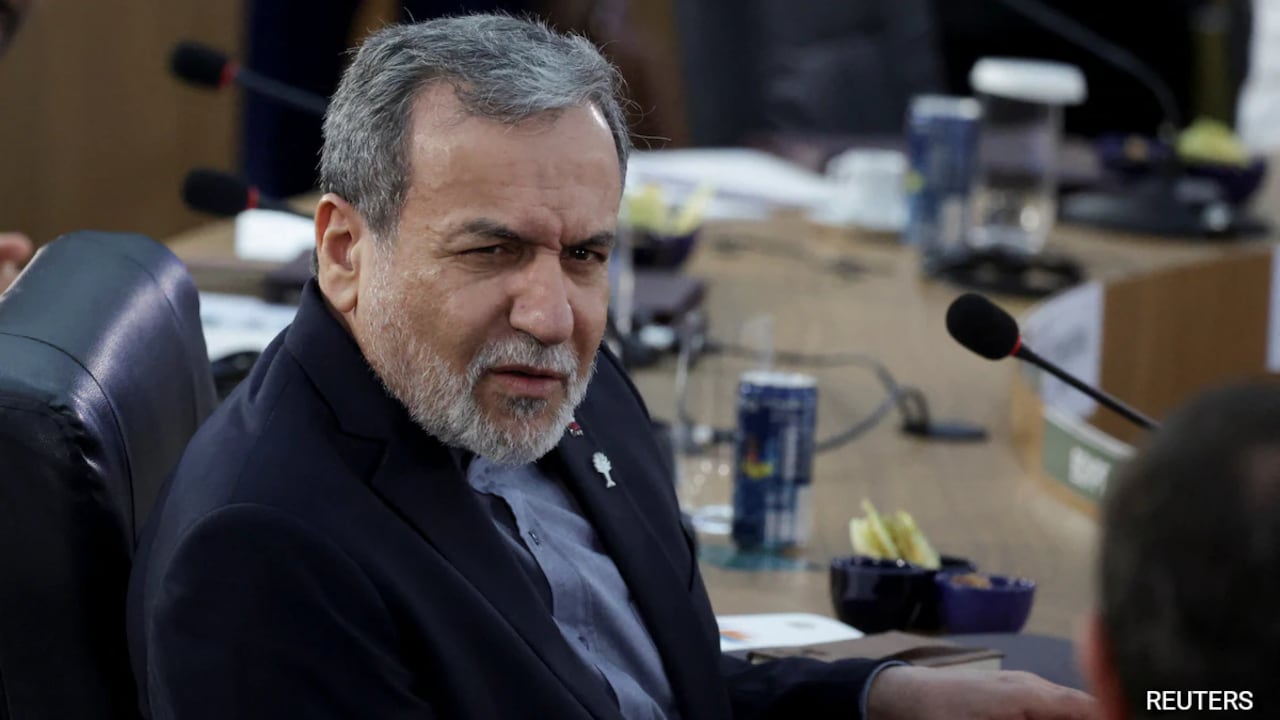
Blaming a single actor for maritime instability in the Strait of Hormuz confuses rhetorical attribution with the structural mechanics of choke-point risk. When Iranian Foreign Minister Abbas Araghchi argues that United States forces and regional bases generate insecurity in the waterway, standard wire-style reporting treats the claim as a self-contained diplomatic clash. That framing misses the operational reality of 2026: maritime risk is priced by insurers, shipowners, and cargo buyers through a compounding chain of coercion, interdiction, and rerouting friction that neither Washington nor Tehran unilaterally controls.
To understand why maritime traffic collapsed from roughly 21.4 million barrels per day in the third quarter of 2025 to 5.1 million barrels per day in the second quarter of 2026—before recovering to an estimated 9.1 million barrels per day in the third quarter of 2026—analysts must separate diplomatic narratives from physical and commercial enforcement mechanisms. This breakdown deconstructs the underlying argument around Hormuz insecurity, maps its cause-and-effect structure, and lays out an operational playbook for actors exposed to Gulf transit risk. In other news, take a look at: Why Andy Burnham’s Devolution Push Isn’t an Instant Growth Cure.
Deconstructing the Competitor Narrative
A standard headline-driven report on Araghchi blaming the United States for insecurity in the Strait of Hormuz typically relies on a linear cause-and-effect chain: foreign military presence enters the region, regional tensions rise, and commercial navigation suffers. While that captures Tehran's official diplomatic posture—including calls for foreign troops to withdraw, references to regional security arrangements, and demands tied to sanctions relief, blockades, and asset releases—it treats a complex multi-actor conflict as a two-party blame game.
The first logical gap in that conventional framing is asymmetry of enforcement. Declaring a waterway insecure or asserting sovereign control over transit lanes does not operate the same way as physically interdicting vessels, laying mines, conducting aerial strikes, or imposing naval blockades. Commercial shipping reacts to expected loss probability rather than press briefings. The Washington Post has analyzed this critical topic in extensive detail.
The second logical gap is conflating presence with trigger events. U.S. naval deployments, escort operations, and port blockades interact directly with Iranian naval actions, Islamic Revolutionary Guard Corps (IRGC) restrictions, and attacks or seizures affecting commercial vessels. Treating one side's posture as the sole independent variable obscures how each escalation alters vessel routing, insurance underwriting, and diplomatic leverage.
The third logical gap is ignoring data distortion. In 2026, Automatic Identification System (AIS) tracking signals in and around the Strait of Hormuz became unreliable as vessels spoofed locations, went dark, or conducted offshore transfers in the Gulf of Oman. An analysis that cites raw transit numbers without noting reporting lag and signal manipulation mistakes noisy telemetry for ground truth.
Look at the geography in the map above: the narrow constriction between Iran's northern shore and the Arabian Peninsula links the Persian Gulf directly to the Gulf of Oman, while oil export hubs such as Kharg Island sit deep inside the enclosed basin. Because tankers exiting the Persian Gulf have no alternative sea exit except through this bottleneck or overland pipeline capacity where available, localized military friction rapidly translates into global energy and commodity price shocks.
The Three Pillars of Hormuz Maritime Risk
Rather than viewing instability as an abstract state of "insecurity," commercial and strategic analysts can evaluate conditions in the Strait across three distinct pillars: Physical Interdiction Capacity, Commercial Friction and Insurance, and Diplomatic Conditionality.
Physical Interdiction Capacity
Physical risk depends on whether state or non-state forces can credibly threaten ships, restrict specific shipping lanes, or block coastal terminals. During the 2026 crisis, physical pressure took multiple forms—from aerial strikes on coastal targets and naval blockades of Iranian ports to vessel seizures, commercial ship strikes, mine-clearing operations, and naval escorts.
Even when a full physical closure is not sustained continuously, episodic attacks or declared restrictions create sharp step-changes in risk. In maritime chokepoints, intermittent kinetic events impose outsized costs because a single damaged hull or fatality alters crew willingness and fleet scheduling across dozens of subsequent voyages.
Commercial Friction and Insurance
A waterway does not need to be completely blocked by warships to choke trade; it only needs to become economically prohibitive or operationally uninsurable. When hostilities intensify, war-risk premiums spike, hull and cargo underwriters tighten terms or exclude coverage, and charterers face severe demurrage and delay exposure.
In 2026, shipping costs remained elevated even when estimated daily flows rebounded from second-quarter lows. Shipowners weigh four operational variables before committing a vessel:
- Hull and crew safety exposure along narrow inbound and outbound traffic separation schemes.
- War-risk insurance availability and pricing at policy renewal or voyage endorsement.
- Port and terminal turnaround delays, including potential port blockades or inspection bottlenecks.
- Alternative routing or offshore transfer options, such as shifting loading or discharge points toward the Gulf of Oman when feasible.
Diplomatic Conditionality
Diplomatic statements around Hormuz rarely exist in isolation; they function as bargaining levers linked to broader war termination terms, sanctions relief, frozen assets, and regional security guarantees. When officials blame external military presence for instability, they are simultaneously defining the terms under which transit norms might be restored—such as lifting blockades, rolling back force deployments, or implementing ceasefire protocols.
The catch for market participants is commitment credibility. Ceasefires and transit understandings in 2025 and 2026 experienced breakdowns, disputes over compliance, and shifting preconditions. Consequently, markets discount diplomatic assurances until physical incident rates and insurance pricing confirm durable change.
Missed Cause-and-Effect Chains in the Crisis
Standard commentary often stops at immediate blame. Mapping the second- and third-order effects reveals why Hormuz disruptions ripple far beyond crude oil benchmarks.
Known Facts vs. Educated Hypotheses
Known facts established by trade and energy reporting include the sharp contraction in Hormuz oil flows during the first half of 2026 compared with pre-war baselines around 20–21.4 million barrels per day, the partial recovery in the third quarter of 2026, the heavy reliance of global seaborne oil, liquefied natural gas (LNG), and Persian Gulf fertilizer exports (such as urea and ammonia) on the waterway, and the degradation of AIS tracking reliability since late February 2026.
Educated hypotheses include projections of how quickly commercial transit would normalize after any formal diplomatic agreement without verified de-escalation on the water, or how much latent export volume remains trapped behind offshore transfer bottlenecks. Because AIS data has been subject to frequent revisions and signal anomalies, exact barrel-by-barrel attribution of every transit carries higher uncertainty than in normal market periods.
From Chokepoint Friction to Agricultural and Industrial Stress
Most coverage treats Hormuz almost exclusively as a petroleum story. In reality, the Persian Gulf is also a major source of internationally traded fertilizers, including urea and ammonia. When maritime transit slows or reroutes, the transmission mechanism operates through input costs:
- Higher freight and war-risk charges raise landed prices for bulk commodities and refined fuels.
- Fertilizer supply tightness increases planting and yield costs for downstream agricultural producers outside the Gulf.
- Industrial margin compression hits energy-intensive manufacturers and European and Asian buyers that rely on seaborne energy and chemical feedstocks.
This chain explains why diplomatic rhetoric over "insecurity" carries macroeconomic weight even when partial flows resume. Elevated freight and risk premiums act as a persistent tax on global trade rather than a single one-day price spike.
Why "Reopening" Is Not Binary
Observers often ask when the Strait will reopen, as if maritime access were a light switch. In practice, reopening occurs along a spectrum:
- Selective or restricted passage governed by unilateral declarations, naval escorts, or bilateral route arrangements.
- Offshore and adjacent-water workarounds, where transfers shift outside the tightest constriction to manage exposure.
- Full commercial normalization, which requires sustained absence of attacks, predictable insurance coverage, and reliable navigation telemetry.
Operational Playbook for Exposed Supply Chains
For supply chain leaders, commodity traders, and corporate risk teams operating in or buying from the Gulf, reacting to headlines is a losing strategy. A disciplined operational response follows a sequential decision workflow.
- Audit direct and indirect Gulf exposure. Map not only crude and LNG contracts, but also petrochemicals, fertilizers, metals, and third-party components shipped through Persian Gulf ports.
- Replace raw AIS dashboards with multi-source verification. Cross-check vessel position claims against port turnaround logs, broker reports, and official energy agency assessments that account for AIS spoofing and data revisions.
- Stress-test contracts for force majeure, delay, and war-risk allocation. Clarify whether buyers or sellers absorb sudden insurance surcharges, rerouting costs, or discharge changes before a vessel is mid-voyage.
- Pre-qualify alternative supply origins and overland routes. Identify non-Gulf suppliers and pipeline or alternative maritime corridors ahead of renewal cycles so procurement teams do not scramble during acute spikes.
- Tie inventory buffers to trigger thresholds rather than diplomatic rhetoric. Increase safety stock or lock forward hedges when physical incident frequency or war-risk spreads cross predefined thresholds, not when officials trade accusations in speeches.
Strategy Limitations and Trade-Offs
No risk-mitigation measure eliminates cost. Holding excess inventory ties up working capital and risks obsolescence if prices fall quickly. Rerouting or switching to alternative suppliers often entails higher unit costs, specification adjustments, or limited spot availability given tight global capacity across alternative maritime routes. Meanwhile, waiting for a formal diplomatic breakthrough before adjusting logistics exposes organizations to sudden operational halts if ceasefire terms unravel.
Strategic Play for Decision-Makers
Treat diplomatic blame over Strait of Hormuz insecurity as a leading indicator of negotiating leverage, not a reliable measure of physical transit safety. Decision-makers should anchor their exposure limits to observable commercial friction—specifically war-risk insurance availability, verified physical incident counts, and revised flow baselines—while maintaining pre-negotiated contingency supply options that can be activated within days if enforcement tightens again.