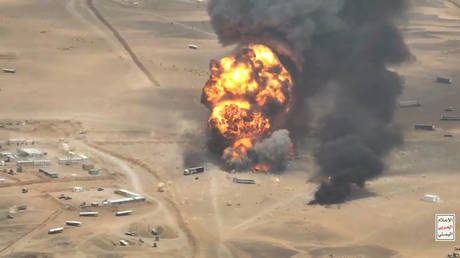
The prolonged military engagement involving the United States and Iran has converted the Strait of Hormuz from a standard maritime transit lane into a severe global energy bottleneck. With Brent crude testing the threshold of $100 per barrel, traditional market commentary has defaulted to superficial declarations of supply shocks. This analysis deconstructs the structural mechanics driving the collapse of regional crude exports, isolating the cost functions, logistical adaptations, and inventory shifts dictating physical market realities.
Understanding this crisis requires moving past geopolitical headlines to examine the underlying microeconomics of maritime energy logistics. The core driver is not merely political posturing, but an enforced structural alteration of flow paths that transforms how Middle Eastern hydrocarbons reach consuming nations.
The Logistics Function of Maritime Disruption
Maritime energy transport relies on predictable velocity and fixed route economics. When transit through the Strait of Hormuz dropped from historical averages exceeding 20 million barrels per day down to historic lows, the disruption exposed the fragility of modern tanker scheduling.
The primary transmission mechanism of this crisis operates through three distinct structural adjustments:
- Insurance and Risk Premiums: War-risk underwriting surged exponentially following the initiation of hostilities. For Very Large Crude Carriers (VLCCs), per-transit insurance spikes added hundreds of thousands of dollars to voyage overhead, fundamentally altering the netback calculations for refiners.
- Asset Utilization and Turnaround Times: Naval checkpoints and asymmetric security threats forced operators to abandon optimized direct routes. Longer steaming distances reduced effective global tanker fleet capacity by locking up hulls in diverted transit lanes.
- Forced Inventory Reductions: Prior to the escalation, producers utilized regional storage to buffer price volatility. The subsequent extraction rush drained these commercial buffers, leaving physical supply chains exposed to immediate shocks.
The Cost Function of Dark Transits and Shuttle Shipping
As direct passage through the primary channel faced severe restrictions, regional producers attempted to maintain market share via alternative vectors. This gave rise to a bifurcated market characterized by dark transits and ship-to-ship transfers outside the immediate conflict zone.
This workaround carries a steep economic penalty. Shuttle-shipping operations require intermediate smaller vessels to ferry crude from Persian Gulf terminals to open-sea transfer points where traditional VLCCs wait. Each transfer incurs distinct friction costs:
- Pumping and Handling Loss: Double-handling crude increases operational expenditure and introduces mechanical delays.
- Demurrage Accumulation: Congestion at designated open-sea transfer zones causes extensive vessel queueing, inflating daily charter hire costs.
- Counterparty Discounting: Crude forced into opaque logistical chains typically trades at a steep discount to Brent benchmarks, penalizing net revenues for exporting nations regardless of headline price spikes.
The economic reality is stark. While headline prices hover around $90 to $100 per barrel, the realized value for constrained exporters is heavily eroded by the compounded friction of these alternative transport mechanisms.
Global Inventory Depletion and the Structural Deficit
The persistent shortfall in daily export volumes has forced a continuous draw on worldwide commercial and strategic inventories. Estimates indicate that global inventories have compressed by hundreds of millions of barrels since the onset of the conflict.
This depletion creates a multi-layered market deficit that cannot be resolved by immediate production adjustments. Even if upstream extraction facilities maintain or marginally increase output, the physical inability to move barrels through a restricted maritime corridor creates an unyielding ceiling on effective supply.
Consuming nations, particularly across energy-dependent Asian import hubs, have been forced to rebalance procurement portfolios toward Atlantic Basin suppliers. This shift increases tonne-mile demand, tying up global tanker capacity for longer durations and cementing a structural support floor for global freight rates.
Strategic Allocation and Execution Vectors
Market participants attempting to position portfolios around this energy bottleneck must monitor specific leading indicators rather than broad political declarations.
- Track Tonnage Spreads: Monitor the differential between standard charter rates and war-risk insured routes to gauge real-time operational friction.
- Audit Floating Storage Metrics: Evaluate the volume of crude stranded on stationary tankers outside the Persian Gulf, which serves as a direct proxy for failed or delayed ship-to-ship transfers.
- Measure Inventory Velocity: Disregard weekly headline inventory figures in favor of regional draw rates at primary transit terminals to assess physical tightness.
The structural deficit in the Strait of Hormuz will not resolve through diplomatic signaling alone. Long-term energy security requires permanent diversification of export infrastructure that bypasses regional chokepoints entirely. Capital allocation should prioritize assets resilient to maritime blockades, focusing heavily on overland pipeline expansions and secure non-Gulf production basins capable of absorbing sustained volume shocks.