Silence.
That is the first thing you notice when a crisis isn't real, yet everyone around you acts as if the sky is falling, and the trading floor screens bleed crimson while diplomats scramble for talking points that make no sense at all.
Consider a hypothetical scenario to understand how modern rumors detonate. Imagine an analyst in a cramped glass office in Taipei—let’s call her Mei—staring at two monitors at three in the morning. On the left screen sits a schematic for next-generation silicon wafers. On the right screen sits a viral, unverified rumor circulating on social media platforms about a prominent American tech executive's personal life and alleged ties to Beijing. Mei knows the physics of lithography. She knows the supply chain bottlenecks in Hsinchu. Yet she also knows that by the time the New York Stock Exchange opens in six hours, the rumor on her right screen will matter far more to global markets than the engineering on her left.
Look at the headline circulating across digital feeds today: Will Nvidia CEO Jensen Huang’s affair become another ‘spy balloon’ saga for US-China ties?
Stop and examine that question closely. Look at the mechanics of how a single, unverified phrase—and a loaded historical comparison—can hijack the collective imagination of two superpowers.
The Ghost in the Machine
We have seen this exact movie before, though the props look different every time.
In February 2023, a white, high-altitude balloon drifted across the continental United States. According to U.S. defense officials at the time, the craft carried intelligence-gathering equipment; according to the Chinese Ministry of Foreign Affairs, it was a civilian meteorological airship blown severely off course. Regardless of the technical telemetry, the physical object became an instant political Rorschach test. For weeks, cable news networks broadcast live feeds of empty blue skies. Secretary of State Antony Blinken postponed a critical diplomatic trip to Beijing. A single physical anomaly, suspended sixty thousand feet in the air, froze high-level communication between the world's two largest economies.
Now, look at the leap being made in contemporary commentary. Someone has taken a completely unsubstantiated rumor regarding Jensen Huang—the leather-jacket-wearing co-founder and CEO of Nvidia, a man who married his college sweetheart, Lori Mills, decades ago and whose public reputation has been defined almost entirely by relentless engineering obsession—and tethered it to the diplomatic trauma of the 2023 balloon incident.
Let’s be brutally honest about the factual baseline here. First, there is no credible, verified evidence from reputable journalistic outlets or regulatory filings supporting claims of an illicit "affair" involving Jensen Huang that compromises national security. Second, treating an unverified personal rumor as equivalent to an airspace incursion conflates tabloid speculation with statecraft.
Why, then, does the comparison feel so strangely plausible to so many readers?
Because in the current era of semiconductor geopolitics, anxiety is looking for a face.
The Weight of a Single Company
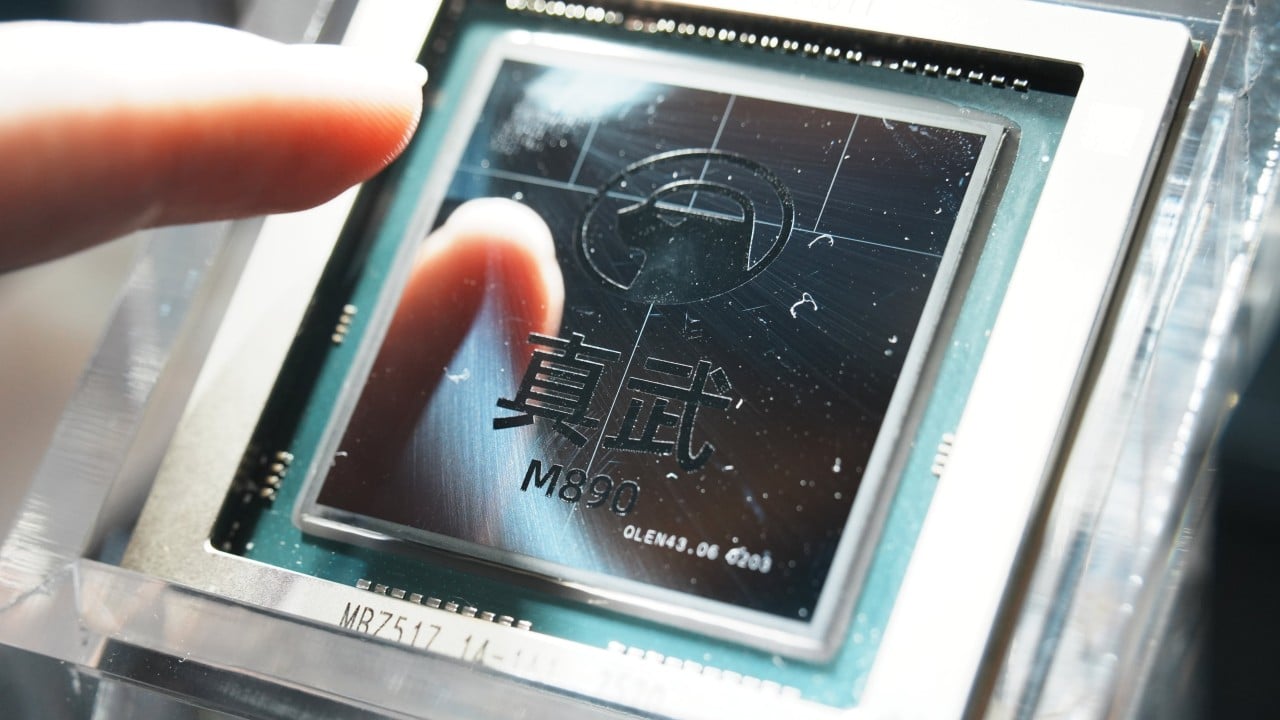
To understand why a whisper about Jensen Huang can trigger immediate geopolitical tremors, you have to understand what Nvidia actually represents in 2026. It is no longer just a graphics card company for video gamers. Through years of aggressive investment in its CUDA software ecosystem and data center architecture, Nvidia became the primary hardware bottleneck for the global artificial intelligence boom.
Think of the global AI race like a massive, transcontinental gold rush. Every major tech giant, sovereign wealth fund, and defense ministry is trying to dig for intelligence. Nvidia sells the only shovels that actually work at scale.
This position puts Huang on an impossible tightrope. Born in Tainan, Taiwan, and raised in the United States, he leads an American-headquartered corporation whose manufacturing depends heavily on Taiwan Semiconductor Manufacturing Company (TSMC), while a substantial portion of its historical revenue and developer ecosystem has been tied to China.
According to U.S. Department of Commerce rules implemented and tightened over the past several years, Washington has systematically restricted the export of Nvidia’s highest-performing AI chips—such as the H100 and subsequent architectures—to Chinese entities, citing national security concerns over military modernization. In response, Nvidia repeatedly designed modified, lower-bandwidth chips to comply with U.S. regulations while still serving commercial customers in mainland China. Every time Huang travels to Taipei, Beijing, or Washington, his movements are tracked with the intensity usually reserved for heads of state.
When one executive sits at the exact intersection of American export controls, Taiwanese manufacturing vulnerability, and Chinese technological ambition, he ceases to be viewed merely as a businessman. He becomes a symbol. And symbols are extraordinarily fragile.
How Information Warfare Exploits the Vacuum
I remember sitting in a briefing room years ago during an earlier trade dispute, watching seasoned policy experts debate a leaked memo that turned out to be a complete fabrication. Nobody in the room wanted to be the person who dismissed a potential threat too early. Career survival in Washington and Beijing often rewards paranoia over skepticism. If you warn about a crisis that never happens, you are called cautious; if you ignore a warning that turns out to be true, you are finished.
This institutional bias creates a fertile breeding ground for what intelligence analysts call information laundering.
Here is how the cycle works in practice. An anonymous account on an unmoderated forum posts an explosive, salacious claim about a high-profile figure—say, an executive at a strategic technology firm. A fringe blog picks up the post, framing it as a question rather than a fact: Could this rumor be true? Next, an aggregator site writes a meta-article asking whether the rumor could impact international relations. By the time the headline reaches mainstream feeds, the premise has been laundered through three layers of commentary. The reader never sees primary evidence because none existed in the first place. Instead, the reader sees a debate about the consequences of the rumor.
Notice the phrasing of the competitor's headline again: Will Nvidia CEO Jensen Huang’s affair become another ‘spy balloon’ saga for US-China ties?
The headline presupposes the existence of the affair in order to ask a geopolitical question. It is a classic rhetorical trap. Even if you read the text only to discover there is zero proof of any scandal, the association between "Jensen Huang," "scandal," and "US-China crisis" has already been planted in your mind.
The Real Stakes Behind the Distraction
While commentators chase shadows, the actual friction between Washington and Beijing over semiconductors requires zero tabloid drama to remain volatile.
Consider the documented realities on the ground. According to public statements from the U.S. Bureau of Industry and Security, export controls on advanced computing chips and semiconductor manufacturing equipment are designed to maintain as large a lead as possible in foundational technologies. Meanwhile, Chinese officials—including spokespersons for China's Ministry of Commerce—have consistently condemned these restrictions as economic coercion and technological containment, accelerating domestic state subsidies to build self-reliant chip supply chains.
Let’s look at how these competing pressures play out in the real world through three concrete dimensions:
- Supply Chain Fragility: Every advanced GPU requires an intricate ballet of extreme ultraviolet lithography machines from the Netherlands, specialty chemicals from Japan, design software from the United States, and fabrication plants in Taiwan. A single regulatory tweak in Washington can force billions of dollars in inventory write-downs overnight.
- Corporate Dual-Loyalty Accusations: CEOs of multinational hardware firms face a zero-sum political environment. When Huang praises the resilience of Chinese tech developers, hawks in Washington accuse him of prioritizing quarterly earnings over national security. When he complies strictly with U.S. export bans, state-affiliated commentary in China warns that Nvidia risks losing its foothold in one of the world's largest markets permanently.
- Market Hyper-Sensitivity: Because mega-cap semiconductor stocks carry massive weight in major equity indices like the S&P 500 and Nasdaq, any perceived threat to leadership stability or regulatory standing sends immediate ripples through retirement accounts and institutional portfolios worldwide.
In this hyper-charged atmosphere, the public doesn't need a real spy balloon to panic. A synthetic rumor works just as well.
Why the "Spy Balloon" Analogy Fails—and Why It Sticks
Let’s test the comparison directly. Can a personal rumor about a tech CEO ever function like the 2023 balloon incident?
Strictly speaking, no. The 2023 incident involved physical sovereignty—a tangible object violating sovereign airspace, tracked by NORAD radar, and ultimately destroyed by an AIM-9X Sidewinder missile fired from an F-22 Raptor off the coast of South Carolina. It triggered formal diplomatic protests, military-to-military communication freezes, and tangible shifts in congressional oversight.
A corporate rumor, by contrast, has no radar signature. Unless verified by law enforcement, corporate boards, or credible investigative reporting, it remains noise. Corporate governance mechanisms at publicly traded companies like Nvidia are bound by strict Securities and Exchange Commission disclosure rules; material risks to executive leadership or national security compliance cannot simply be swept under a rug without triggering massive legal liability.
Yet the analogy sticks emotionally because both phenomena reveal the exact same vulnerability in US-China relations: the absence of trust.
When two nations maintain deep, regular diplomatic channels, an unexpected event—whether a stray weather balloon or an unverified internet rumor—is absorbed, contextualized, and quietly resolved behind closed doors. Phone calls happen. Facts are checked. Temperaments cool.
When those channels are rusted shut by years of tariffs, sanctions, and mutual suspicion, every spark lands in dry brush. Politicians looking for domestic applause seize on any narrative that portrays their rivals as devious or their corporate leaders as compromised. Financial speculators trade on the volatility before fact-checkers even finish their morning coffee.
Navigating the Noise
So what happens when you strip away the sensationalism?
You are left with a sobering realization about the modern information ecosystem. We live in an era where geopolitical stability is increasingly entangled with the fortunes of a handful of technology companies, and where the reputation of a single executive can be weaponized by algorithmic outrage.
If you are watching markets, following international relations, or simply trying to make sense of the news without losing your mind, you have to learn to separate the physics from the static. The physics of the US-China tech rivalry are written in export control statutes, wafer fabrication yields, and capital expenditure budgets. The static is written in anonymous forum posts, clickbait headlines, and false historical equivalences.
Return for a moment to Mei, our hypothetical analyst in Taipei at three in the morning. As the sun begins to rise over the mountains east of the city, the New York opening bell rings. On her right screen, the rumor mill has already moved on to a new target, another sensational headline designed to capture thirty seconds of outrage before vanishing into the digital ether.
On her left screen, the lithography machines keep humming, etching microscopic circuits onto silicon wafers at the edge of human physics, indifferent to the noise.