Epidemiological velocity is rarely a function of virological mutation alone; rather, it is the compounding product of structural vulnerabilities, diagnostic latency, and operational friction. The ongoing epidemic in the eastern provinces of the Democratic Republic of Congo represents the fastest-growing transmission cycle in recorded history, eclipsing historical benchmarks set during the 2014-2016 West African crisis and the 2018-2020 North Kivu response. Deconstructing this trajectory requires moving past descriptive casualty reporting to evaluate the precise economic, logistical, and immunological variables driving the spread.
The Etiological Multiplier: Strain Characteristics and Diagnostic Friction
The foundational catalyst of the current acceleration is the specific viral etiology. The outbreak is driven by the Bundibugyo virus, a rare species within the orthoebolavirus genus that possesses distinct epidemiological properties compared to the more frequently encountered Zaire species.
The operational friction compounds at the diagnostic perimeter. Because previous localized outbreaks in the immediate region predominantly involved the Zaire species, regional laboratory infrastructure was optimized for specific genomic signatures. Initial blood samples required physical transport to Kinshasa for confirmation, introducing a diagnostic delay of several weeks. During this window of latency, unmitigated person-to-person transmission occurred unchecked within community settings.
Furthermore, unlike Zaire-driven epidemics which benefit from established therapeutic protocols and localized stockpiles of proven countermeasures, the Bundibugyo strain lacks widely approved, commercially scaled vaccines or targeted antiviral therapeutics. The absence of ring vaccination protocols—the primary containment mechanism that blunted previous waves in Central Africa—forces response teams to rely exclusively on non-pharmaceutical interventions: classical case isolation, contact tracing, and safe burial practices.
The Transmission Cost Function: Unknown Chains and Community Mortality
Epidemiological containment relies on a predictable mathematical relationship between case identification, contact isolation, and the basic reproduction number. When the proportion of cases emerging from unknown transmission chains exceeds critical thresholds, the predictive capacity of public health surveillance collapses.
Current metrics indicate that approximately eighty percent of new infections emerge from unmapped chains. This structural failure stems from two primary operational bottlenecks:
- The Contact Tracing Deficit: Effective containment requires monitoring upwards of ninety-five percent of registered contacts daily. Current field tracking captures significantly fewer than expected contacts, driven by civil insecurity and population mobility.
- The Community Mortality Ratio: More than sixty percent of recorded fatalities occur outside clinical structures, directly within community and household environments.
When infected individuals die in the community, cultural imperatives surrounding traditional burial rites collide with biological reality. Post-mortem viral shedding peaks at the time of death, turning traditional funerary washing and handling into high-consequence exposure events. The operational cost of community deaths is a nonlinear spike in secondary and tertiary infection clusters that bypass formal healthcare interception points.
Regional Friction Variables: Security Deficits and Institutional Strain
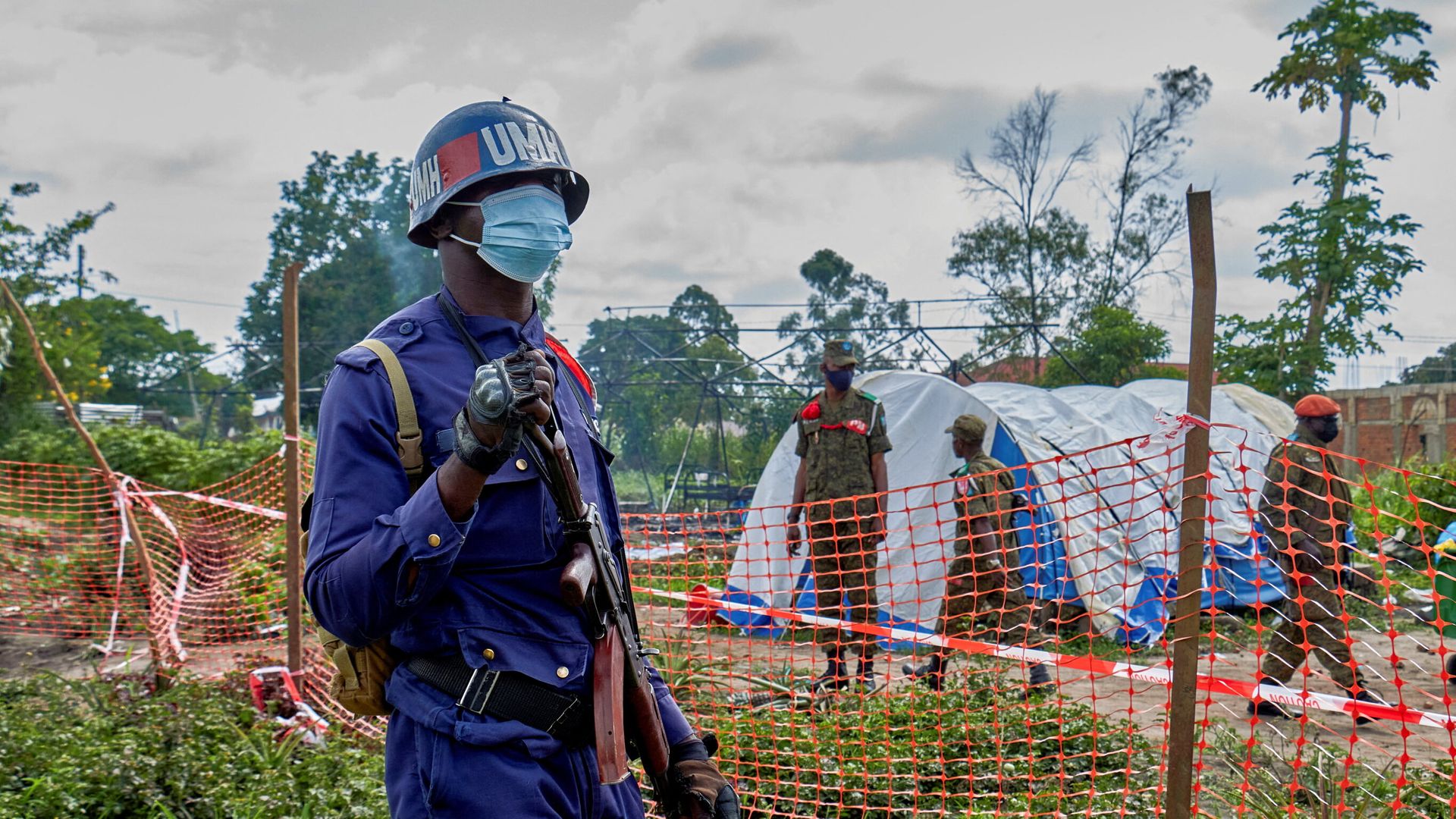
The spatial concentration of the outbreak within Ituri, North Kivu, and South Kivu provinces introduces a hostile operational environment defined by protracted armed conflict and institutional decay. Systemic execution of public health strategy requires physical access, population stability, and secure supply chains—variables entirely absent in the current zone of operations.
Armed insurgencies and localized militia groups create persistent security vacuums, restricting the deployment of epidemiological rapid response teams. Displaced populations residing in overcrowded, under-resourced camps form transient nodes of high susceptibility.
Compounding these exogenous shocks is an internal institutional failure within the response workforce itself. Operational continuity depends entirely on front-line healthcare personnel. When administrative friction results in severe backpay and unpaid retention bonuses for doctors, nurses, and decontamination crews, systematic walkouts and strikes paralyze major treatment centers like the Elikya facility in Bunia. Halting clinical operations shifts the burden of care back into households, accelerating the community mortality cycle.
Strategic Realignment for Outbreak Suppression
To alter the trajectory of the epidemic, strategic deployment must abandon passive surveillance models in favor of aggressive, localized disruption loops.
Response vectors must prioritize the immediate monetization and auditing of frontline healthcare compensation to eliminate workforce abandonment. Simultaneously, military-escorted safe burial operations must be paired with trusted local community intermediaries to neutralize cultural resistance without triggering civil flashpoints. Until diagnostic decentralization brings rapid-result testing directly to rural health zones, the transmission velocity will continue to outpace traditional epidemiological response structures.