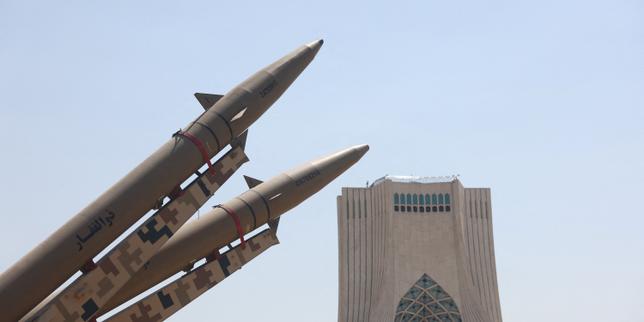
Strategic friction in the Persian Gulf follows predictable mechanical trajectories. When state-backed actors target foreign military infrastructure, the event is rarely an isolated tactical maneuver; it represents a calculated calibration within a broader deterrence matrix. Analyzing the mechanics of such strikes requires stripping away diplomatic rhetoric to examine the core variables governing modern asymmetric warfare: force protection thresholds, logistical vulnerabilities, and the economic costs of air defense expenditure.
Understanding this dynamic demands a shift away from immediate kinetic outcomes toward systemic vulnerabilities. The operational architecture governing military installations in high-risk zones is built on redundancy, hardening, and multi-layered interception grids. Evaluating a strike's true impact relies on measuring how effectively an adversary disrupts regional logistics without crossing the threshold that triggers total kinetic retaliation.
The Structural Drivers of Asymmetric Targeting
Military facilities situated abroad operate under severe spatial and political constraints. Host nations grant operational access while balancing domestic security imperatives, creating choke points in supply lines and command structures. When state actors direct kinetic assets toward these fixed positions, the choice of target is governed by three distinct structural variables.
First, fixed-site installations possess immoveable surface footprints. Unlike mobile naval groups or tactical field units, a permanent base cannot relocate to mitigate incoming vectors. This permanence reduces the complexity of targeting calculations for offensive actors.
Second, the defensive posture of these installations relies on asymmetrical economics. Interceptor missiles deployed by sophisticated air defense systems cost millions of dollars per unit, whereas the incoming offensive vectors often utilize low-cost unguided or guided munitions. This cost disparity introduces a distinct attrition model where the defender absorbs high financial overhead simply by maintaining a posture of readiness.
Third, signaling efficiency dictates the timing of offensive actions. A strike on a foreign base serves as a direct channel of communication between state actors when traditional diplomatic backchannels fail or are deemed insufficient to alter strategic calculations. The kinetic impact acts as proof of capability, while the specific geographic selection transmits precise boundaries regarding regional red lines.
The Operational Mechanics of Regional Interception
Intercepting incoming kinetic threats in a confined theater involves a compressed timeline that strains command-and-control frameworks. The decision cycle from radar acquisition to weapon release operates within seconds, eliminating human deliberation in favor of automated threat-evaluation software.
The logistical burden of maintaining continuous radar coverage and airborne combat air patrols creates a heavy strain on stationed assets. Personnel rotation cycles, maintenance downtimes for complex electronic warfare suites, and supply chain bottlenecks for replacement interceptors form the primary constraints on sustained defensive operations.
When an installation absorbs incoming pressure, the immediate operational priority shifts from offensive posture restoration to structural hardening and debris mitigation. Blast-resistant construction standards and subterranean command bunkers mitigate personnel casualties, but they cannot prevent the secondary effects of prolonged alert states on operational readiness.
The Economic Cost Function of Deterrence
Deterrence is not a static state; it is an ongoing economic expenditure. The cost function governing regional stability incorporates military spending, insurance premiums for commercial maritime traffic passing through nearby straits, and the hydrocarbon market volatility induced by heightened risk perceptions.
For regional powers engaged in proxy or direct confrontation, the financial sustainability of maintaining high-tempo operations dictates the duration of the crisis. State actors with centralized command economies can absorb prolonged periods of resource allocation toward military readiness, whereas democratic coalitions face domestic political friction tied to budgetary allocations and troop safety guarantees.
Market reactions to kinetic incidents in critical shipping lanes provide an immediate barometer of structural stress. Fluctuations in crude pricing reflect the calculated risk assigned by commercial actors to the security of regional chokepoints, transforming localized military strikes into global economic variables.
Strategic Trajectory and Institutional Adaptation
Military organizations operating in high-threat environments must continuously adapt their defensive doctrines to counter evolving offensive capabilities. The proliferation of low-signature guidance systems and extended-range loitering munitions necessitates a transition from centralized air defense batteries to distributed, point-defense networks integrated with directed-energy solutions.
Mitigating future vulnerabilities requires moving away from heavy reliance on fixed infrastructure toward decentralized expeditionary logistics hubs. Dispersing assets reduces the concentration of targetable value, forcing adversaries to expend disproportionate intelligence and materiel resources to achieve nominal disruption. Force posture adjustments must prioritize agility over permanence, shifting the structural advantage back to the defending coalition.
Transition permanent installations to distributed rotational nodes, integrate directed-energy point-defense systems to invert the current interceptor cost curve, and decouple regional logistics corridors from single-point maritime chokepoints.